Facebook
 Google
 GitHub
 Linkedin
Using EVs as a Resource To Prevent Grid Overload
Researchers at Texas A&M are exploring how using flexible charging techniques could ease the strain on the power grid.
The rise of electric vehicles has brought numerous benefits, including reduced tailpipe emissions and decreased reliance on fossil fuels. However, one significant challenge has emerged: the potential strain EVs could place on the power grid.
As more people adopt EVs, grid operators are grappling with the impact on energy demand. Texas A&M University researchers are currently working on a potential solution: using EVs as a flexible energy resource that could benefit the grid rather than burden it.
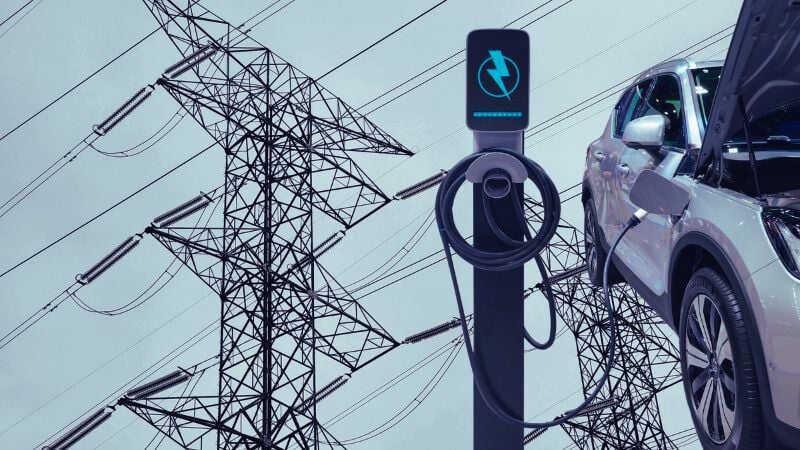
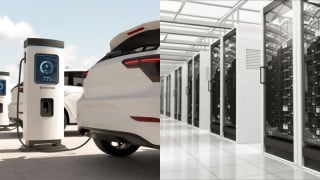
How does EV charging affect the power grid? Adapted from images used courtesy of Canva
Flexible Charging Solutions
Charging electric vehicles often adds pressure to the grid, especially during peak hours in the late afternoon. As power demand rises, especially between 4 and 7 p.m., residential charging can increase the load. However, Thomas Overbye and Jonathan Snodgrass from the Texas A&M Department of Electrical and Computer Engineering believe EVs could play a key role in alleviating that pressure. Their research focuses on creating "smart" charging systems that allow the grid to manage when EVs charge, using flexible charging to avoid overloading the system.
Flexible charging, also called "price-responsive load," could transform how EVs interact with the grid. Instead of charging immediately when plugged in, which could overload peak demand, the technology would enable the grid to adjust when charging occurs. For example, an EV might charge intermittently, starting for a few hours and then pausing to continue charging later, all based on grid needs. The system would also ensure that drivers have enough battery charge for their morning commute, even with delayed charging.
Charging Speeds Vs. Grid Impact
One critical element of this research is understanding how charging speeds affect the grid. EVs can be charged at different levels, ranging from Level 1 (using a standard 120-volt home outlet) to Level 3 fast chargers that can rapidly recharge a vehicle. While fast chargers are useful for quick turnaround times, they demand a significant amount of power. A single high-speed charger can draw as much energy as 25 to 50 homes, and if multiple vehicles charge simultaneously, it could cause significant fluctuations in the grid's frequency. This unpredictable demand could lead to grid instability, as it is not designed to handle such large, rapid surges of power.
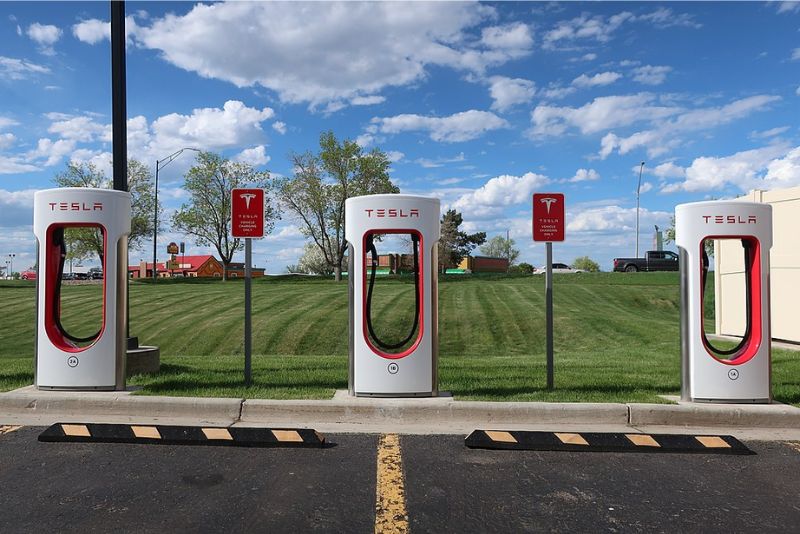
Tesla fast chargers. Image used courtesy of Wikimedia Commons
Data-Driven Predictions
Through their work with Texas A&M's Transportation Institute and software company ElectroTempo, Overbye and Snodgrass aim to simulate how widespread EV adoption would impact the grid. ElectroTempo’s technology takes real-world data on driving patterns and converts it into predictions for future energy demand. This forecast is then fed into grid simulations, allowing researchers to estimate the impact of increased EV use on various regions' power distribution systems.
This partnership could help inform better grid management practices, such as advising utility companies on where and when to upgrade transmission lines or transformers. In some cases, utilities might need to manage EV adoption more carefully, limiting the number of EVs that can be supported by existing infrastructure before upgrades become necessary. Researchers are also exploring the possibility of neighborhoods implementing surcharges for the installation of additional infrastructure. These findings could offer a roadmap for balancing EV adoption with sustainable grid development.
Ensuring a Grid-Friendly Future for EVs
As the number of EVs on the road continues to grow, so too does the need for smarter, more flexible charging solutions. By integrating advanced grid management with EVs' charging capabilities, researchers at Texas A&M are helping to ensure that the transition to cleaner transportation is not only environmentally beneficial but also grid-friendly.