Facebook
 Google
 GitHub
 Linkedin
AI Synergy: Streamlining Renewables in Grid Operations
Artificial intelligence can aid in meeting renewable energy goals.
World leaders have set ambitious net-zero goals, and sustainable electricity projects often fit into those milestones. However, success will be a collaborative, goal-driven effort. Relevant organizations must also develop and implement appropriate strategies. How might artificial intelligence fit into the picture?
Many opportunities exist to apply AI to future sustainable electricity projects that require analyzing vast amounts of data to find trends or make predictions. Artificial intelligence algorithms can process that information much more efficiently than humans, making it an excellent time-saver.
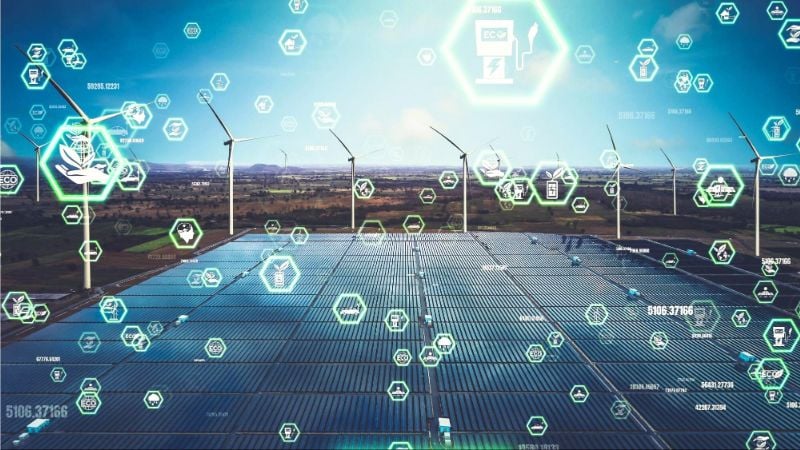
Can AI advance renewable and sustainable energy goals? Image used courtesy of Adobe Stock
Department of Energy AI Initiatives
The U.S. Department of Energy has several AI initiatives linked to clean power innovations. For example, one proposed application will accelerate the siting and permitting requirements for planned sustainable energy projects. Another will encourage experts to collaborate by using AI to solve some of the industry’s most complex problems.
The DOE also released two reports specifying AI’s role in the path to renewable energy. Conversely, because artificial intelligence applications could introduce new risks, another effort tasks cybersecurity experts with examining the threats and benefits of applying the technology to critical infrastructure hackers may target.
Better Grid Management
Improved power grid management could reduce outages and other disruptions. However, challenges could emerge related to grid optimization and expansion projects. Grid bottlenecks can waste up to 40% of renewable energy generated. Can AI solve this problem?
New renewable projects take time to become active and added to the grid, primarily because of the existing transmission shortages, which leave thousands of gigawatts in queues. However, the AI tools could unlock twice the grid capacity by tackling this congestion with algorithms. With less wasted power, the installation pace for distributed electrical sources and batteries supporting renewable projects could speed up.
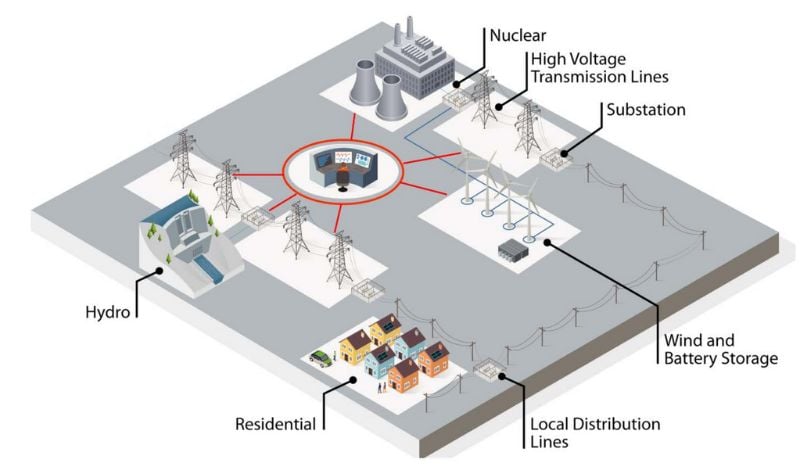
Artificial intelligence can accelerate renewable energy integration. Image used courtesy of National Renewable Energy Laboratory/Christopher Schwing
Batteries make renewables more accessible by addressing fluctuations in energy generation. Solar panels produce energy during sunny periods, but batteries can store the excess. That approach also gives people access to power during outages, similar to a generator, but without the associated noise of that equipment.
Improving Operations at Gas Power Plants
Many gas industry leaders have also become interested in AI to make operational changes to increase efficiency, elevate resiliency, and meet other overarching goals. One option is to use AI-powered sensors on critical equipment to prevent failure causing significant disruptions.
AI algorithms enable better visibility, and real-time data shows technicians when they must act to keep assets running smoothly. Such developments represent substantial improvements in preventive or reactive maintenance approaches. Generative AI used with drones can create a planned predictive maintenance system to reduce downtime.
Additionally, since many gas leaders must demonstrate concrete actions to reduce carbon emissions, AI’s data analysis capabilities could identify contributing factors, showing them which areas to target for the desired results. The data should reduce guesswork, giving decision-makers confidence they have chosen the best options according to individual situations.
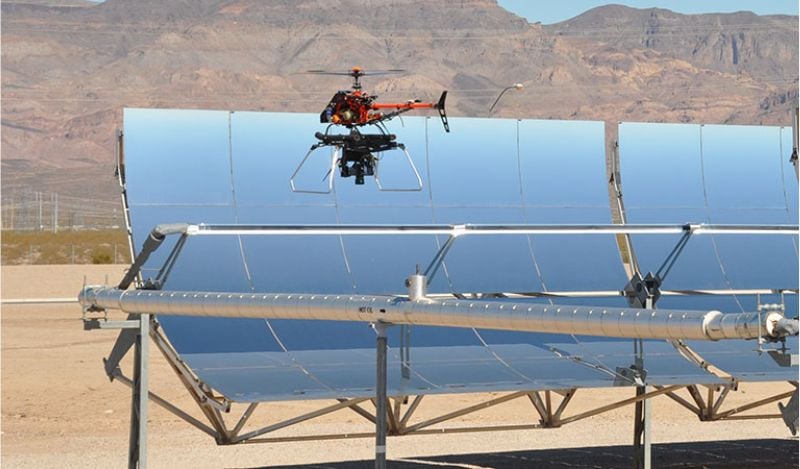
A drone inspects a solar power concentrator. Image used courtesy of National Renewable Energy Laboratory/#23115
Curbing emissions could also have large financial implications. A 2024 methane emissions Stanford University-led study concerning oil and gas entities in the United States gathered approximately 1 million aerial readings from six areas most commonly linked to the oil and gas industry. The results showed methane emissions cost them $1 billion in lost commercial value annually. The total rises to $10 billion when considering the economic and human health costs associated with the output.
Adding AI to the Energy Sector
These compelling examples illustrate how modern leaders have numerous ways to apply AI in the electricity sector. However, interested parties will get the best results when they become familiar with the options most aligned with individual needs and long-term goals.
Choosing metrics and tracking them after using any artificial intelligence solution is also important. Monitoring those statistics throughout the process will help everyone involved see what works well and which areas require further improvement. Finally, employees will appreciate ongoing information about how AI may change their workflows. Supporting their transition will help them feel more upbeat about current and future applications of the technology.