Facebook
 Google
 GitHub
 Linkedin
2024 Set the Stage for 2025 Data Center Energy Storage Innovation
The momentum in data center energy storage innovations will continue into 2025.
As data centers evolve to meet surging workloads, particularly with artificial intelligence applications, energy systems must keep pace with increasingly dynamic and demanding power profiles. Faster response times, higher energy densities, and improved thermal stability are necessary data center energy storage characteristics.
Fortunately, in 2024, developers made major advancements in addressing these needs while tackling challenges in power density, sustainability, and grid stability. These developments signal a promising trajectory for 2025.
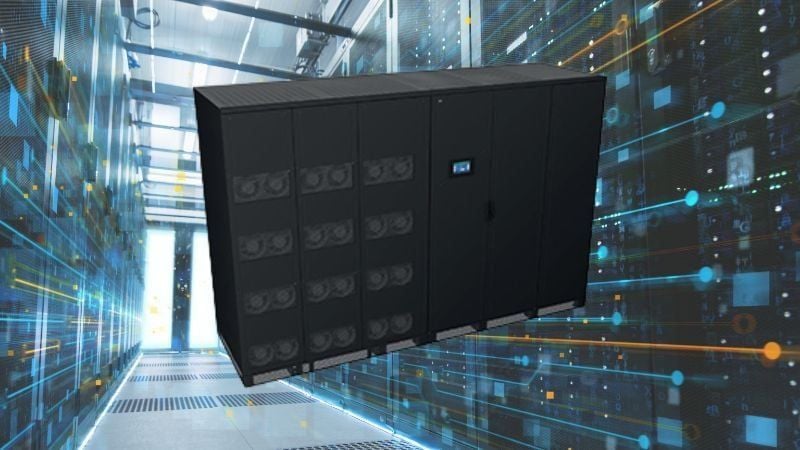
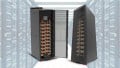
ABB’s MegaFlex UPS for data centers. Image adapted from ABB and Canva
ABB’s NiZn Batteries for Data Center Power Supplies
In 2024, ABB introduced nickel-zinc batteries (NiZn) into its MegaFlex uninterruptible power supply (UPS) lineup, specifically targeting data centers’ energy challenges.
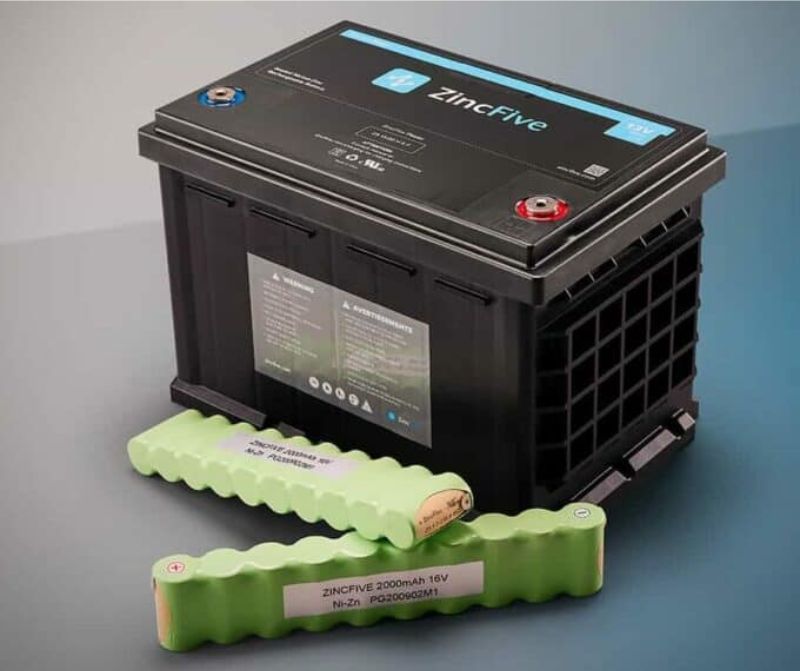
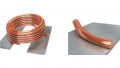
Nickel-zinc battery. Image used courtesy of ZincFive
ZincFive supplies NiZn batteries, which offer high power density, improved safety, and eco-friendly benefits compared to traditional lithium-ion solutions. Compared to lithium-ion and lead-acid batteries, NiZn units emit 4x and 6x fewer greenhouse gases, respectively, with 23–33% reduced energy footprints. Equally important is their non-toxic construction using abundant nickel and zinc, which makes the batteries more easily sourceable and mitigates flammability risks, simplifying transport and installation.
Paired with MegaFlex, ABB achieves system efficiencies up to 97.4% and power availability scaling to 1.6 MW (UL) and 2.0 MW (IEC). As of June, ABB had already deployed 150 MW of systems.
Musahi’s Capacitor Certification
In 2024, Musashi Energy Solutions' hybrid supercapacitors received UL810A certification to demonstrate their safety in data center applications. Hybrid supercapacitors provide faster power delivery than batteries with minimal degradation over time, making them well-suited for the uniquely frequent charge/discharge cycles required in data center environments.
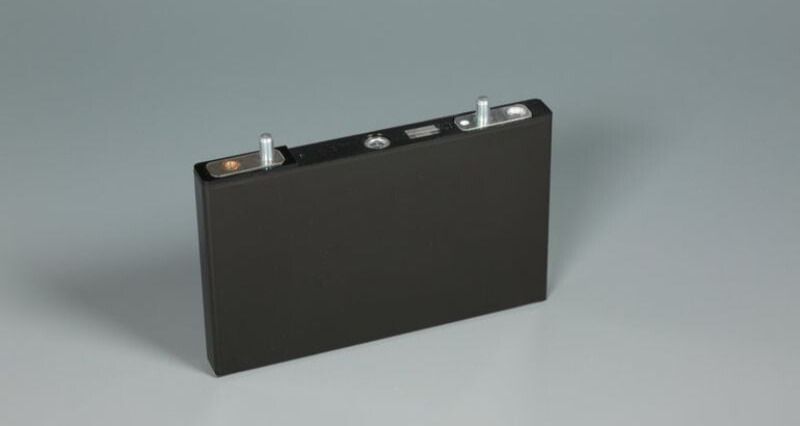
Musashi’s hybrid supercapacitor. Image used courtesy of Musashi Energy Solutions
Previously known as lithium-ion capacitors, Musashi's hybrid supercapacitors are optimized for 1 MW-class uninterruptible power supplies (UPS) in data centers. The certified models—CPP4100SA, CPP4101SA, CPQ3300SD, and CPQ3301SD—offer impressive energy density, high power output, and extended operational longevity.
Super Energy Storage for AI Data Centers
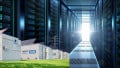
In 2024, Flex and Musashi Energy Solutions introduced a hybrid supercapacitor-based energy storage system (CESS) for the AI data center. Leveraging the capacitors’ fast response times capacitors relative to batteries, the CESS helps reduce transient spikes associated with AI training workloads and stabilizes grid operations.
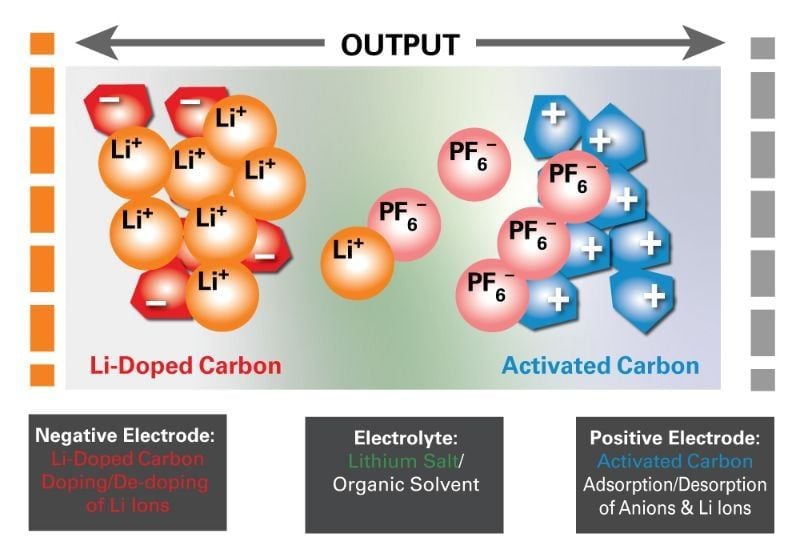
Hybrid supercapacitor technology. Image used courtesy of Musashi Energy Solutions
The system is built around Musashi’s Hybrid SuperCapacitor (HSC) technology, which offers impressive power density, thermal stability, and durability, with a capacity for millions of charge/discharge cycles. The system also withstands operating temperatures from -30°C to 70°C and meets important safety benchmarks, including UL 810A and UL 9540A thermal runaway certifications. By alternating energy uptake and release, CESS integrates cohesively into server rack systems.
High-Tech Labs Fuel Renewables Research
The U.S. Department of Energy and the National Renewable Energy Laboratory launched advanced research centers to optimize renewable energy storage.
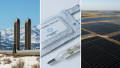
The Grid Storage Launchpad (GSL), a 93,000-square-foot facility at Pacific Northwest National Laboratory, replicates real-world grid conditions to test sub-100 kW energy storage systems. Its major purpose is to validate the performance, safety, and durability of next-generation storage technologies.
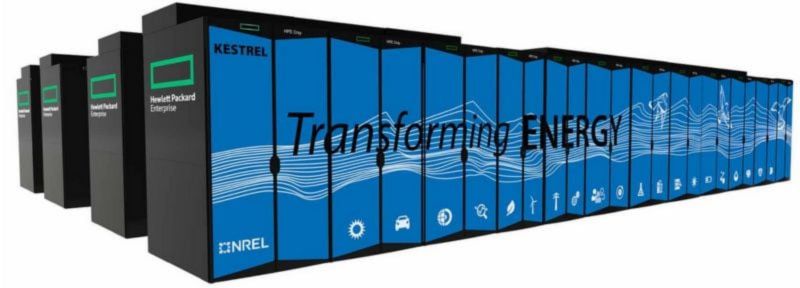
Kestrel supercomputer. Image courtesy of NREL
Additionally, NREL's Kestrel supercomputer, capable of 44 petaflops and equipped with 132 GPU nodes (NVIDIA H100) and 2,314 CPU nodes (Intel Sapphire Rapids), delivers energy-efficient computational power at 10.4 gigaflops/watt. Kestrel supports advanced simulations for electrocatalytic systems, a powerful tool for researchers trying to modernize grid infrastructure and push renewable energy innovations.
A Strong Foundation for 2025
The developments in 2024 have laid a solid foundation for the next stage in data center energy storage. Looking ahead to 2025, these technologies are well-positioned to scale and further refine their capabilities. As energy systems evolve, the industry can expect more efficient and reliable solutions that reduce environmental impact while meeting growing power demands. With the momentum of 2024, the trajectory is clear: smarter, cleaner, and more resilient energy solutions are on the horizon.