Facebook
 Google
 GitHub
 Linkedin
ABB Unveils NiZn Batteries for Data Center Power Supplies
Nickel-zinc batteries provide a secure, durable, and eco-friendly energy storage option compared to traditional chemistries.
The uninterruptible power supply (UPS) is a lesser-discussed data center element. While necessary for preserving information in the case of power loss, the UPS also has some inherent sustainability concerns. Its reliance on batteries, such as lithium-ion or nickel-cadmium, introduces concerns such as resource depletion, toxic material handling, and carbon emissions.
ABB has unveiled nickel-zinc (NiZn) batteries as part of its MegaFlex lineup, offering high power density and sustainable UPS solutions for data centers and critical power applications. These batteries could address the sustainability challenges associated with the increasing digitalization trend.
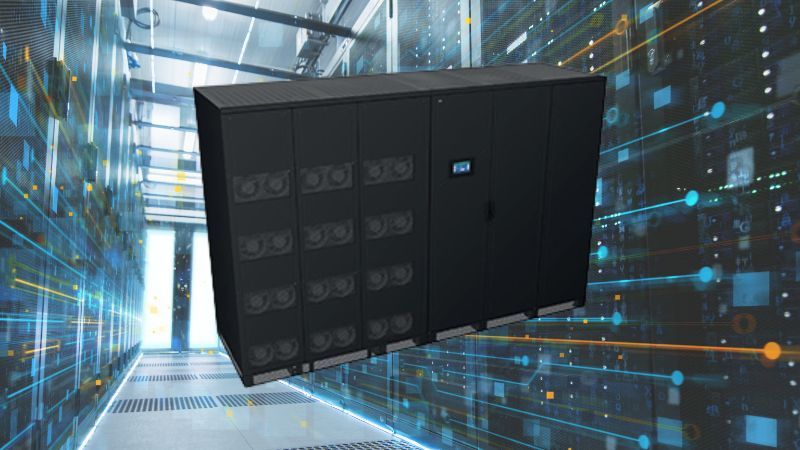
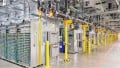
ABB will use nickel-zinc batteries in its MegaFlex UPS for data centers. Image adapted from ABB and Canva
Sustainability Challenges in Data Centers
The meteoric growth of digital services has spurred a global demand surge for data centers. These specialized facilities, which store, manage, and distribute the world’s data, have become indispensable for the seamless functioning of modern technological conveniences essential to daily life.
However, increased reliance on digital infrastructure comes with more responsibility. Data centers with servers and critical infrastructure drive substantial and escalating energy consumption. For example, projections indicate a surge in energy consumption from 200 TWh in 2016 to approximately 2,967 TWh by 2030.
Concerns also surround the power systems, where data centers typically depend on extensive arrays of lead-acid or lithium-ion batteries connected with UPS to sustain operations during outages. These batteries involve resource-intensive manufacturing. Lead-acid batteries utilize lead mining and sulfuric acid synthesis, while lithium-ion batteries require energy-intensive lithium extraction. Improper battery disposal poses environmental risks, releasing toxic substances into soil and water. Both batteries emit greenhouse gases throughout their lifecycle, contributing to climate change.
ABB's Eco-Friendly Power Backup
To address these concerns, ABB has recently introduced NiZn batteries to its MegaFlex family of UPS solutions.
Supplied by ZincFive, these batteries offer a sustainable alternative to conventional chemistries while meeting the needs of high-power, high-density UPS. Generally, NiZn batteries use abundant, recyclable materials, nickel and zinc, which are non-toxic and non-flammable. Research indicates the batteries’ greenhouse gas emissions are four times less than lead-acid and six times less than lithium-ion batteries. NiZn batteries’ energy footprint is also 23-33% smaller than lithium-ion and lead-acid batteries. Moreover, NiZn batteries’ enhanced safety compared to conventional lithium-ion batteries makes their transportation and installation easier, particularly in mission-critical applications.
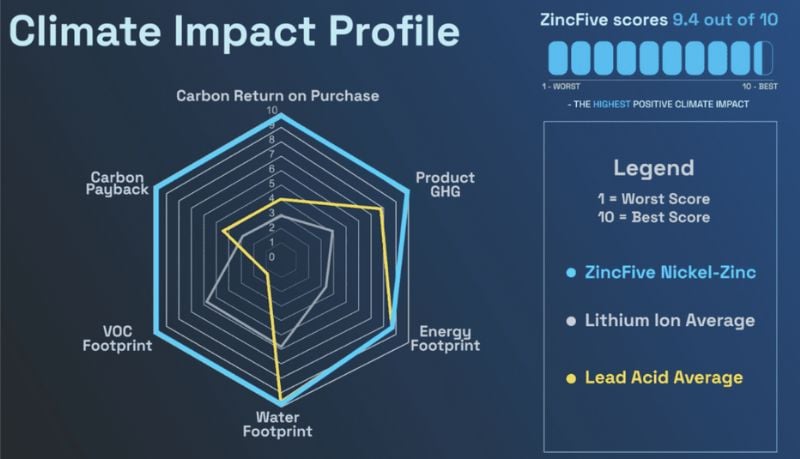
Comparing climate impact profiles of three battery technologies. Image used courtesy of ZincFive
For these reasons, introducing NiZn battery technology is a huge boon for ABB’s MegaFlex, already known for its high system efficiency of up to 97.4 percent and power availability of up to 1.6 MW UL and 2.0 MW IEC. So far, thorough testing has confirmed ZincFive's NiZn battery technology as a dependable and safe substitute for traditional lead-acid and lithium-ion batteries. With over 150 megawatts of these integrated systems already implemented, ABB is well on the way toward a net-zero future.
The Future of Sustainable Battery Solutions
Integrating NiZn batteries in uninterruptible power supplies can transform data center operations. These batteries' environmental benefits and enhanced safety and efficiency align well with the global push toward more sustainable practices.
However, transitioning to more sustainable battery solutions is just one puzzle. Future efforts must also focus on improving overall energy efficiency, leveraging renewable energy sources, and developing advanced cooling technologies to further reduce data centers' carbon footprint. The broader industry must embrace a holistic approach, combining innovative technologies like NiZn batteries with comprehensive energy management and sustainability strategies.