Facebook
 Google
 GitHub
 Linkedin
Safer Batteries in 2024: Breakthroughs for Renewables and EVs
Battery safety improvements are essential for moving the renewable energy transition and electric vehicle adoption.
The renewable energy transition and the rise of electric vehicles depend heavily on battery technology advancements. However, widespread adoption has consistently faced challenges related to safety risks like overheating, fires, and battery explosions.
In 2024, the industry raced to develop safer, more sustainable, and high-performance solutions, particularly to address safety challenges. Here are some notable battery safety developments in the past year.
In 2024, research focused on battery safety. Image used courtesy of Adobe Stock
Self-Extinguishing Batteries
Lithium-ion batteries are efficient but prone to fire risks due to their flammable electrolytes, typically composed of lithium salts dissolved in organic solvents. Internal short circuits, overcharging, physical damage, heat exposure, or manufacturing defects can trigger thermal runaway. Larger batteries present even greater fire hazards, and rapid charging can form needle-like lithium dendrites on the negative electrode, potentially breaching the separator and causing internal short circuits.
In 2024, researchers developed a novel self-extinguishing electrolyte using materials found in fire extinguishers. The formulation incorporated Novec 7300 coolant (a fluorinated liquid) and Daikin-T5216 (a non-polar solvent) to reduce flammability. It performed well across extreme temperatures (-100°F to 175°F/-75°C to 80°C) and passed nail penetration tests.

Electric vehicle fire. Image used courtesy of National Highway Traffic Safety Association
Water Batteries
Higher energy density often increases fire risks due to volatile organic electrolytes in conventional lithium-ion batteries (Li-ions). Chinese researchers developed a groundbreaking water-based battery, as reported in Nature Energy.
This iodine and bromine-based aqueous battery delivered nearly twice the energy density of traditional lithium batteries, achieving up to 1,200 Wh/L compared to 700 Wh/L. Its unique chemistry unlocked efficient energy storage, transferring over 30 M electrons and delivering more than 840 Ah with an iodine concentration of 6 M. Paired with a cadmium anode, the battery retained 72% efficiency under high power. Most importantly, its water-based electrolyte is significantly safer and reduces flammability and volatility compared to traditional Li-ions.
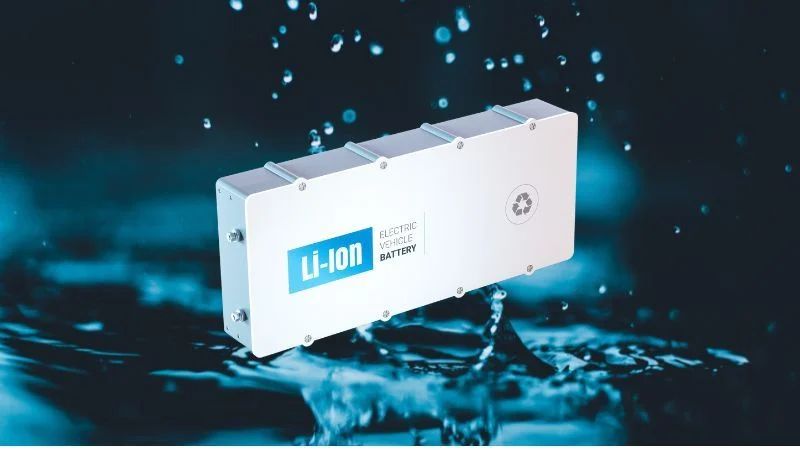
A water-based battery. Image adapted from Adobe Stock
Solid-State Batteries
Liquid electrolytes in batteries offer high ionic conductivity and flexibility but pose significant safety risks, including leakage, flammability, and explosion. In 2024, University of Liverpool researchers developed a solid electrolyte that rivals liquid electrolytes in performance while significantly improving safety.
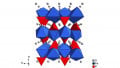
This lithium, silicon, sulfur, and iodine material features a unique 3D crystal structure with 15 pathways for lithium-ion transport to enhance conductivity and minimize ion trapping. Unlike liquid electrolytes, which risk leakage or explosion, the solid-state electrolyte excelled in rigorous safety tests, including short circuits, nail penetration, heating, and overcharging. Combined with a lithium cobalt oxide cathode and lithium metal anode, it demonstrated superior energy density, power density, and cycle life.
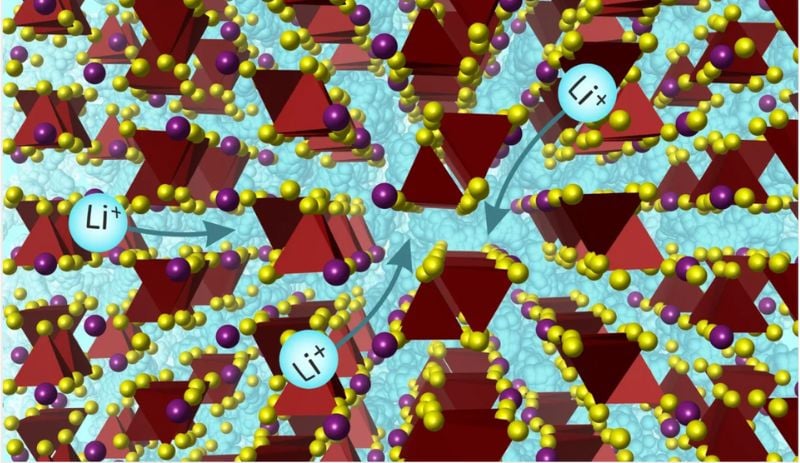
Lithium-ion pathways in solid electrolyte. Image used courtesy of University of Liverpool
Sodium-Ion Batteries
Lithium is highly reactive and prone to catching fire because it readily oxidizes, releasing heat. In lithium-ion batteries, flammable organic electrolytes combined with potential short circuits, thermal runaway, or dendrite formation can ignite the electrolyte, causing combustion or explosions.
Sodium-ion batteries have garnered interest as a safer, more sustainable alternative because they are less prone to overheating or explosion. In 2024, Komatsu’s pilot program introduced an electric forklift powered by sodium-ion batteries to replace lithium-ion and lead-acid technologies. The sodium-ion battery system demonstrated strong potential for safer operations and, if proven viable, could transform material handling by offering a safe energy storage solution.
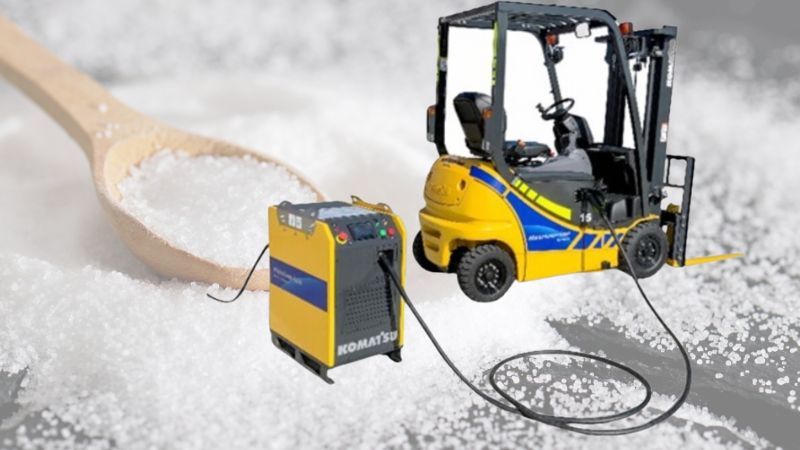
The sodium-ion battery-powered forklift. Image used courtesy of Komatsu
Safer Energy Storage
2024’s advancements in battery safety reflect the industry’s growing concern for safety as energy storage becomes more ubiquitous. As sectors like renewable energy and electric mobility scale, these safer battery technologies could shape future standards and pave the way for efficient and reliable energy storage.