Facebook
 Google
 GitHub
 Linkedin
High-Tech Labs Fuel Renewables Research
The centers aim to boost renewable energy storage research and testing to modernize the electric grid.
The global renewable energy transition hinges on overcoming key technical and infrastructure challenges, particularly in energy storage. As solar, wind, and other intermittent power sources become a larger share of the energy pool, storing and deploying energy efficiently is critical for grid stability and reliability. Energy storage systems, however, must meet high standards for performance, safety, and cost-effectiveness, especially when scaled to national grid demands.
Take a tour inside the Grid Storage Launchpad. Video used courtesy of Pacific Northwest National Laboratory
Addressing these challenges requires advanced testing environments that accurately reflect real-world conditions. In response, the U.S. Department of Energy (DOE) and the National Renewable Energy Laboratory (NREL) have launched dedicated facilities to accelerate innovation in energy storage technologies.
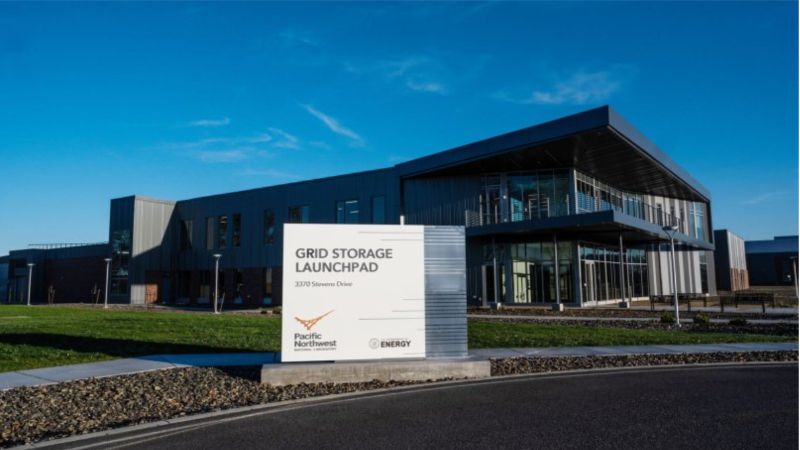
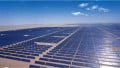
The Grid Storage Launchpad facility. Image courtesy of DOE
The Grid Storage Launchpad
As renewable energy sources are integrated into the grid, significant engineering is needed to ensure these storage systems can operate reliably, safely, and efficiently at scale. However, traditional laboratory testing environments often lack the complexity and variability of actual grid conditions, making it difficult to predict how new technologies will perform in the real world. To address this, the U.S. Department of Energy has launched the Grid Storage Launchpad (GSL) at Pacific Northwest National Laboratory (PNNL) in Washington.
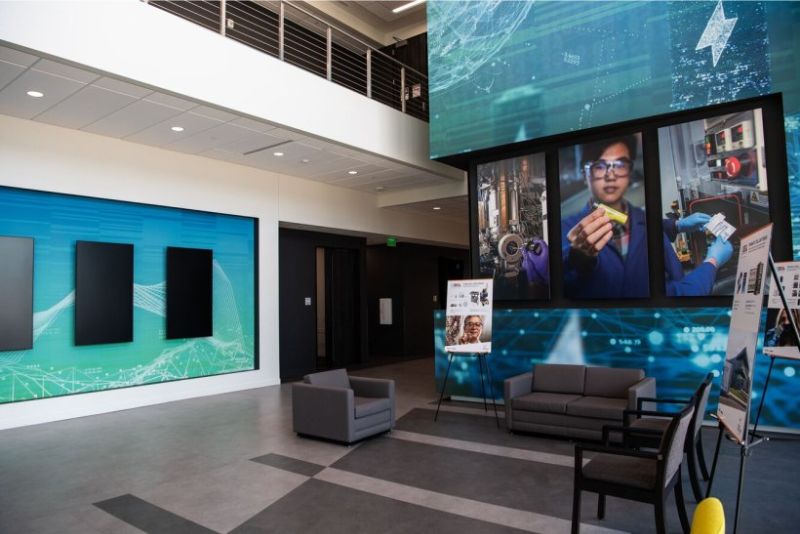
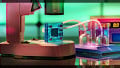
GSL interior. Image used courtesy of Pacific Northwest National Laboratory/Andrea Starr
The GSL is a 93,000-square-foot facility designed to drive grid-scale energy storage through advanced research and testing. The GSL aims to validate grid performance standards, accelerate technology development by enforcing rigorous performance requirements, and foster collaboration among DOE and the energy storage community. Specifically, the state-of-the-art facility enables researchers to test and validate next-generation energy storage materials and systems (< 100 kW) under real-world conditions.
Importantly, the GSL will facilitate collaboration between industry and national lab researchers to develop safer, more durable, cost-effective energy storage technologies.
Renewable Research Reimagined
In the push for clean energy adoption, the demand for high-performance computing (HPC) capabilities has grown by leaps and bounds. In response, the National Renewable Energy Laboratory (NREL) developed a supercomputer uniquely tailored to address the challenges of the energy transition.
The result of this effort is the Kestrel supercomputer, a powerful HPC system that has just completed its full buildout. Delivering an impressive 44 petaflops of computing power, the Kestrel system provides more than five times the computing capacity of NREL's previous supercomputer, Eagle.

Kestrel supercomputer. Image courtesy of NREL
The system boasts 132 GPU nodes, hosting four NVIDIA H100 GPU processors and 2,314 CPU nodes with two Intel Sapphire Rapids processors. Kestrel's energy-efficient design, featuring 100% direct liquid cooling for all components, offers more than twice the efficiency of its predecessor, delivering 10.4 gigaflops per watt compared to Eagle's 4.7 gigaflops per watt.
This cutting-edge hardware combination enables Kestrel to excel at emerging artificial intelligence and machine learning workflows and visualization tasks, which are instrumental for solving challenges such as materials science and chemistry modeling. So far, researchers have already leveraged the Kestrel supercomputer's GPU capabilities to conduct high-fidelity simulations of electrocatalytic systems and design improved catalysts for water electrolysis, fuel cells, and carbon dioxide reduction.
Driving the Future
Establishing these advanced research centers signals a shift toward deeper collaboration between industry, government, and academia in the race to modernize the energy grid. As energy storage technologies evolve, testing and validating their performance under real-world conditions will help ensure their scalability and long-term reliability. Facilities like the Grid Storage Launchpad and Kestrel supercomputer enable researchers to push the boundaries of what’s possible in energy storage and grid integration.