Facebook
 Google
 GitHub
 Linkedin
Report Finds 72% of BESS Defects Occur at System Level
Clean Energy Associates’ audit of battery energy storage systems recommends better quality control in battery energy storage system manufacturing facilities.
About 72% of defects in battery energy storage systems occur at the system level, according to a report by the Clean Energy Associates (CEA). These defects pose the greatest safety risk of fires, system shutdowns, or energy shortfalls, the report stated.
CEA, a solar energy engineering services firm, conducted audits of battery energy storage system (BESS) factories and concluded that the system-level defects in 2024 had risen 24% from previous audits. After conducting more than 680 inspections in over 70 factories, CEA’s audit found over 2,600 manufacturing problems.
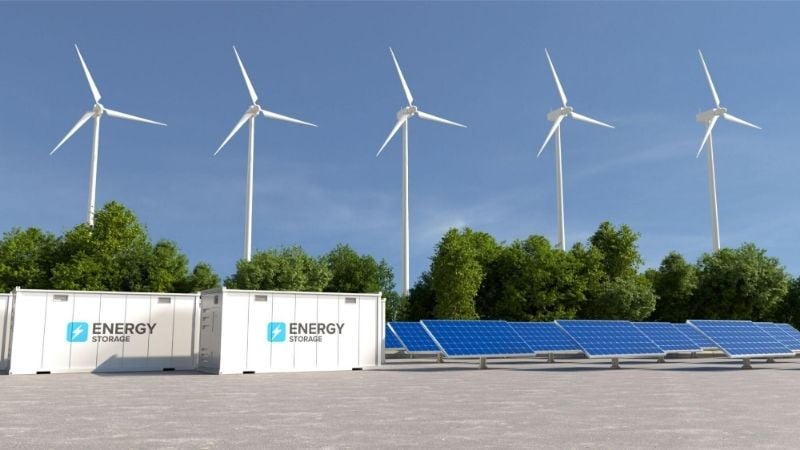
Battery energy storage system used with renewable energy. Image used courtesy of Adobe Stock
Battery Storage Systems’ Essential Role in Renewable Energy
BESSes store energy generated from renewable sources like solar or wind and release it when needed. Unlike standard household batteries, BESSes use sophisticated software to manage energy flow, storing excess power and supplying it to the grid during peak demand. These advanced systems are essential for the energy transition, where the renewable supply can be unpredictable. Energy storage plays a critical role in maintaining a stable power grid.
However, they are susceptible to fire when damaged, overheated, or degraded. In 2024, a BESS facility in California burned for five days.
Audit Process and Identifying BESS Issues
CEA audited factories representing 64 percent of Tier 1 BESS cell manufacturers across the United States, India, China, Vietnam, and South Korea. Tier 1 manufacturers include companies like Panasonic, LG, and Samsung. To achieve Tier 1 status, a company must meet the following criteria: be qualified to supply multinational automotive original equipment manufacturers and electric vehicle producers outside of China; serve the domestic Chinese EV market; and have a total annual production capacity of over 5 GWh.
During the audit, CEA documented a “finding” for any issue deviating from standard best practices, processes, or product specifications. Findings were categorized as minor, major, or critical. When a critical or major finding was identified, CEA notified both the buyer and the manufacturer of the issue. The manufacturer was then responsible for resolving the issue, after which CEA conducted a re-inspection to confirm it had been addressed.
BESS Problems
In 2024, the CEA identified that 72% of issues occurred at the system level, 15% occurred during battery cell manufacturing, and 13% occurred during module manufacturing. System-level findings increased 24% from past audits, while both cell- and module-level findings have decreased at least 10% each.
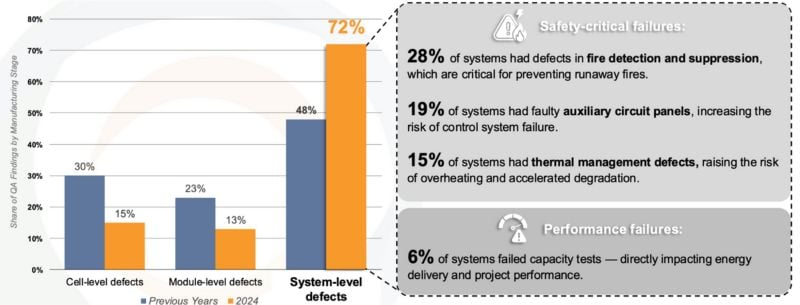
2024 BESS defects compared to previous audits. Image used courtesy of CEA
The BESS “system” is the sum of all parts: the enclosure housing the modules, internal safety mechanisms, testing protocols, and other technological elements. System-level failures can compromise both battery and facility safety, potentially causing fires, system shutdowns, or energy shortfalls.
Of all system-level findings, 64% were due to component defects and improper system integration procedures (balance of system), such as liquid coolant leakage or malfunctioning smoke sensors. Another 30% occurred from enclosure manufacturing defects and transportation mishandling (enclosure), such as grounding mechanism defects or structural deformation. The final 6% were related to various manufacturing defects (performance test), such as charging or discharging failure due to wiring issues.
During battery cell manufacturing, 40% of defects were due to electrode manufacturing issues, such as missing key quality checks for coating thickness or moisture content. About 39% stemmed from cell assembly, with most problems caused by slitting from lack of burr size control. The remaining 21% were due to cell finishing, such as improper cell insertion or electrolyte filling. Most battery defects were classified as minor.
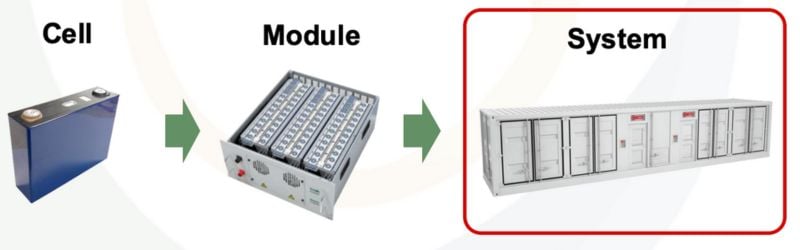
Cell, module, and system. Image used courtesy of CEA
At the module level, 48% of problems occurred during cell sorting and installation, with issues such as inconsistent glue usage and position. Another 32% occurred during interconnection welding, with defects such as mislocated welding position. About 11% occurred during electrical testing and integration, with issues such as abnormal cell voltage. The final 9% occurred during enclosing, with errors such as inconsistent cell group placement. These findings were fairly balanced between major and minor.
Takeaway: Maintain Rigorous Quality Control
Most system-level issues occur because the integration process requires manual, labor-intensive work and often depends on third-party quality assurance providers with limited motive to ensure long-term performance. Additionally, the manufacturers have little time available to establish mature, reliable production practices. The complexity of BESS systems makes them vulnerable to failures caused by upstream component defects that may go unnoticed during earlier quality checks.
As the BESS industry continues to expand, maintaining rigorous quality control is essential to supporting renewable energy infrastructure. CEA recommends that prospective BESS buyers conduct a factory acceptance test to verify that the equipment meets all expected performance, safety, and quality standards before deployment.