Facebook
 Google
 GitHub
 Linkedin
Solar, Wind and Fire: Making Battery Energy Storage Systems Safer
Fires in battery energy storage systems put renewable energy systems at risk. How can they be prevented?
A five-day fire in a lithium-ion battery storage unit caused the evacuation of the 250 MW Gateway Energy Storage facility near San Diego, California. According to the Electric Power Research Institute, a dozen other fires have occurred in battery energy storage systems (BESS) worldwide since 2023.
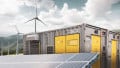
These fire incidents raise alarms about the safety of battery energy storage systems, especially when co-located or interspersed with solar panels or wind turbines. If the fire spreads, it could endanger renewable energy assets, cause power disruptions, and cost millions.
As BESS use increases with renewable energy growth, current fire prevention strategies are not keeping up, according to a report from Firetrace International, an Arizona-based fire suppression supplier. The report outlines the problems and suggests four possible solutions to mitigate renewable energy fire risk and impact.
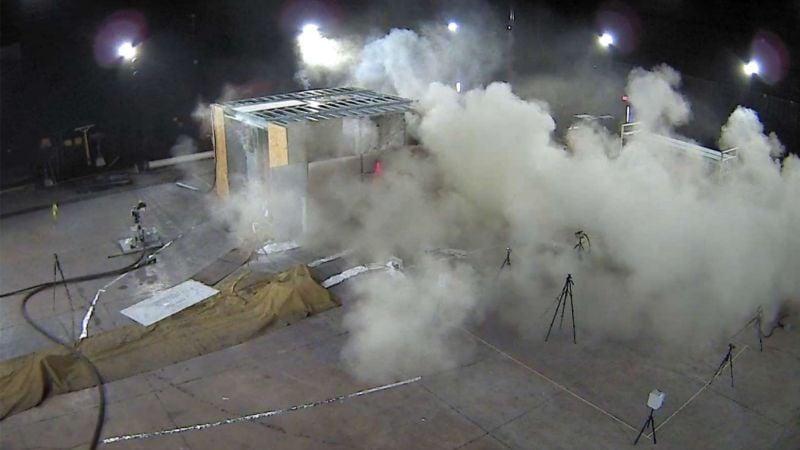
Battery storage unit fire. Image used courtesy of International Association of Firefighters
Renewable Energy Growth and Battery Fires
Integrating battery storage systems with renewable energy developments has become routine. In 2023, battery storage increased by 70% over the previous year, adding 6.4 GW of capacity to the U.S. grid. The Energy Information Administration (EIA) expects storage capacity to double in 2024.
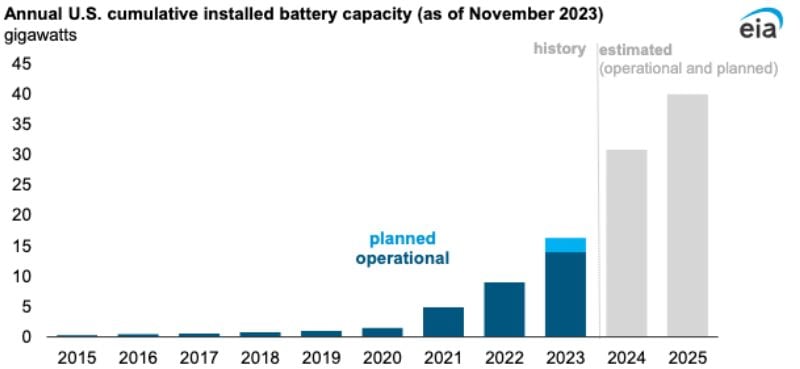
Battery capacity growth over time. Image used courtesy of EIA
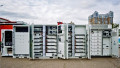
About 97% of battery storage systems use lithium-ion (Li-ion) batteries. A typical grid-scale storage unit uses multiple Li-ion batteries enclosed in a protective metal case resembling a shipping container. The battery units are usually installed adjacent to solar or wind generation infrastructure. Locating the units close to inverters, switchgear, and other necessary equipment makes distribution easier and more cost-effective.
Ventilation and cooling methods are necessary to keep batteries cool during normal charging and discharging. U.S. regulations also require fire suppression technologies, including thermal imaging, fire monitoring and detection, and sprinklers. However, regulations can vary from state to state and internationally.
Li-ion battery fires are not common when properly stored and cooled. However, the proximity of the BESS to other equipment can pose problems if a fire occurs. Thermal runaway causes most Li-ion battery fires, which tend to be explosive and quickly burn out of control.
Fire: Causes and Solutions
Lithium-ion batteries are not the only cause of fire on wind and solar farms. According to EPRI, battery failures account for only 11% of fires and explosions. Most fires are linked to electrical equipment malfunctions.
Firetrace International reports that 1 in 2,000 wind turbines will catch fire, with devastating and costly impacts. Replacing a single wind turbine due to fire can take 18 months and cost $4.5 to 9 million.
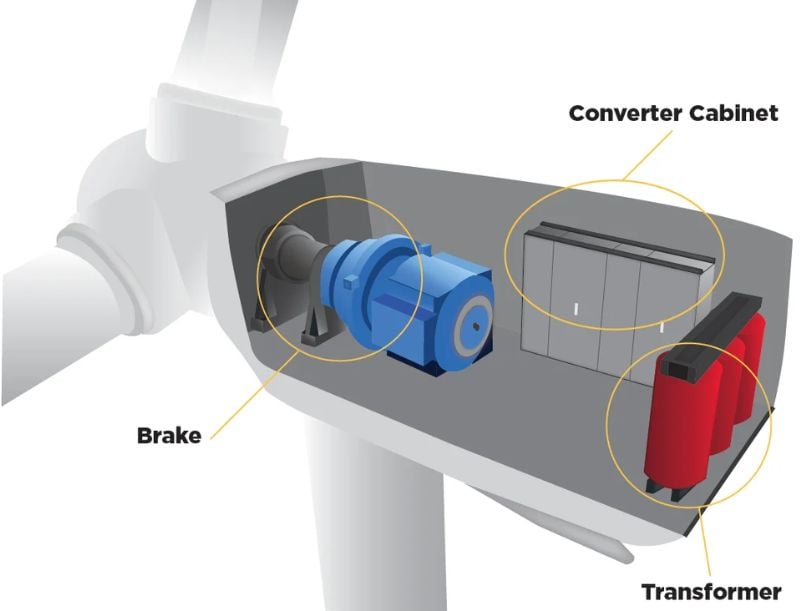
Fire suppression system in a wind turbine. Image used courtesy of Firetrace International
Firetrace International’s report recommends four steps renewable energy operators should take to prevent fire in co-located BESSes and solar or wind farms.
- Take a holistic view. The company advises extending fire suppression techniques to other assets on site.
- Conduct risk assessments. Evaluating assets’ fire risk should be conducted independently and regularly.
- Understand local regulations. Regulations can guide renewable energy operators in installing and maintaining fire suppression systems.
- Regular testing. Operators should schedule regular examinations and test all assets to determine wear and tear and whether maintenance or replacement is needed.
Avoiding BESS Fires Long-Term
Fire risk in electrical systems can never be eliminated, but new technologies can make energy storage systems safer. Developers are experimenting with Li-ion alternatives, such as sodium-ion batteries, which are less prone to thermal runaway. Zinc-based and iron-air batteries are also possibilities.
Battery-free storage systems are also viable alternatives. These include pumped hydro, compressed air, thermal, and gravity storage. Hydrogen storage systems are also emerging. These systems use renewable energy-based electrolysis to create green hydrogen for storage until needed. The hydrogen is then converted back to electricity.
Whatever storage technology is used, it must develop quickly, as the EIA projects that wind and solar energy will double to 25% of all energy generated by 2028.