Facebook
 Google
 GitHub
 Linkedin
Flames of Change: 5-Day BESS Inferno Teaches Hard Lessons
A fire at the world’s second-largest battery storage facility may change designs for future storage systems.
In January, while wildfires ravaged Southern California and Los Angeles, a fire raged at a battery energy storage system south of San Francisco. The Moss Landing Power Plant burned for five days, evacuating more than 1,200 Monterey County residents. Ultimately, more than 80 percent of the batteries were destroyed before the fire burned itself out.
Learn more about the Moss Landing BESS fire. Video used courtesy of NBC News
This fire will likely change the renewable energy industry, causing new standards for the operation and maintenance of large-scale battery facilities and better emergency response action plans.
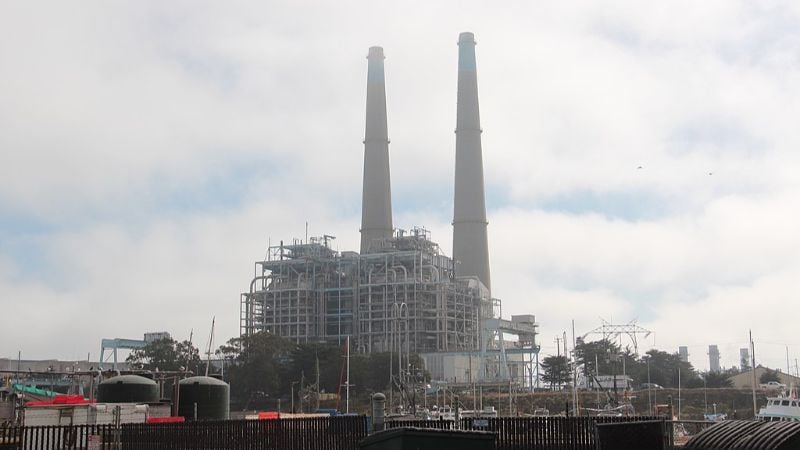
The Moss Landing Power Plant, before the fire. Image used courtesy of Wikimedia Commons
The Need For Battery Storage Systems
Battery energy storage systems (BESS) play crucial roles in integrating and optimizing renewable energy sources. Daily and seasonal variations in sunlight and wind impact solar and wind generation. A BESS enhances grid stability by smoothing out supply-demand imbalances caused by renewable energy’s intermittent nature.
The BESS’s primary function is to store excess renewable energy generated and release it during high-demand times or when renewable sources are not readily available. This process, known as load shifting, maximizes the efficiency of renewable energy use and reduces dependence on fossil fuels. By storing energy during low-demand periods and using it during peak times, BESSes also help reduce energy costs for businesses and households while easing pressure on the grid.
California's statewide battery storage has grown dramatically, from 500 MW in 2019 to over 13,300 MW in 2024. While the current installed capacity is about 20% of the state’s peak demand, the need for battery storage is expected to be 52,000 MW by 2045.
Moss Landing
Texas-based Vistra Corporation's Moss Landing Power Plant and Energy Storage Facility, located about 18 miles northeast of Monterey, is one of the largest battery storage systems in the world, second only to the Edwards and Sanborn Solar Plus Storage Project in the Mojave Desert in California.
The Moss Landing BESS is located on the site of a closed power plant adjacent to a natural gas power plant that is still in operation. The first two phases of the facility went online in 2021 with a capacity of 400 MW, while the third phase in 2023 brought the overall capacity to 750 MW.
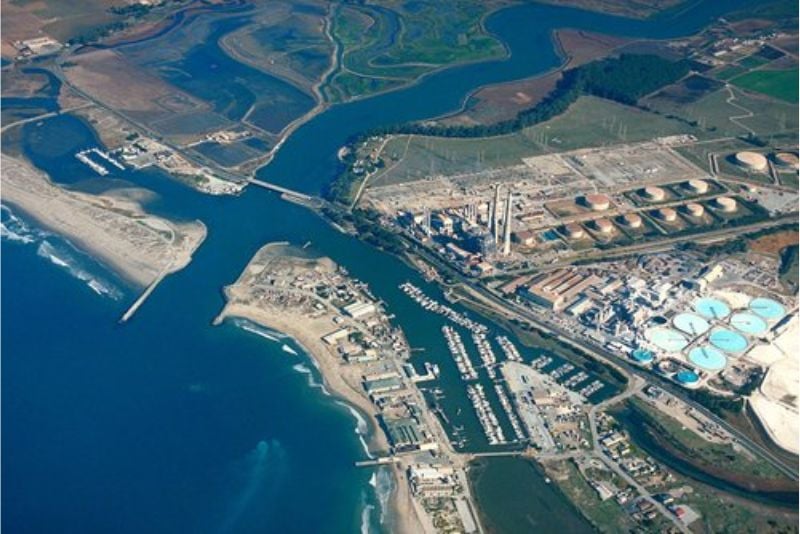
Elkhorn Slough, site of Moss Landing. Image used courtesy of Wikimedia Commons
The Vistra Moss Landing Energy Storage Facility uses lithium-ion battery cells manufactured by LG Energy Solution for its energy storage system. The batteries employ nickel-manganese-cobalt (NMC) chemistry, initially chosen for its high energy density and commonly used for electric vehicle applications. The battery modules are mounted in LG Energy Solution's TR1300 Transportable Rack system. For Phase 1 (300 MW/1,200 MWh), the batteries were installed inside a repurposed turbine hall of the former Moss Landing Power Plant. Phase 2 (100 MW/400 MWh) used similar LG Energy Solution batteries, but they were housed in a separate stand-alone building. The most recent Phase 3 expansion (350 MW/1,400 MWh) added over 110,000 battery modules housed in 112 containers.
The Battery Fire: Contributing Factors
The initial cause of the blaze is under investigation. However, several factors contributed to the severity and spread of the BESS fire at Moss Landing. The fire suppression system within one of the facility's battery racks failed, allowing the fire to spread rapidly. This critical safety feature malfunction was a primary factor in the fire's escalation. A broken camera system in the plant hindered visibility, while superheated gases made it difficult for firefighters to intervene inside the building. Moss Landing is among less than 1 percent of U.S. energy storage facilities housing batteries indoors. This design may have contributed to the fire's intensity by containing heat and gases that would normally dissipate in an outdoor storage facility.
Another factor resulted from the battery chemistry used in the Moss Landing BESS. The affected section used nickel-manganese-cobalt lithium-ion batteries, which have high energy density but are more prone to thermal runaway and intense fires compared to newer chemistries like lithium iron phosphate (LFP). It's worth noting that the use of NMC chemistry in large-scale stationary storage has become less common in recent years due to safety concerns, with many newer projects opting for LFP chemistry instead. Because the Moss Landing facility is already several years old, it used NMC batteries that were more commonly available at the time.
The Moss Landing BESS sits adjacent to the Elkhorn Slough, California's second-largest estuary. It plays a crucial part in carbon sequestration and coastal protection and hosts diverse plant and animal life, including endangered species.
Since the fire, scientists from San Jose State University's Moss Landing Marine Laboratories have detected alarmingly high heavy metal concentrations in soil samples from the Elkhorn Slough Reserve. They note dramatic increases in nickel, manganese, and cobalt levels were found in marsh soil surfaces. These metals are components of lithium-ion battery cathodes, linking their presence to airborne emissions from the fire. Concentrations of these heavy metals were measured to be hundreds to thousands of times higher than pre-fire levels or deeper soil samples.
Battery Safety Changes Coming
The California Public Utilities Commission (CPUC) Safety and Enforcement Division (SED) has initiated an investigation into the incident at Moss Landing. SED staff conducted an initial site visit on January 22, 2025, as part of its ongoing investigation.
On January 27, 2025, the CPUC issued a proposal to enhance the safety of battery energy storage facilities. This proposal includes:
1. Implementing Senate Bill 1383 (SB 1383) to establish new standards for the maintenance and operation of battery energy storage facilities.
2. Increased oversight of emergency response action plans for battery storage facilities, as required by Senate Bill 38 (SB 38).
3. Modification of existing regulations, specifically, General Order 167, which currently governs the maintenance and operation of electric generating facilities in California and includes:
- Adding new safety standards specifically for battery energy storage systems
- Establishing technical logbook standards for battery storage systems
- Expanding requirements for emergency plans related to all electric generating facilities
The CPUC has scheduled a vote on the proposal for March 13, 2025, at a commission meeting. Meanwhile, the CPUC is working in conjunction with other agencies, including communicating with Vistra Energy and requesting information and updates about the incident to determine its cause and how other BESS facilities can be made safer.