Facebook
 Google
 GitHub
 Linkedin
Hydrogel Coating Boosts Solar Panel Efficiency by 13%
Hong Kong Polytechnic University researchers have developed a hydrogel coating to enhance solar panel efficiency at a critical time in the region’s clean energy transition.
Researchers at Hong Kong Polytechnic University (PolyU) have developed a moisture-absorbing polymer composite, or hydrogel, that could enhance heat dissipation in solar panels and increase power generation efficiency up to 13%.
The hydrogel addresses a key challenge for solar panels: hot spots. While converting sunlight into electricity, solar panels also absorb heat, creating hot spots. This thermal buildup raises panel temperatures, reducing power output and shortening operational lifespan.
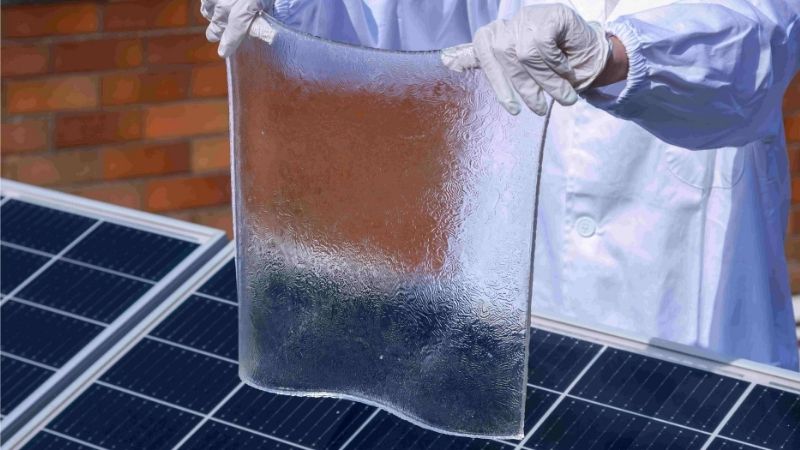
The solar panel hydrogel coating. Image used courtesy of PolyU
Solar Panels, Shading, and Hydrogels
Hot spots are caused by partial shading—sunlight obstructions often created by buildings, trees, or dirt—and are made worse by extreme weather conditions, such as high temperatures, which place extra strain on the panels. Unattended hot spots will reduce the power generation efficiency and increase the risk of fires or other damage to the panels.
Existing cooling systems designed to manage the hot spot effects often depend on externally powered water or air circulation, making them energy-intensive, costly, and maintenance-heavy.
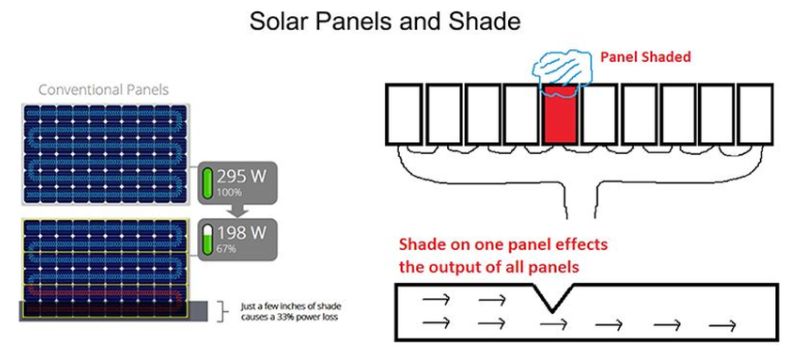
Solar panels, heat, and shading. Image used courtesy of Ya’acob et al.
Instead, the hydrogel coating reduces hot spot issues without requiring modifications to existing circuitry. Applying the hydrogel coating to solar panels reduced hot spot temperatures by up to 16°C (60°F) and increased power output by as much as 13%.
In rooftop and building-integrated systems, the coating could mitigate nearly half of the power losses caused by hot spots, significantly improving the long-term stability and efficiency of building-based solar generation.
The PolyU hydrogel coating has demonstrated beneficial cooling performance and the durability required for long-term outdoor use. Compared with traditional hydrogels, which can experience volumetric shrinkage of up to 46% over time, the PolyU coating limits shrinkage to 34% by combining the natural polymer hydroxyethyl cellulose and the fibrous material leafy cotton thread with the hydrogel matrix to address the critical challenges of cracking and shrinkage.
The research team aims to build on its cooling technology to support the development and wider adoption of emerging photovoltaic systems.
Solar and the Energy Transition
The growth of solar photovoltaics has become integral to the clean energy transition and continues to dominate the renewable energy sector on a global scale. Yet, solar is still struggling to gain a footing in Hong Kong, despite the region’s hopeful net-zero generation goals.
In 2021, Hong Kong, which has been experiencing more hot nights and heavy precipitation due to rising global temperatures, released its Climate Action Plan 2050, outlining strategies and targets to address climate change and achieve carbon neutrality. The plan includes strategies for net-zero electricity generation by phasing out coal, increasing renewable energy to 10% of the electricity mix by 2035, and reaching full net-zero generation before 2050.
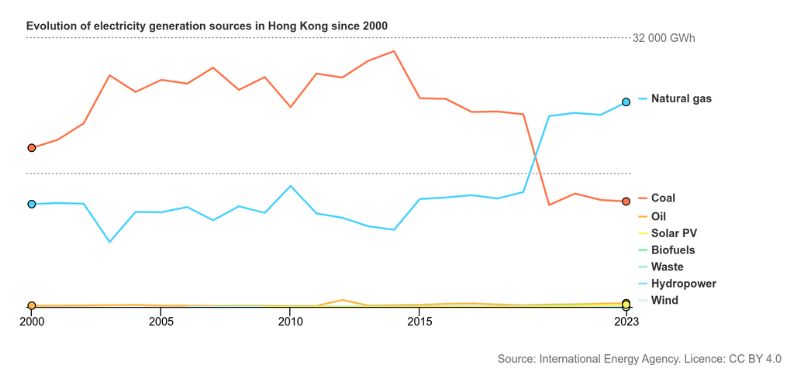
Evolution of electricity generation sources in Hong Kong since 2000. Image used courtesy of IEA
According to the most recent International Energy Agency (IEA) data available on regional electricity usage, solar accounted for just 0.7% of Hong Kong’s electricity generation in 2023. Hong Kong appears to face hurdles to helping solar take off in the region, including other mechanical equipment occupying rooftop space, concerns about shading, and additional funding needs.
The potential impact of the PolyU hydrogel extends beyond Hong Kong and could support wider global adoption of solar energy. As Hong Kong advances its clean energy transition, innovations like this alongside broader policy and infrastructure support will help strengthen the role of solar in the region’s energy mix.