Facebook
 Google
 GitHub
 Linkedin
Dukosi Releases Reference Design for Grid-Scale BESS
Dukosi's battery monitoring system aims to improve the performance, safety, and scalability of large-scale energy storage.
When the demand for scalable and efficient energy storage systems increases, managing high-power battery systems becomes exceedingly complex. Energy storage performs a vital function in balancing electricity grids. This is even more true as grid operators try to incorporate ever-increasing amounts of renewable energy sources.
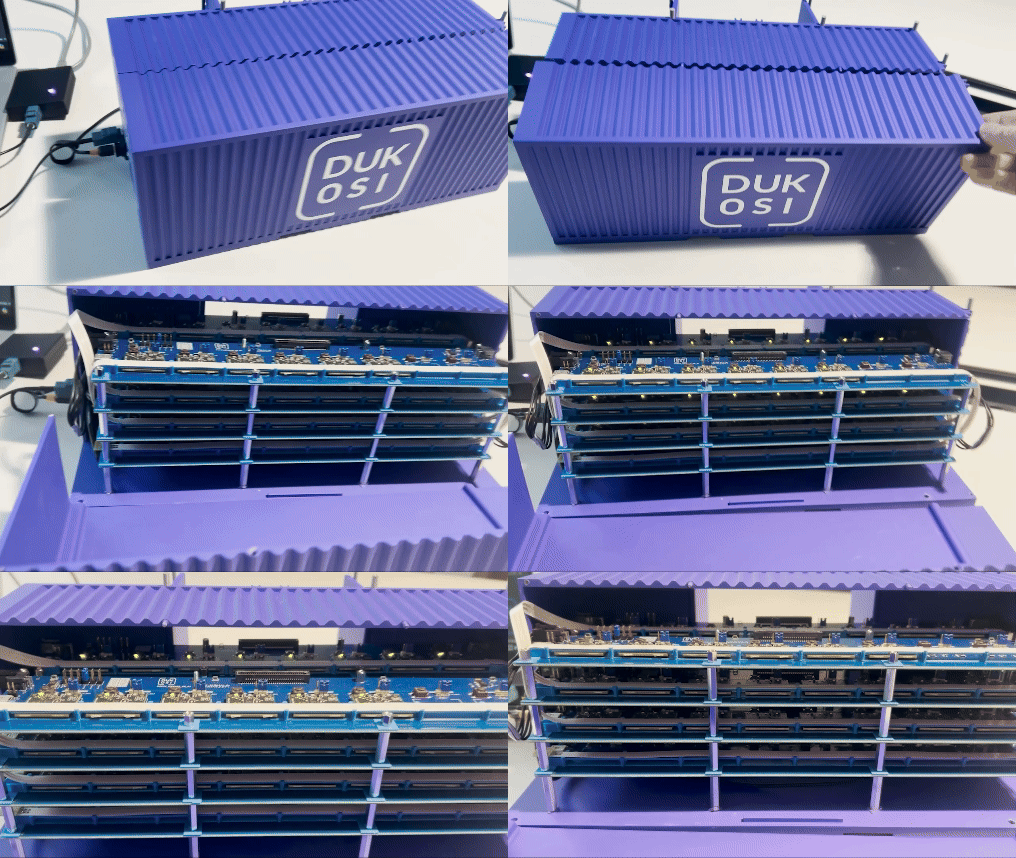
What’s inside Dukosi’s cell monitoring system? Image used courtesy of Dukosi
However, the reliability of these energy storage systems depends on monitoring and maintaining individual battery cells. Battery management systems have struggled with slow data updates and limited accuracy and scalability.
Dukosi Ltd. has introduced a reference design for battery energy storage systems (BESS) featuring its advanced Dukosi Cell Monitoring System (DKCMS). This design includes 54 cells, which is standard for a 900-1500 V rack configuration. Dukosi will provide the tools necessary to further develop designs based on DKCMS.
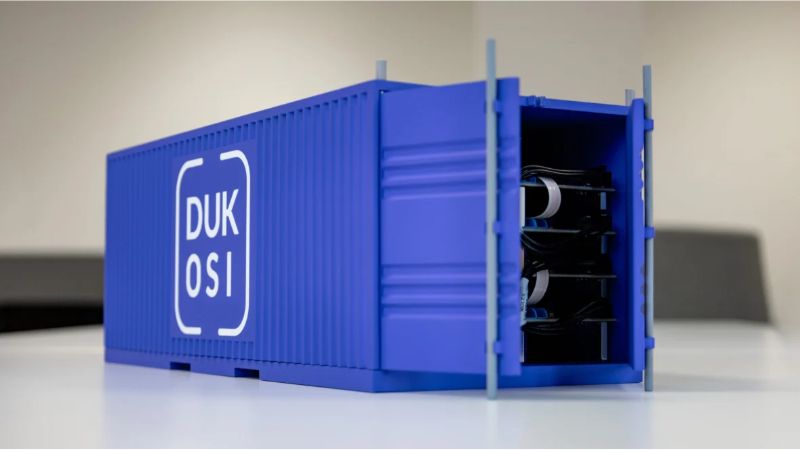
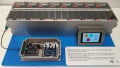
54-channel cell monitor demonstrator for battery energy storage systems. Image used courtesy of Dukosi
Dukosi's Solution for Diverse Energy Storage Needs
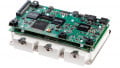
The DKCMS uses DK8102 Cell Monitors, a DK8202 System Hub, and the Dukosi API. The Cell Monitors process the data and send it to the battery management system’s main processor through the System Hub.
Unlike traditional systems that often depend on wired connections and intricate setups, Dukosi uses a contactless communication system called C-SynQ. The cell monitors in the PoC design are not physically attached to live battery cells but instead use near-field contactless technology to communicate with the centralized system hub. This method simplifies the setup and guarantees faster, more reliable data transmission.
Each of the 54 cells (4 racks, containing three rows of 8 and one row of 6) sends real-time data about voltage and temperature to the hub. This provides a synchronized, centralized view of battery performance that had before been difficult to muster, especially at the large scale required by some battery applications. These functionalities provide benefits for grid management, peak shaving, and load shifting, along with other energy storage applications.
Dukosi’s proprietary C-SynQ communication protocol provides bidirectional communication between the System Hub and the Cell Monitor network, which is managed by the System Hub and Dukosi’s API.
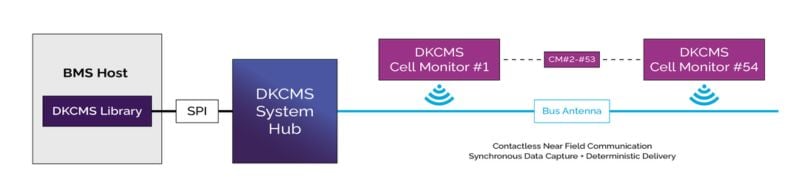
End-to-end BESS proof of concept using DKCMS. Image courtesy of Dukosi
Elevating Battery Performance
Dukosi's solution has some major advantages. The system's modular design and adaptability allow integration into a wide variety of energy storage applications, from behind-the-meter systems to grid-level installations.
Dukosi has worked with Arrow Electronics and eInfochips to create the reference design, which integrates BMS host processors from several manufacturers with the system's hardware and software interface. Dukosi’s monitoring system enhances performance and safety and contributes to the long-term sustainability of storage battery systems. By providing enlightening data about the batteries' condition, the technology enables a new level of forecasting and management of energy storage resources.
Dukosi's new reference design tackles the urgent issues of battery scalability, reliability, and performance in energy storage systems. Its cell monitoring capabilities make it a superior reference design. Dukosi has offered a flexible, accurate, and easy-to-implement solution aligned with today's and tomorrow's needs.