Facebook
 Google
 GitHub
 Linkedin
Exclusive—Powering AI Processors Using a 48 V Factorized Power Architecture
In this Q&A with Vicor, we explore current multiplication and decoupled conversion stages. Both overcome traditional multiphase limitations and drastically cut I²R thermal losses for high-demand loads.
Powering AI processors is not a simple power delivery design exercise. It is one of the most formidable power engineering challenges of our time. The conventional multiphase voltage regulation approach falls short on two attributes: current gain and current density. Both are critical for high-power loads.
The conceptual underpinnings of a 48 V Factorized Power Architecture (FPA) are quite straightforward. However, the design innovation to simultaneously achieve both high current density and high current gain is distinctive.
In the following written interview, our sister publication, All About Circuits, explores FPA with Maury Wood, VP Strategic Marketing for Vicor.
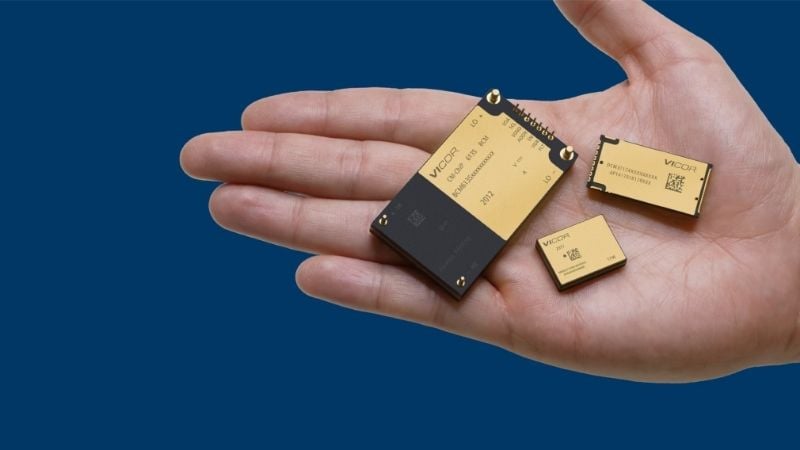
Vicor 48V power modules.
How Factorized Power Architecture Works
All About Circuits: A Factorized Power Architecture separates DC-DC power conversion into two functional stages—regulation followed by voltage transformation. Industry-standard Intermediate Bus Architectures (IBA) use voltage transformation first, followed by regulation. Why is FPA superior to IBA?
Vicor: Wafer-level and panel-level AI HyperProcessors, which can demand 30 to 40 kA TDA, benefit very significantly using a 48 V power delivery network (PDN) as the input to the point-of-load (PoL) DC-DC converter. In the case of FPA, the PoL converter is a voltage transformation module or current multiplier module. A 48 V PDN has four times less current than a 12 V PDN and eight times lower than a 6 V PDN.
As Ohm’s law dictates, the power loss equation is the product of the current squared and the resistance of the current-carrying trace or wire. This equates to 16x and 64x the power loss, respectively, for a 12 V and a 6 V PDN. For an AI HyperProcessor load requiring 30 to 40 kA, these thermal power losses can be unacceptably high.
The Factorized Power Architecture, illustrated in Figure 1, delivers three benefits over multiphase alternatives. It reduces intermediate bus PCB heating. It allows backside decoupling capacitors to sit close to the load. And it lets the front-end regulation stage go on the PCB without a major thermal management hit.
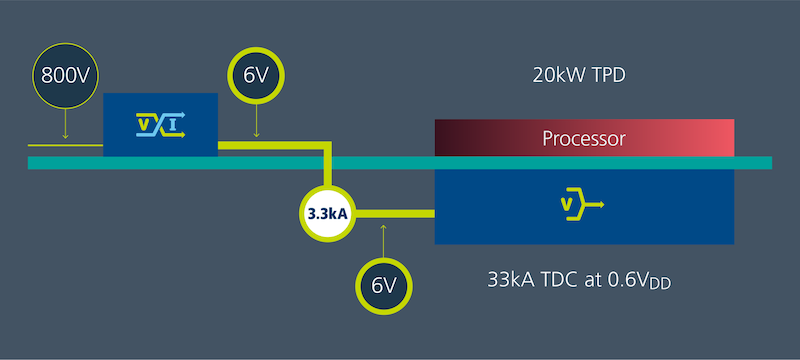
Figure 1. 48 V Factorized Power Architecture provides regulation followed by transformation.
All About Circuits: A voltage transformation module (VTM) is a fixed-ratio converter. This means that it does not regulate the voltage, but that it steps down (transforms) the voltage and multiplies current at a fixed ratio determined by its design. How is regulation achieved?
Vicor: The regulation is achieved by an upstream buck or buck/boost regulator module which regulates the voltage to the VTM at a set point level calculated by the K factor and the desired voltage of the load. For example, if the K factor is 1/48 and the desired load voltage is 1 V, the input to the VTM would be tightly regulated to 48 V.
All About Circuits AI processors have demanding transient response specifications. How does Vicor’s FPA handle these demands?
Vicor: Vicor’s latest generation 48V FPA technology has extremely fast transient response enabled by its very high bandwidth proprietary control loop that utilizes the unique characteristics of the VTM current multiplier. Transient response rate has been measured at less than 100 nsec.
Solving Vertical Power Delivery Challenges
All About Circuits: Because of the extremely high currents required to power the latest generation of AI processors, vertical power delivery (VPD) has been proposed as a way to reduce board or substrate power delivery losses. How does FPA handle the VPD challenges?
Vicor: Best-in-class VPD requires two very important specifications to achieve optimal power delivery: current gain and current density. Without high levels of both of these specifications, tradeoffs must be made, which lead to significantly higher sled (AI accelerator tray), rack, and data center power losses.
Vicor’s current multipliers can achieve a current density of 5 A/mm2 TDC (continuous), 10 A/mm2 peak, and current gains of up to 60x. VPD also has significant mechanical and thermal challenges due to the placement under the processor and this local concentration of heat. Vicor’s current multipliers are 1.5 mm thin and have a thermal resistance of 0.3°C/W, further simplifying their application in AI training and inferencing system designs.
This combination of current density and current gain matters for one key reason. The current multiplier can co-locate with the PCB backside decoupling capacitors. That preserves the thermal reductions that 48 V FPA provides.
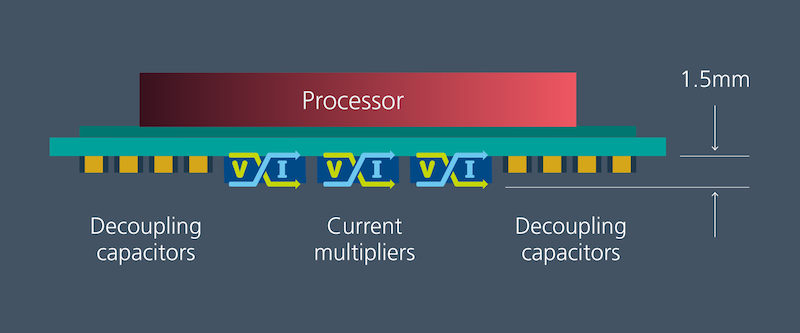
Figure 2. Vicor current multiplier: high current density and high current gain.
All About Circuits: Why is current gain and current density so important in AI accelerator VPD applications?
Vicor: First, consider current gain. A multiphase TLVR voltage regulation solution powers the processor point of load by averaging its input voltage. That voltage is typically 12 V, or 6 V in VPD applications, to increase current density. The ability to use lower voltage FETs, with lower RDS(ON) values and thus lower I²R dissipation, yields higher output current levels and higher current density.
Consider a 20 kW wafer-scale or panel-scale AI HyperProcessor with a 0.6 VDD core supply rail. It requires 33,333 A, and the 6 V intermediate bus must conduct roughly 3,333 A. A 48 V voltage transformation module current multiplier at the point of load reduces that current to a manageable 417 A.
Assuming 200 μΩ PCB or substrate impedance, the 48 V FPA dissipates 35 W. By comparison, the 6 V IBA instance loses 2.2 kW — 64x higher.
These current multipliers have a continuous output current (TDC) of 600 A, with a roadmap to reach higher levels. This high output current minimizes the number of VPD modules on the PCB backside.
High current density converters simplify placement and performance constraints. The current multiplier's 5 A/mm² density and high transient bandwidth let it sit in the essential bypass capacitor field on the backside of the accelerator PCB. The 6 V multiphase solution, at a lower 2 A/mm² density, needs a larger footprint to deliver the same aggregate current. It generally displaces the critical bypass capacitors, forcing relatively tall, stacked power modules to integrate them instead. This leads to mechanical assembly and thermal management design challenges.
The Bottom-Line Efficiency Payoff
All About Circuits: How much of an improvement in AI factory performance or power utilization effectiveness (PUE) can be projected when changing from a 6 V multiphase TLVR approach to a 48 V FPA approach with current multiplication?
Vicor: The thermal power loss savings enabled by 48 V FPA can add tens of basis points to overall AI factory power utilization effectiveness, compared to 6 V multiphase TLVR architectures. (One basis point is 0.01%.)
Gigawatt AI factories are projected to arrive early next year. Assuming a typical starting PUE of 1.20, a 50 basis point improvement to 1.15 yields roughly 21.7 megawatts in power savings. This is equivalent to 20 additional racks of AI compute capacity under the same utility power purchase agreement.
This approach brings 48 V to the processor point of load. That minimizes thermal losses across the high-current power chain. Over time, those reduced I²R losses add up to significant OPEX savings on utility electricity.
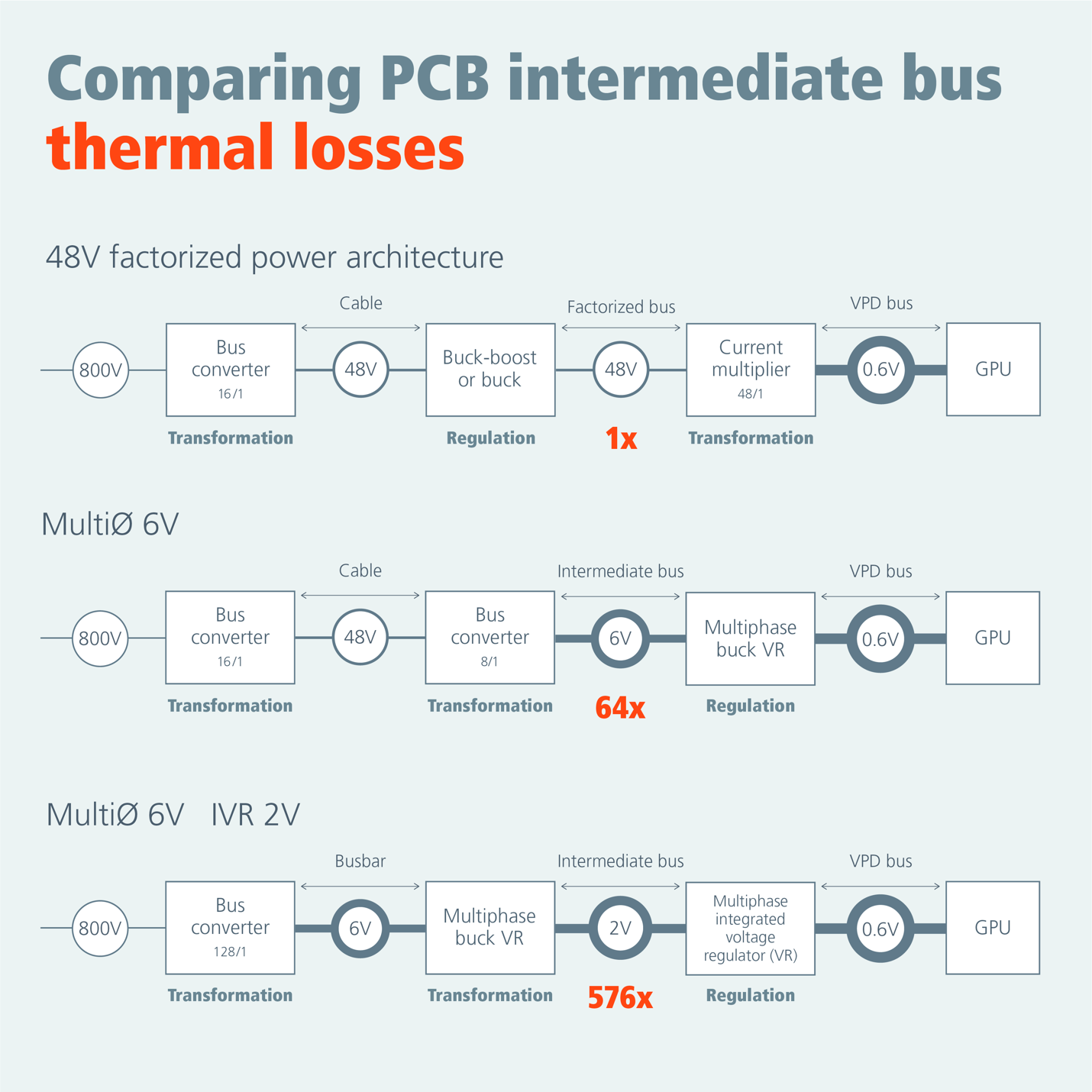
Figure 3. 48 V FPA delivers power to the processor point of load. [click to enlarge]
All About Circuits: In summary, what are the most important reasons for adopting 48 V Factorized Power Architecture for powering the processors in AI factories?
Vicor: Our FPA brings 48 V to the processor point of load, minimizing the thermal losses across this very high current power chain. From an operator's perspective, these reduced I²R thermal losses enable higher data center compute density. That translates to higher ROI, better-performing AI processors, improved transient performance, and simpler thermal management.
All images used courtesy of Vicor.