 Facebook
 Google
 GitHub
 Linkedin
Thorizon Targets Molten Salt Corrosion With Replaceable Cores
A joint research program will assess material degradation and component lifetimes to support the development and licensing of Thorizon’s next-generation nuclear reactors.
Dutch reactor developer Thorizon and research institute TNO have launched a joint program to investigate corrosion and material degradation in molten salt reactors. The research will use laboratory testing and predictive models to estimate component lifetimes, support licensing of Thorizon’s Pioneer demonstrator in the Dutch coastal village of Petten, and inform the design of its planned commercial Thorizon One reactor.
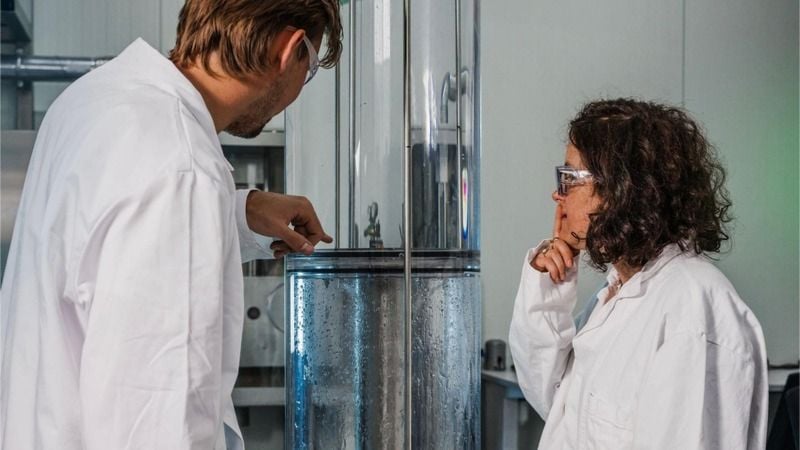
Thorizon's molten salt reactor technology lab. Image used courtesy of Thorizon
Materials Testing and Reactor Engineering
Molten salt reactors operate at relatively low pressures, but their structural materials must withstand high temperatures, corrosive salts, and radiation.
In a liquid-fueled molten salt reactor, nuclear material dissolves in circulating salt that also transports heat. Unlike conventional reactors, where solid fuel pellets sit inside metal cladding, this puts fuel-bearing liquid into direct contact with the primary circuit.
Moisture and oxygen introduced during salt preparation can accelerate reactions with metal surfaces, while fission products change the salt’s composition during operation. Corrosion can selectively remove constituents from an alloy, weakening the material without an obvious reduction in overall wall thickness.
Durability testing must account for differences in salt chemistry, operating temperatures, radiation exposure, and changes in the metal's internal structure, all of which can affect component lifespan.
Thorizon's small modular reactor design uses sealed cartridges to hold molten fuel salt, with replacements planned every five to 10 years. This could allow operators to periodically inspect and replace salt-exposed components, limiting their exposure to corrosive conditions over the reactor's operating life.
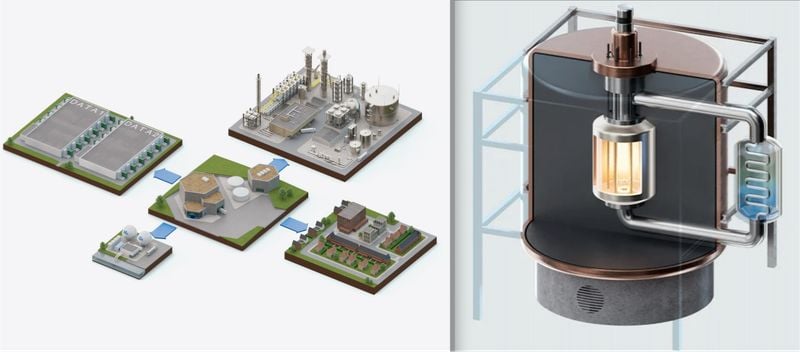
Visualizations of Thorizon's plant (left) and reactor design (right). Images used courtesy of Thorizon
According to Thorizon's technical design, the core houses individually contained fuel cartridges, each equipped with a circulation pump and heat exchanger that transfers heat to a separate circuit. The modules work together to sustain the nuclear reaction, but the primary salt remains contained within individual cartridges. This arrangement establishes a defined set of parts for scheduled removal and may allow manufacturing and inspection procedures to be standardized across units.
Component durability is an important engineering consideration because pumps, heat-transfer surfaces, and containment structures must withstand high temperatures, corrosive salts, and radiation throughout their operating life.
Materials research will help determine whether the proposed replacement interval is technically feasible. TNO will lead corrosion testing and material characterization, alongside failure analysis and modeling to estimate component lifetimes.
Watch a pump motor drive test. Video used courtesy of Thorizon
The findings will help Thorizon select suitable materials and assess whether the cartridges can operate reliably throughout the planned five- to 10-year replacement period.
The partners are now outlining the testing program, with preliminary work underway at Thorizon's Amsterdam site and TNO's research laboratories in Petten, a small Dutch village along the North Sea coast. The Netherlands has outlined a roadmap for potentially reaching 7 GW of nuclear capacity by 2050.
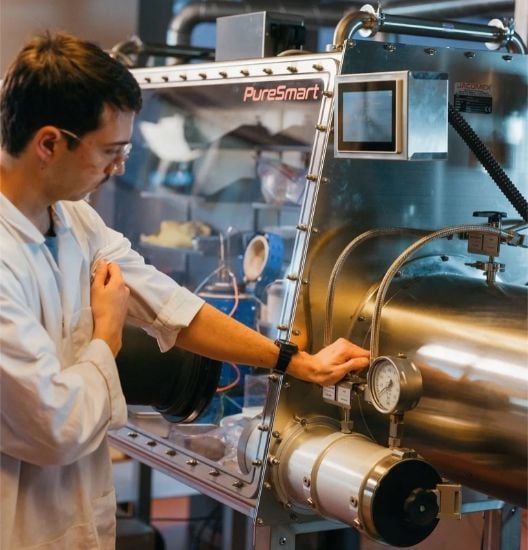
Thorizon's molten salt technology lab. Image used courtesy of Thorizon
Demonstrations and Plans for Commercial Deployment
Thorizon is pursuing a staged demonstration program, with a non-nuclear pilot preceding Pioneer, a smaller nuclear reactor designed to validate core operation without generating electricity. Thorizon One, the company's proposed commercial plant, is designed to generate 100 MW of electricity, with construction targeted for the early 2030s.
The pilot will evaluate cartridge assembly and operation of the primary system, while Pioneer will provide data on reactor performance under nuclear conditions. The company has identified the existing nuclear site at Borssele for its first commercial plant, though deployment remains subject to development and regulatory approval.
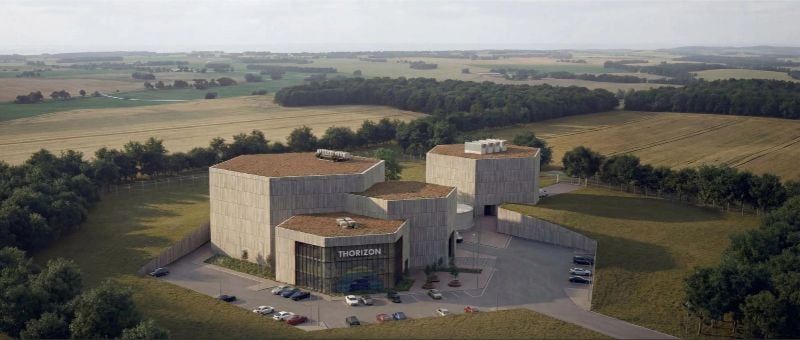
A rendering of Thorizon's first commercial plant. Image used courtesy of Thorizon
For molten salt technology more broadly, phased development addresses the gap between laboratory measurements and evidence needed for licensing. Non-nuclear equipment tests can assess circulation, heat transfer, and fabrication, but can't reproduce every effect of neutron irradiation or changing fuel chemistry. Results from the materials program and later reactor operation will therefore likely serve complementary roles in demonstrating credible component lifetimes.
In October, Thorizon and uranium enrichment company Urenco signed a memorandum of understanding to examine potential fuel cycle cooperation. The agreement covers possible enriched-uranium supplies for Thorizon’s reactors and the potential use of depleted uranium as fuel.