Facebook
 Google
 GitHub
 Linkedin
Gyrotron Technology Goes Deep For Geothermal Energy
A gyrotron device, more commonly used in nuclear fusion experiments, may hold the key to globally accessible geothermal energy.
Quaise Energy, an MIT spinoff, is developing gyrotron technology for deep geothermal drilling.
Gyrotrons are powerful vacuum electronic devices that generate high-frequency electromagnetic waves in the microwave to terahertz range. They operate on the principle of electron cyclotron resonance in a strong magnetic field. Gyrotron technology has been around for decades and is used to heat material in nuclear fusion experiments.
Quaise Energy is developing technology to mine precious metals, create deep underground locations to store nuclear waste, and access geothermal resources within the Earth’s crust.
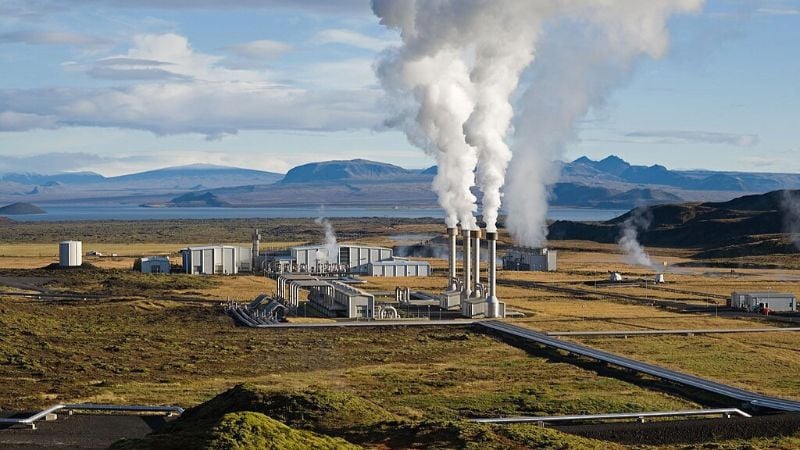
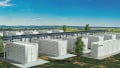
Geothermal plant in Iceland. Image used courtesy of Wikimedia Commons
Geothermal Energy
Geothermal energy is derived within the Earth, originating from the residual heat from the planet's formation 4.5 billion years ago and the decay of radioactive elements in the Earth's mantle and core. This thermal energy is continuously produced and stored in rocks, fluids, and steam beneath the Earth's surface.
Geothermal energy is regarded as a renewable energy source because the heat is constantly replenished within the Earth. The temperature increases with depth, following the geothermal gradient, which averages about 3°C per 100 meters. It can be harnessed from various depths, ranging from a few meters to several kilometers below the surface. Most current commercial geothermal plants are located where natural conditions—typically near tectonic plate boundaries or areas of volcanic activity—allow for energy extraction at shallow depths of up to 400 feet. Deeper than that, conventional drilling becomes less practical since, at depth, the crust becomes hotter and harder, wearing down mechanical drill bits.
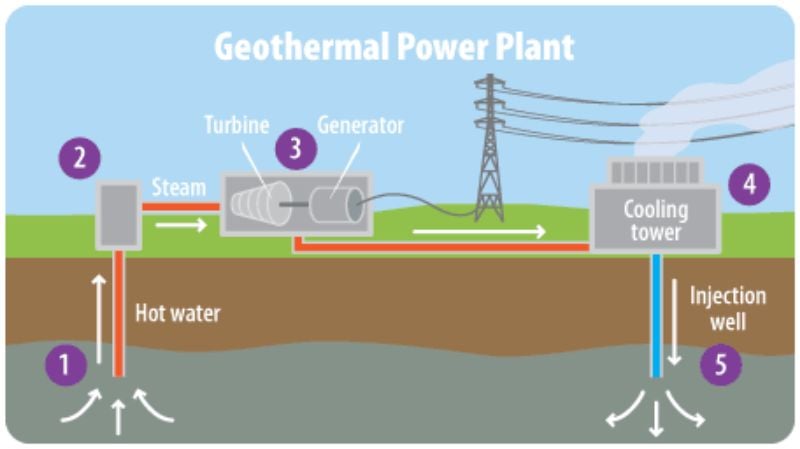
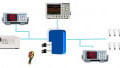
Typical geothermal power plant system. Image used courtesy of Environmental Protection Agency
Geothermal energy is used for industrial processes, space heating and cooling, electricity generation, and agriculture.
New Way to Reach Depth
The concept created at MIT and now under development at Quaise Energy uses gyrotrons to generate high-power millimeter waves. These waves are directed down a borehole to vaporize rock, allowing much deeper drilling than conventional methods and potentially reaching depths of up to 20 kilometers. This provides access to superhot rock with temperatures exceeding 374°C, which can be used to create superheated steam to power a turbine and electric generator.
This concept provides faster drilling than traditional methods. Quaise aims to complete deep boreholes in about 100 days. Access to geothermal resources that were previously out of reach will also make clean energy generation viable in more locations globally. Rather than turning a drill bit, about a megawatt of power will be used to vaporize rock and extract gas.
The new system could also use the obsolete and mothballed coal and fossil fuel power plant’s steam turbines and generators along with transmission lines that still run to the grid. Drilling a deep borehole at the plant geothermally creates steam that could be used to repower the plant, allowing it to produce electricity without any harmful greenhouse gas emissions.
Gyrotron Challenges
Implementing gyrotrons for geothermal energy extraction is not without engineering and technical challenges. One of the primary challenges is transmitting a clean, high-energy density beam without breakdown. The gyrotron beam must maintain its integrity and power over long distances as it drills deep into the Earth's crust. They also must be able to operate nearly continuously during the drilling process. While gyrotrons are commercially available, they have never been used continuously for extended periods, and ensuring reliable 24/7 operation in harsh drilling environments is a major hurdle.
Maintaining open wellbores at extreme depths and temperatures will also be crucial. Although the gyrotron drilling process creates a glass wall that may help prevent collapse, ensuring long-term stability remains challenging. Additionally, developing materials and equipment that can withstand the extreme temperatures and pressures encountered at great depths is essential. Efficiently removing vaporized rock and debris from the borehole over great lengths and properly flushing rock vapors are crucial for maintaining drilling progress.
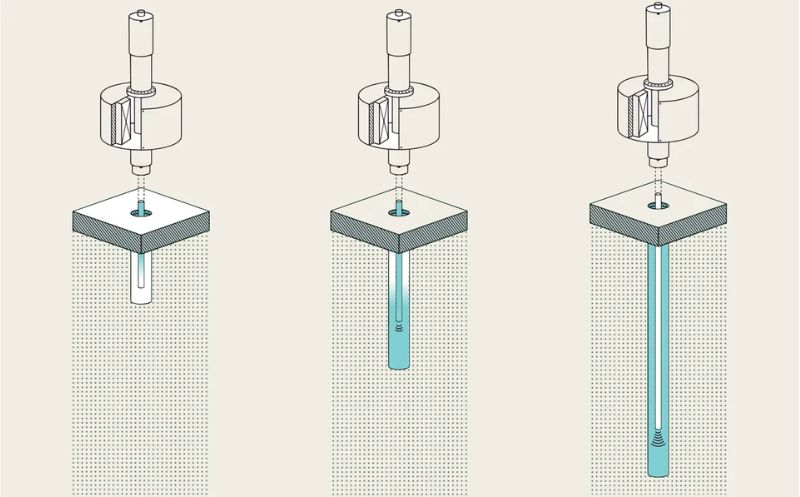
Gyrotron drilling. Image courtesy of Quaise Energy
Moving Forward
Transitioning from laboratory experiments to full-scale field operations presents numerous challenges. Quaise Energy is working on scaling up its tests incrementally before attempting field demonstrations. A test facility in Marble Falls, Texas, will be used to demonstrate the feasibility of hard rock drilling using a gyrotron. After that, a pilot plant will be set up in a geothermally active zone in the western U.S. by 2026.
While gyrotron drilling may ultimately prove more cost-effective than conventional methods for deep geothermal wells, overcoming the initial technical and engineering hurdles will require significant investment. Quaise has raised more than $95 million, primarily from private investors and companies like Japan’s Mitsubishi.