Facebook
 Google
 GitHub
 Linkedin
AI Stabilizes the Grid by Sharing Energy Between Buildings
Researchers demonstrated how algorithms can facilitate energy-sharing between urban buildings to ease grid strain.
Researchers from the Korea Institute of Energy Research have created an artificial intelligence-based energy management system to exchange electricity between residential and commercial buildings.
This approach yielded a 38.4% energy self-sufficiency rate, meaning the building could tap into its internal power generation to meet demand without relying on external sources. The system also achieved 57.6% self-consumption, allowing the facility to use electricity on-site rather than exporting to the grid.
These metrics mark substantial improvements to the status quo’s 20% sufficiency and 30% self-consumption without the energy-sharing function. In addition to supporting power stability, the solution also cut electricity costs by 18% annually through demand-side management.
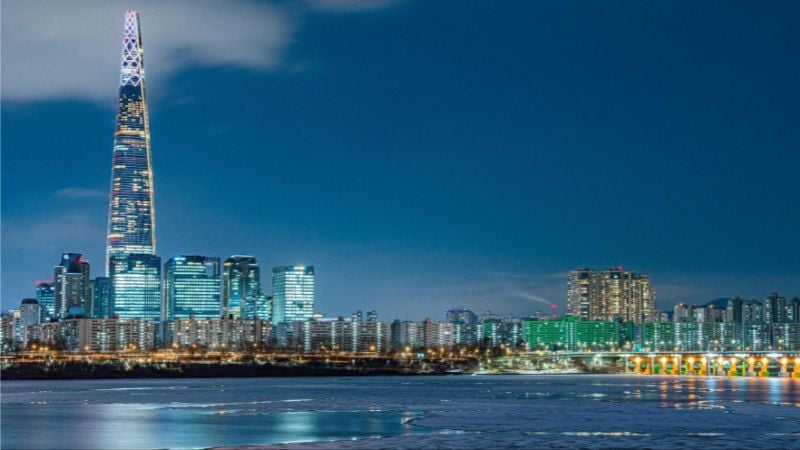
Buildings in Seoul, South Korea. Image used courtesy of Pexels/by Ethan Brooke
Grid Stability Gaps
The researchers wanted to address operational gaps in urban power grids. In South Korea, fossil fuel-fired plants typically step in to manage load fluctuations from variable solar and wind resources. Renewables accounted for 9.6% of South Korea’s power generation mix last year, according to the Institute for Energy Economics and Financial Analysis, and project development activity continues to grow. Still, coal and oil remain the nation’s largest energy sources.
Rather than building new coal and gas plants to manage renewable volatility, battery energy storage systems could perform a similar task by discharging excess power during peak demand. Still, Korea’s rapid solar expansion has outpaced storage projects. According to the Renewable Energy Institute, the country’s cumulative battery storage capacity totals about 4 GW/10 GWh. However, the government’s long-term strategy targets 24.5 GW/127 GWh of battery and pumped hydro storage by 2036.
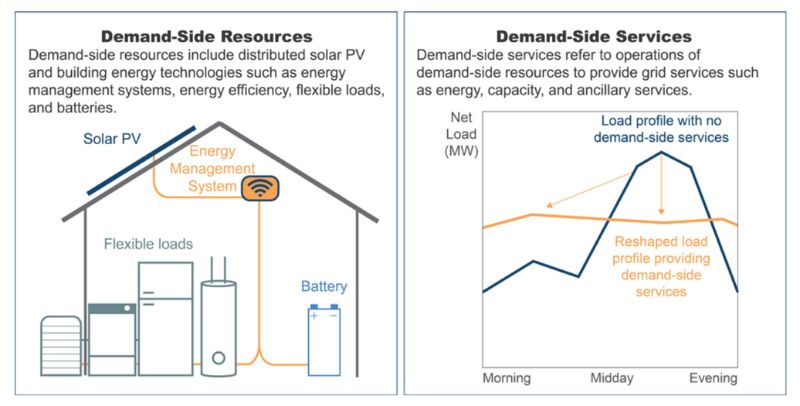
Demand-side resources for buildings. Image used courtesy of the National Renewable Energy Laboratory (Page 11)
In the building sector, carbon neutrality requires integrating a higher share of renewables in the larger power grid, electrifying heating, ventilation, and air conditioning (HVAC) systems, and facilitating flexible demand-side interactions between buildings and the grid. South Korean authorities require all public buildings to have an integrated smart building energy management system to control and optimize energy consumption.
In their paper, published in Sustainable Cities and Society, the Korea Institute of Energy Research team revealed that combining these demand-side solutions with an energy-sharing mechanism could efficiently reduce grid strain from urban offices and residential buildings.
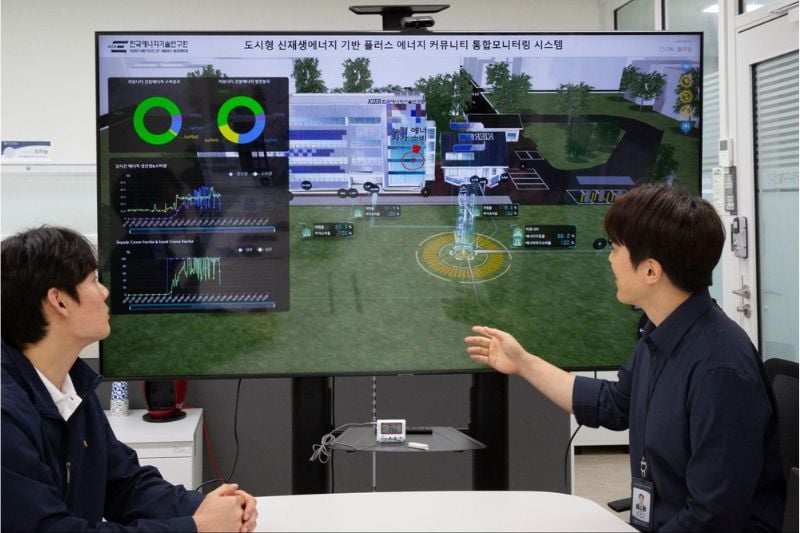
Researchers review energy management data. Image used courtesy of the Korea Institute of Energy Research
Machine Learning Algorithms Boost Flexibility
First, the researchers used machine learning clustering techniques with domain-based interpretation of daily and seasonal profiles to study building energy consumption and renewable production patterns. They also weighed other considerations, including weather, occupant behavior, system design factors like renewable power supply and HVAC capacity, and operational controls such as energy storage and thermal systems.
The analysis accounted for low-probability high-impact (LPHI) events like heatwaves, where sudden spikes in demand could risk blackouts when production is insufficient. The data revealed that LPHI events occur only 1.7 days a year (0.5% frequency and 1.8% of annual net energy) but substantially affect grid stability.
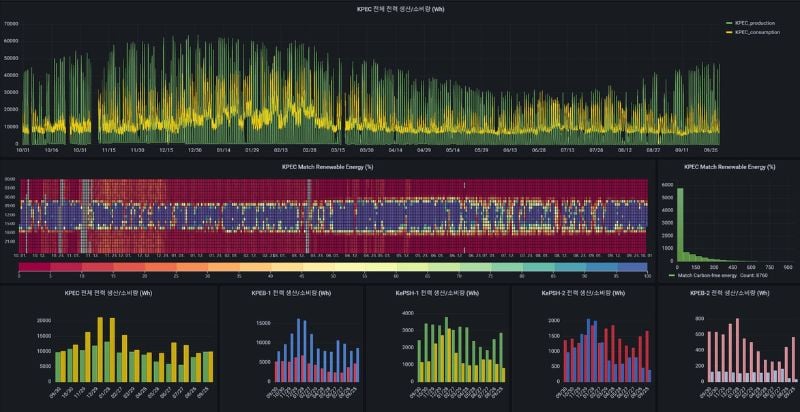
Operational data from the research project. Image used courtesy of the Korea Institute of Energy Research
The team combined this data into an algorithm to match peak demand with production in a 100% electrified urban community powered by renewables and integrated HVAC, energy storage, and building thermal mass systems. Ultimately, their algorithm helped maintain a daily energy balance and could easily respond to LPHI events.
Replicating the system at a community scale unlocked superior self-sufficiency and self-consumption rates than conventional power systems. The demonstration also marked a significant research milestone by simulating 107 MWh of energy consumption, seven times larger than previous studies.