Facebook
 Google
 GitHub
 Linkedin
3 Projects Making Energy Cleaner and Leaner
Researchers have made breakthroughs in carbon-free energy, battery electrodes, and grid modeling.
While renewable energy adoption continues to accelerate, solar and wind power's variability presents challenges for maintaining a stable and reliable grid. Traditional fossil fuel-based backup generation remains a common solution, but long-duration storage, advanced power management strategies, and intelligent grid optimization methods offer promising alternatives.
Researchers worldwide are exploring ways to improve energy storage efficiency, enhance battery performance, and integrate predictive analytics into grid management. Three recent developments focus on carbon-free electricity, extended battery life, and neural networks for smart grids.
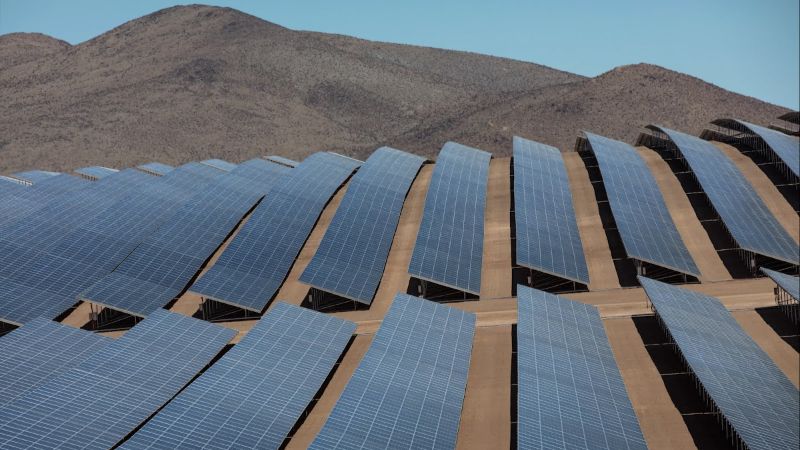
Solar facility in Chile used by Google. Image used courtesy of Google
1. A 24/7 Carbon-Free Energy Initiative
Although 100% green electricity tariffs have reduced fossil fuel reliance, power grids often still require fossil backups during nighttime and at peak demand periods. To overcome this limitation, researchers from the Technical University of Berlin, Princeton University, and Google have developed a 24/7 carbon-free electricity framework that guarantees every hour of consumption is matched by renewable energy.
The system leverages a combination of electricity production monitoring, advanced storage solutions, and controllable power sources like long-duration iron-air batteries and Allam cycle turbines. The latter is a power generation system that burns natural gas using pure oxygen in a high-pressure, CO₂-rich environment to drive a turbine while inherently capturing CO₂ for near-zero emissions.
Utilizing Python for power system analysis (PyPSA), open-source software integrated with a learning model, the team simulated scenarios in which a 1% to 10% corporate commitment to 24/7 CFE initiative causes substantial cost reductions. For example, a 3% commitment could quadruple long-term storage deployment and cut costs by 25% by 2030, while Allam cycle turbine expenses may drop by 12% to 38%. Implementing early projects will drive cost savings through economies of scale and make 24/7 CFE accessible to a broader range of businesses.
2. Flash Irradiation Boosts Battery Life
In lithium-ion batteries, thick electrodes offer increased energy density, a streamlined structure, and better manufacturing efficiency. However, they have drawbacks, such as increased resistance to lithium-ion and electron movement and restricted electrolyte penetration, which degrade electrochemical performance and limit rate capability. Korea Institute of Machinery and Materials has developed an electrode activation technology that incorporates a roll-to-roll compatible flash process.
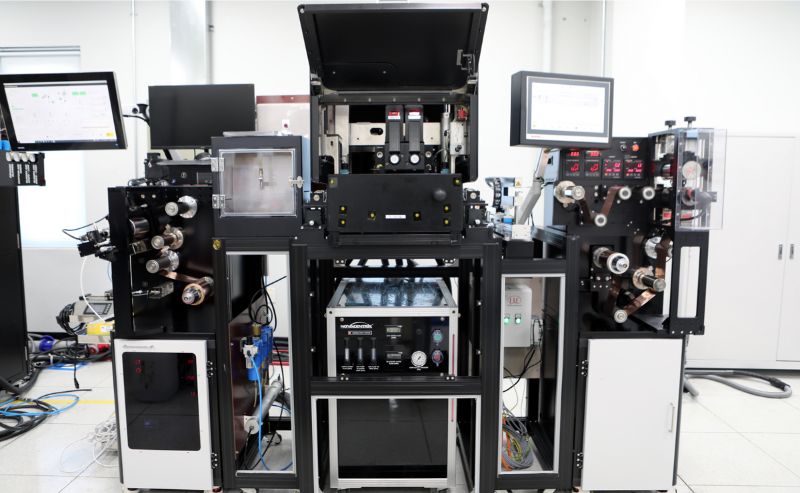
Technology for flash irradiation. Image used courtesy of Korea Institute of Machinery and Materials
The flash irradiation process involves applying high-intensity light pulses of less than one millisecond to induce rapid photothermal reactions. This process instantly carbonizes binders, expands graphite interlayers, increases porosity, and enlarges the electrode-electrolyte interfacial area. These structural modifications enhance ion and electron transport and mitigate the system’s performance and mechanical degradation.
Pilot-scale tests demonstrated that this technique significantly reduces energy consumption and processing time during electrode drying. The team plans to further refine and validate the technology for adoption by domestic lithium-ion battery manufacturers and in nickel-cobalt-manganese cathodes.
3. Smart Power Grid Assessment
Radboud University researchers have developed a method based on graph neural networks that model the grid as an interconnected graph of substations and cables with defined electrical properties. This technique evaluates the entire network holistically and reduces computation time by up to a factor of 1,000. It also improves accuracy by approximately 5% compared to conventional methods. The method involves solving a mathematical optimization problem to identify all possible cable switching options and then using graph topologies, initial voltage values, and load flow computations to determine the optimal configuration with the fewest switches in the grid.

n-1 compatible and non-compatible topologies. Image courtesy of Van Nooten et al.
The system also learns to identify patterns and predict network behavior under various failure scenarios. Grid operator Alliander implemented the method on a medium-voltage grid. Extensive simulation data and rigorous testing show that it may enhance operational efficiency and support real-time contingency management.
The Next Phase of Energy Storage and Grid Optimization
More resilient and sustainable energy infrastructure depends on technological advancements that can address today's pressing challenges. As these technologies mature, their deployment at scale depends on continued investment, regulatory support, and collaboration between researchers, utilities, and manufacturers. Some of these innovations, like the 24/7 carbon-free electricity framework, have already entered the early implementation stage, while others, such as flash irradiation for battery electrodes, are still undergoing validation for commercial use.