Facebook
 Google
 GitHub
 Linkedin
3 Projects Closing the EV Charging Infrastructure Gap
The EV charging infrastructure is falling behind. These three initiatives are pushing it forward.
The International Energy Agency indicates that electric vehicle charge point installations must increase six-fold by 2035 to meet consumer demand and government targets. Several public and private initiatives are looking to help address this growing challenge.
Global nonprofit Smart Freight Centre, an organization focused on climate initiatives in the freight sector, has organized a shipper and carrier consortium to increase EV adoption technologies in the long-haul trucking industry.
Next, Ford Motor Company and Southern California Edison are teaming up on a smart-charging initiative that provides monetary incentives to Ford EV drivers in exchange for charging their vehicles during off-peak hours.
Finally, Beam Global is rethinking the function of streetlights. The company is launching its BeamSpot curbside EV charger, designed to replace standard streetlights with a combined lighting and charging solution powered by renewables.
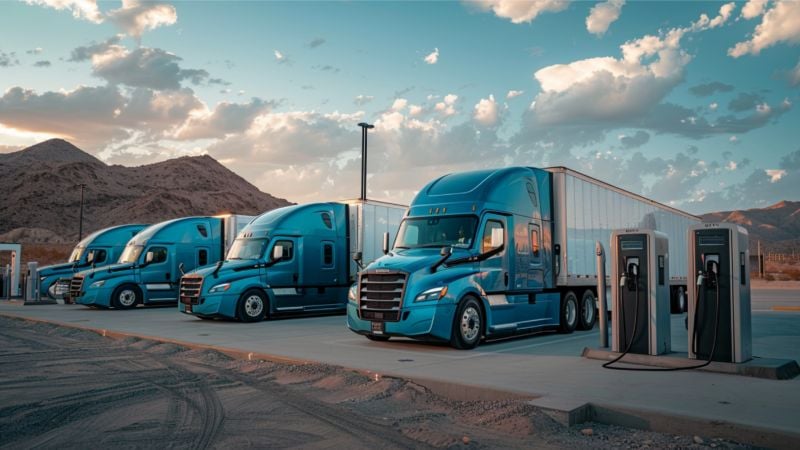
Long-haul, heavy-duty EV charging. Image used courtesy of Terawatt
Electric Trucks for Long-Haul Freight
Smart Freight Centre has assembled a coalition of carriers and shippers to help drive adoption of heavy-duty EVs for freight transport. The group includes big names like AIT Worldwide Logistics, DB Schenker, Maersk, Microsoft, and PepsiCo.
These industry leaders have committed to a pilot program to test using battery-electric long-haul trucks for freight transport operations along the I-10 corridor between Los Angeles and El Paso.
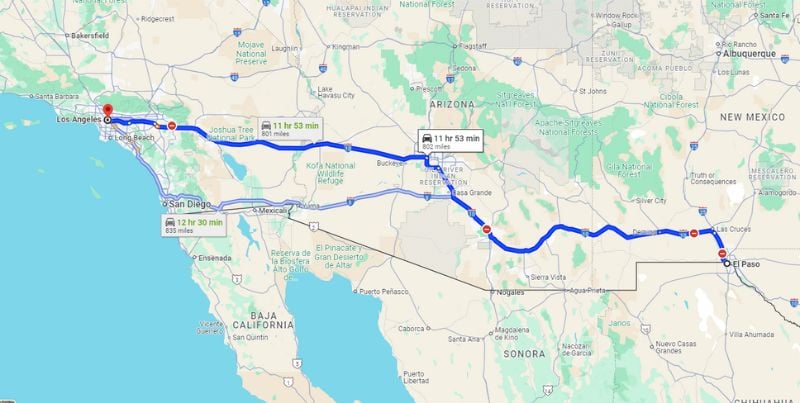
I-10 corridor from Los Angeles to El Paso. Image used courtesy of Google Maps
The charging solutions partner for the project will be Terawatt Infrastructure, which has already developed six charging hubs along the I-10 route and will provide software, operations, and maintenance support.
The pilot aims to demonstrate the potential for long-haul freight transport using battery electric trucks to help shippers and carriers meet emission goals while achieving cost parity, or better, with traditional internal combustion engine trucks.
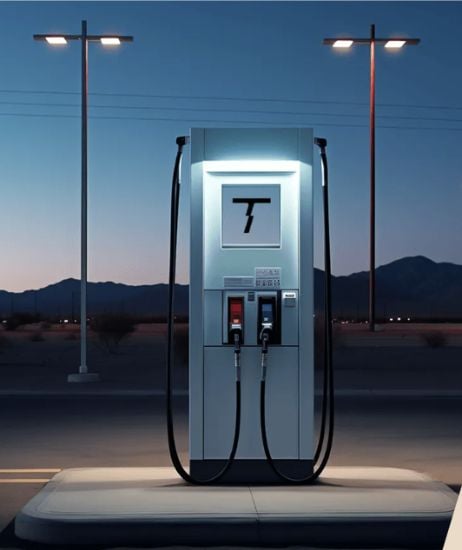
Electric truck EV charger. Image used courtesy of Terawatt
The freight industry has generally demonstrated a strong commitment to electrification and decarbonization. According to Charles van der Steene, Regional President for Maersk North America, his company aims to achieve net zero emissions by 2040, and decarbonization of its trucking operations will play a key role.
Managing a Strained Grid
Southern California Edison’s (SCE) Emergency Load Reduction program (ELRP) provides customers with financial incentives of up to $1 per kWh of energy reduced during periods of peak demand. SCE is now partnering with Ford Motor Company to get their EV drivers onboard with the program.
When SCE declares an ELRP event, customers can receive a rebate against any reduction in their baseline consumption between 4 p.m. and 9 p.m. The program runs between May 1 and October 31, when electricity demand spikes can be the greatest.
In its partnership with Ford, when SCE declares an event, Ford will notify its EV owners and automatically update the vehicle's charger settings to reduce power demand during the event.
Drivers can override the charger settings if they decide they need to charge their vehicle during an event.

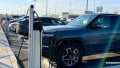
Charging a Ford EV. Image used courtesy of Ford Motors
Repurposing Streetlights
To help improve EV charger access, Beam Global is launching its BeamSpot curbside EV charging system powered by solar, wind, and grid power. The novel configuration is designed to replace existing street lamps with BeamSpot units that provide street lighting and EV charging services and are largely self-powered from renewables and battery storage.

Renewable powered street lights for EV charging. Image used courtesy of Beam Global
The solution eliminates the need for separate charging infrastructure, and with the additional renewable energy sources, it does not require any modification to standard streetlight grid power interfaces.