Facebook
 Google
 GitHub
 Linkedin
Underwater Energy: Wave Converter Nearing Commercial Deployment
CETO’s certification is a major step toward making wave energy converters commercially feasible.
Renewable energy has grown significantly, particularly with solar and wind power advancements. However, wave energy, a promising yet underutilized resource, is gaining attention for its potential to provide consistent and predictable energy. Oceans cover 70% of the Earth’s surface and hold enormous untapped energy reserves that could theoretically meet a substantial part of global energy demand.
This animation shows the CETO wave energy converter in action. Image used courtesy of Carnegie Energy
Despite its promise, wave energy faces numerous technical and environmental challenges, including the durability of devices in harsh marine environments, high installation costs, and concerns about impact on marine ecosystems. Carnegie Clean Energy’s CETO wave energy converter (WEC) is now pursuing certification from Lloyd's Register to confirm that CETO complies with the International Electrotechnical Commission's Renewable Energy standards.
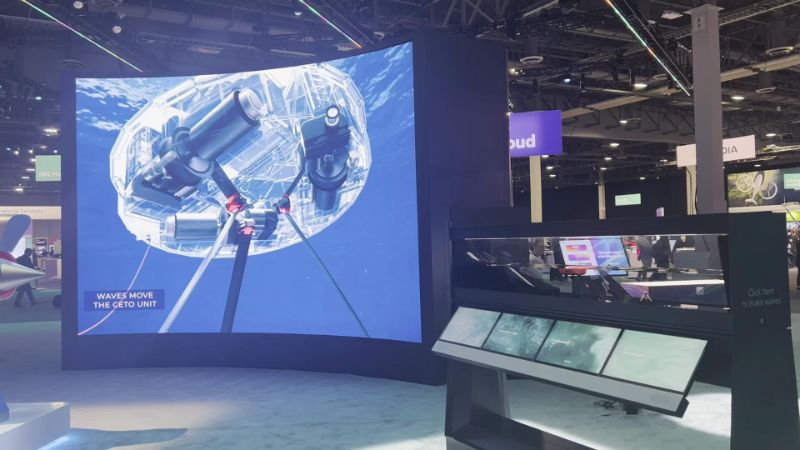
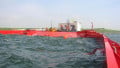
CETO wave converter demonstration. Image used courtesy of Carnegie Energy
Challenges in Harnessing Wave Energy
Wave energy is a renewable resource derived from the motion of ocean waves.
Unlike competing renewable energy sources, such as solar or wind, waves offer more consistency and predictability, with energy production possible up to 90% of the time. According to the U.S. Department of Energy, wave energy could theoretically meet 60% of the country's energy demand.
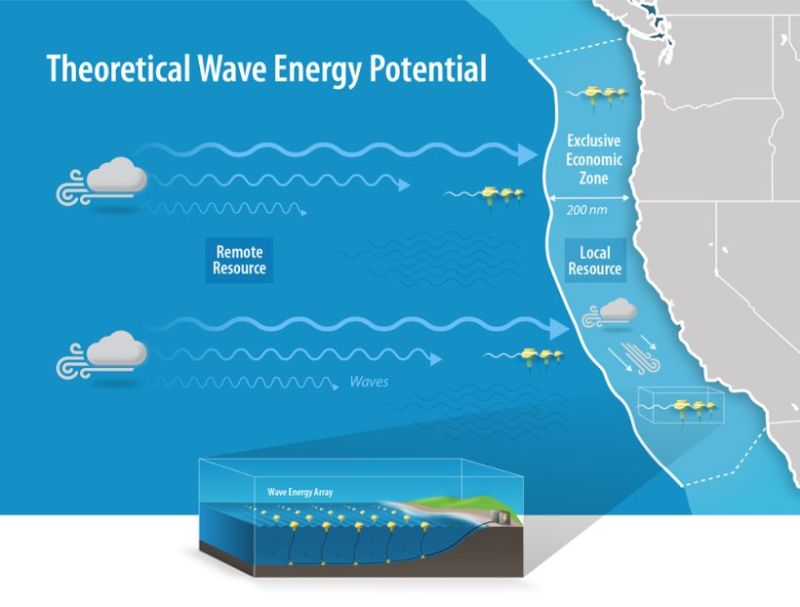
Wave energy potential. Image used courtesy of National Renewable Energy Laboratory/John Frenzl
WECs are designed to harness ocean waves’ kinetic energy and convert it into electrical energy. These devices leverage water movement to drive mechanical components, such as buoys or submerged devices, which generate electricity as they move with the waves. The energy extraction could occur through oscillating water columns, point absorbers, or attenuators, each employing different methods to convert wave motion into electrical output.
However, despite wave energy’s promising potential, significant challenges hinder its large-scale deployment.
One major issue is the harsh marine environment, where devices must endure constant exposure to corrosive saltwater, high pressure, and powerful storms. Designing WECs that are durable yet economically viable also remains a challenge. Furthermore, regulatory hurdles and the high initial costs of installation also slow the adoption of WEC technology.
Reinventing Wave Energy
Carnegie Clean Energy’s CETO WEC has advanced towards commercial deployment with its application for type certification from Lloyd’s Register.
CETO is a fully submerged WEC that harnesses ocean waves’ kinetic energy through a buoyant actuator. Unlike other surface-based systems, CETO’s submerged design enhances durability by protecting it from harsh environmental conditions while minimizing visual and environmental impact. Its low-profile, submerged design allows for easier deployment, minimizes impact on beachgoers, and safeguards marine life.
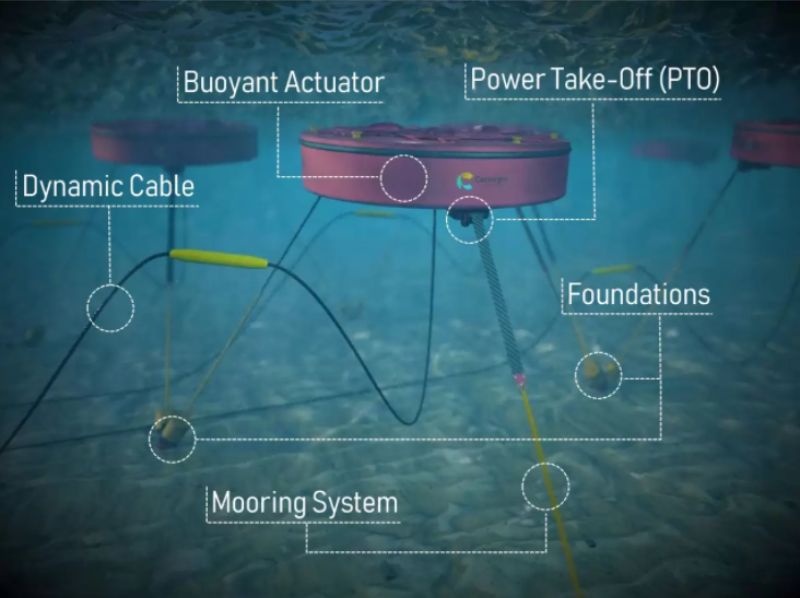
Anatomy of the CETO. Image courtesy of Carnegie Energy
The system converts energy from waves into electricity using hydraulic pressure, which drives a power generation system located onshore or within the submerged unit itself. CETO’s architectural advantage is its ability to remain operational under various ocean conditions, leading to higher efficiency and less downtime than surface-based WECs. This also improves its resistance to extreme weather.
Future Prospects
As renewable energy demands rise, technologies like CETO hold the promise of supplementing more established sources like wind and solar. So far, Carnegie’s CETO device has undergone prototype testing at the Biscay Marine Energy Platform in Spain and is expected to be deployed by 2025. With ongoing advancements, wave energy could evolve into a major contender in the renewable energy pool.