Facebook
 Google
 GitHub
 Linkedin
Extending Battery Life With Simulation
Simulating batteries under varying conditions could help predict and optimize battery performance.
The transition to renewable energy has amplified the importance of battery energy storage systems (BESS) in stabilizing grids and enhancing flexibility. These systems are indispensable for integrating intermittent energy sources like solar and wind, but their efficiency and reliability depend heavily on battery health and longevity. However, challenges such as battery degradation, operational inefficiencies, and limitations in accurately predicting performance confound our ability to understand the battery over time.
One solution is battery aging simulation software, which is reshaping how BESS performance and durability are optimized. These simulation models can guide design projects and help teams predict battery behavior across different grid applications.
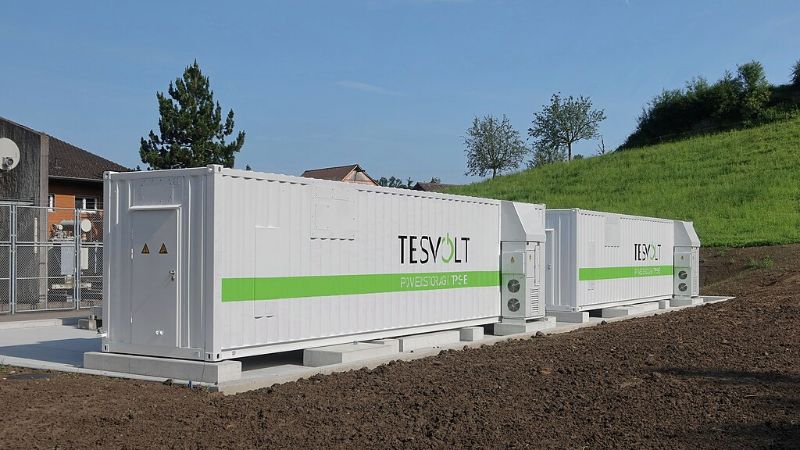
Battery energy storage system. Image used courtesy of Wikimedia Commons
Understanding Performance Indicators
Effective monitoring is necessary for ensuring optimal performance of battery energy storage systems. Aging batteries suffer from degradation processes such as lithium plating and aging-induced shifts in open circuit voltage (OCV) that affect performance and longevity. Several performance indicators can be used to analyze battery health.
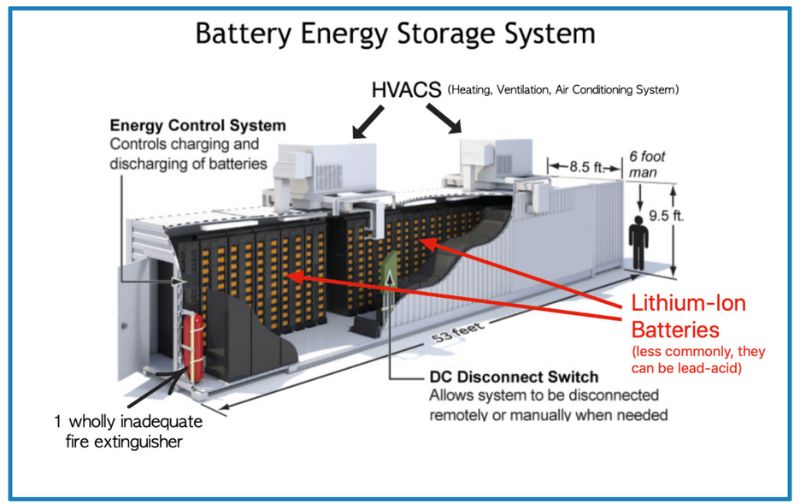
Anatomy of a BESS. Image courtesy of Sushita et al.
State of charge (SOC) reflects the remaining charge in a battery as a percentage of its full capacity. A fundamental metric for battery management systems, SOC is indirectly estimated using parameters like voltage, current, and internal resistance. Accurate SOC estimation is essential to avoid overcharging or over-discharging, which can harm battery lifespan and safety.
State of health (SOH) quantifies the battery's aging and current condition by comparing its present maximum capacity to its original capacity. Factors like material wear and increased resistance affect SOH, which helps track performance degradation over time.
Furthermore, depth of discharge (DOD) measures the percentage of a battery’s capacity used during a discharge cycle. High DOD values indicate extensive capacity usage, which, if frequent, can accelerate internal wear and reduce the battery’s lifespan.
Application of Battery Aging Models
TWAICE, a battery software platform provider, recommends battery simulation models to enhance BESS's performance and reliability.
Architecturally, the models integrate physicochemical degradation effects into semi-empirical frameworks to accurately represent complex phenomena like lithium plating. Features include the ability to model the shifting OCV curves in lithium-iron-phosphate batteries, which traditionally present challenges for accurate SOC estimation due to flat voltage profiles. This capability ensures precise SOC and SOH calculations that enhance real-time system monitoring. Additionally, the models assess variables such as depth of discharge, cycle frequency, and operating temperature.

Analyzing the performance of a BESS. Image used courtesy of TWAICE
By providing detailed degradation insights, the models allow operators to optimize usage scenarios, such as trading strategies while balancing profitability and battery health. For instance, integrating these models enabled a European renewable energy generator to improve profitability by over $1 million per 10 MWh and extend battery lifespan by 20%.
Furthermore, the models support the evaluation of emerging battery chemistries, like sodium-ion, offering comparative insights to determine suitability for specific applications. These capabilities contribute to improved system design, performance prediction, and operational strategies so that BESS installations achieve maximum efficiency, extended lifespans, and reduced downtime.
The Overall Impact
Advanced aging models enable accurate predictions of how new battery types perform under real-world conditions. Beyond theoretical applications, aging simulations support safe and efficient storage operations while extending the lifespan of energy storage systems. This proactive management approach can optimize battery health, minimize downtime, and enhance return on investment. By leveraging these models, engineers are able to gain unprecedented insights into cell selection, system design, and operational strategies to ensure the highest levels of efficiency and durability for BESS.