Facebook
 Google
 GitHub
 Linkedin
The Aging Power Grid Needs a Watchdog. Are Robot Dogs the Answer?
Anybotics and Gresco have partnered in a robotic solution for autonomous utility facility inspections.
The U.S. power grid comprises more than half a million miles of transmission lines and serves approximately 160 million users. Electricity demand will skyrocket in the coming years as electric vehicles and data centers continue to grow. These needs will strain the grid’s aging components. Automated utility inspections can increase efficiency and ensure the grid is more closely monitored and quickly updated when needed.
Watch the Anymal robotic dog in action. Video used courtesy of Anybotics
Gresco and Anybotics have partnered to create a fully autonomous robotic dog that can automate data collection and facility inspections to relieve labor and time demands. This automation can significantly improve overall utility health and prepare for incoming loads due to escalating electrification.
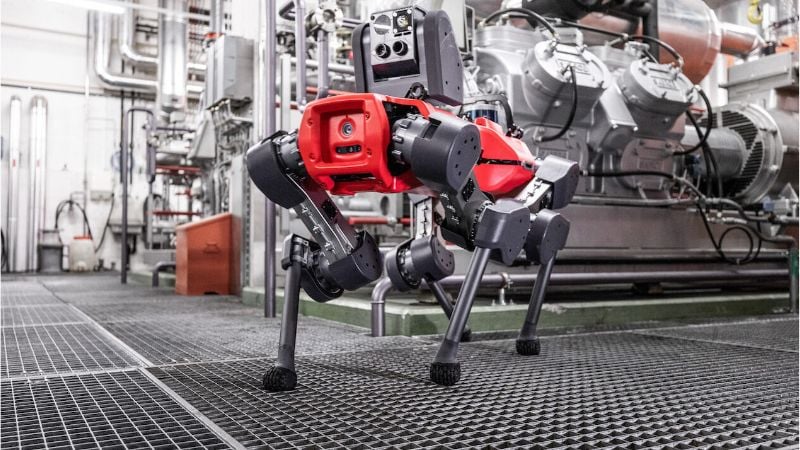
The Anymal robotic dog. Image used courtesy of Anybotics
Aging Infrastructure and Automation Compatibility Problems
Nationwide, utility facility inspections face myriad challenges, particularly regarding aging infrastructure, safety concerns, and financial constraints. Many systems, including power grids and underground utilities, are decades old, increasing failure risks due to wear and environmental stressors.
This increased risk means that timely inspections are crucial. However, insufficient resources, outdated inspection processes, and reliance on manual methods often hinder inspections.
Delays can lead to severe consequences. Undetected structural issues in power facilities can result in catastrophic failures, such as equipment explosions, extended outages, or fires. The California wildfires, for example, have been linked to neglected power line maintenance, leading to billions in damages and loss of life. Another complicating factor is the steady increase in extreme weather events that compound grid failure. These have caused a wave of bankruptcies, including PG&E’s bankruptcy after the Camp fire and Lincoln Power’s bankruptcy after winter storm Elliott.
Utilities spend substantial resources on emergency repairs that could have been avoided with proactive maintenance. Modern infrastructure’s complexity, combined with regulatory pressures, makes streamlining inspections a necessity.
Innovative technologies like drones and robotics are emerging as solutions to inspection and maintenance hurdles. This tech can enable safer, more efficient inspections while reducing human exposure to hazardous environments.
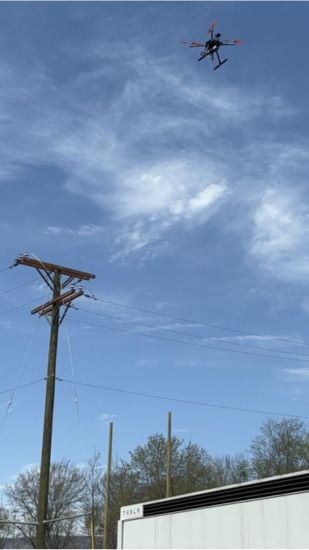
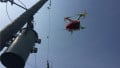
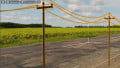
Drone inspecting transmission lines. Image used courtesy of Oak Ridge National Laboratory/Emma Foley
Automation comes with a host of complications. More is known about using artificial intelligence-powered robotics for structural inspections and industrial applications than for utility facility monitoring. Some preliminary findings show that robotics is hardly a simple plug-and-play solution.
Unmanned ground vehicles (UGVs) can perform effectively in highly structured environments with uniform layouts. However, environments filled with irregularity and novelty are much more challenging and lead to more frequent operation errors.
Another concern is the compatibility with existing infrastructure and the need for total automation to maximize the performance of some automated equipment. Given the aging grid, automated drones and UGVs will not be compatible with much existing equipment. Researchers have also noted that adding one automated inspection tool is ineffective unless other automated elements are introduced. For example, if a robot dog completes thermal readings, the temperature reading must also be automated.
Robot Dogs for Ground Inspections
Gresco’s extensive experience in utility supply and Anybotics’ robotics expertise have resulted in an efficient, autonomous, and highly mobile inspection solution. The robot dog, aptly named Anymal, is designed to safely monitor grid conditions in hazardous environments. This technology is considered a robot assistant or teammate rather than a fully independent inspector.
Anymal is outfitted with a thermal camera capable of completing temperature readings from -40–550°C. It can complete readings without any physical interaction. The robot dog has senses, including sound and vision. The camera offers a 20x optical zoom, and the ultrasonic microphone can detect noise anywhere from 0-384kHz. With LiDAR scanning tech onboard, Anymal is capable of 360° surveillance of the environment in which it is working.
With the capability to install generative AI, Anymal is just beginning to realize its potential operational capacities. The robot dog can increase efficiency, reduce costs, and keep workers safe by automating dangerous and high-risk tasks.