Facebook
 Google
 GitHub
 Linkedin
Power Trains: Delivering Stored Energy for Local Grid Needs
SunTrain is developing freight trains equipped with lithium iron phosphate battery storage to transport renewable energy across existing rail networks.
The development of renewable energy projects has outpaced the infrastructure needed to support it. Aging and insufficient transmission lines prevent renewable energy from being transported to areas with high electricity demand, forcing grid operators to curtail or discard the excess power. As a result, the U.S. is facing a bottleneck that wastes the wind and solar power needed to reduce carbon emissions.
SunTrain, a U.S.-based startup, is pioneering the use of existing railway infrastructure to move energy around the country to where it is needed most. SunTrain is developing a series of long railway cars that will transport safe lithium iron phosphate batteries (LFPs) that can store renewable resources. Once they reach their destination, the batteries can connect to the grid, circumventing the need for transmission infrastructure.
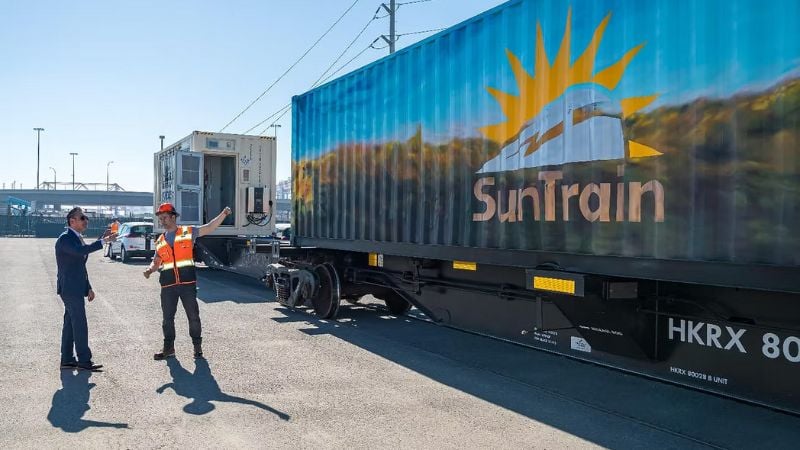
SunTrain mobile battery energy storage. Image used courtesy of SunTrain
Transmission Line Troubles: Infrastructure Stagnation
Launching renewable energy projects might have seemed difficult 20 years ago, but today, just moving clean energy from generation sites to users has become a significant challenge to ensure that energy doesn’t go to waste.
The U.S. is experiencing a significant bottleneck in renewable energy deployment, primarily due to inadequate transmission line infrastructure. As of 2023, the interconnection queue for new energy projects had swelled to approximately 2.6 TW, nearly double the capacity of the existing U.S. power grid.
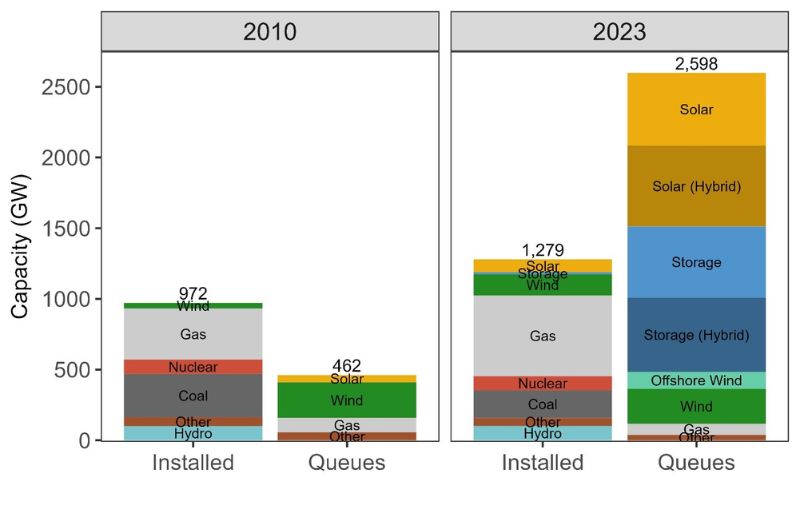
Increase in wait for grid connection. Image used courtesy of Lawrence Berkeley National Laboratory
This backlog is largely attributed to the aging and insufficient transmission network, which struggles to accommodate the rapid influx of renewable energy sources like wind and solar.
The U.S. Department of Energy's National Transmission Planning Study states that the nation must double or even triple its current transmission capacity by 2050 to meet future energy demands and integrate renewable sources.
However, expanding transmission infrastructure is hampered by lengthy permitting procedures, legal challenges, and the sheer complexity of coordinating across multiple jurisdictions. This infrastructural inadequacy leads to significant delays connecting renewable energy projects to the grid, with some projects facing wait times of up to five years.
Consequently, many renewable energy installations remain idle, unable to deliver clean power to consumers.
Using LFPs to Move Stored Power
SunTrain charges LFPs with wind and solar energy and transports the fully changed batteries on a large train to locations where renewable energy access is needed.
Working in Colorado with government partners, SunTrain has already launched its test train, which can move 750 kilowatt-hours of energy and has successfully traveled 6,500 miles on California’s railways. The company is waiting for federal funding to help it expand to a 20-car train, pushing testing closer to operation.
One LFP in a SunTrain freight car can power 20,000 homes for an hour. Linking these cars together will compound capacity, and low traffic on U.S. railways will ensure easy transport without substantial delays.
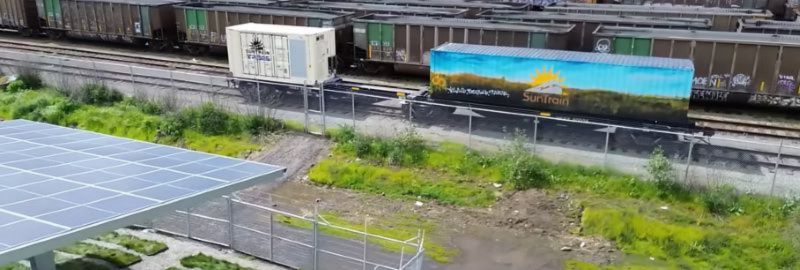
SunTrain on the move. Image used courtesy of SunTrain
While Colorado does supply some of its own wind power, it relies on transported renewables from other states like Wyoming. Transmission expansion in this region is slow. The TransWest Express Transmission Project waited 19 years to begin construction and won’t be completed until 2028. SunTrain’s mobile batteries can bypass these wait times.
Opting for LFPs instead of lithium-ion batteries, SunTrain is prioritizing safety to reduce fire risk during transport. The chemistries of LFPs offer higher thermal stability.
The SunTrain battery on wheels can also capitalize on existing infrastructure once used by coal plants. These LFPs can be discharged to the grid where old coal plants were set up to supply the grid.
Even though the SunTrain idea seems simple, it might provide a crucial workaround to the complexity plaguing transmission line expansion projects. With the possibility of new emissions-free trains, these railway-bound batteries could revolutionize the management of existing renewable energy projects.