Facebook
 Google
 GitHub
 Linkedin
Nissan Announces New In-House Fuel Cell Stack
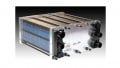
Nissan Motor Co. (Tokyo) announced that it has designed and developed its first in-house fuel cell stack, as well as a new 700 bar hydrogen storage system. The fuel cell stack uses a newly developed thin separator. The separator is the component that separates the hydrogen and oxygen gases supplied to the individual cells and transfers the electricity produced to the next cell. The new separator narrows the spacing between adjacent fuel cells (the cell pitch) connected in the stack by 40% compared to the previous stack used in the X-TRAIL fuel cell vehicle.
Nissan has also integrated the plumbing components inside the stack case, and built into the case the peripheral control devices. As a result, Nissan has increased power while reducing size. The new stack can be reduced in volume to approximately 60% of the previous stack while providing the same level of power. A new 700 bar (10,000 psi) hydrogen storage cylinder increases vehicular hydrogen storage capacity by approximately 30% compared with the previous 350 bar (5,000 psi) cylinder without any change to the cylinder’s external dimensions. The increased storage extends the driving range of a fuel cell vehicle.
Nissan will now begin in-vehicle testing of the new fuel cell stack to further improve its overall performance and reliability.