Facebook
 Google
 GitHub
 Linkedin
Gecko, NAES Deploy AI Robots in Power Plant Modernization Project
Gecko’s AI robots will crawl NAES assets to collect data for optimized production and grid reliability.
Gecko Robotics has signed a multiyear $100 million deal with power operator NAES to modernize its power plants using artificial intelligence and robotics. The project seeks to increase the efficiency and reliability of power production to meet growing energy demands.
Gecko Robotics’ robots at work. Video used courtesy of Gecko Robotics
According to Gecko Robotics, AI data centers, electric vehicles, and industrialization have increased power demand by 16%. That demand is projected to multiply to 160% by 2030. Gecko and NAES plan to address the issue by using AI-enhanced robots to gather data to enable real-time power management.
Gecko and NEAS’ multi-year, $100 million agreement includes an option to increase to $250 million for further grid modernization.
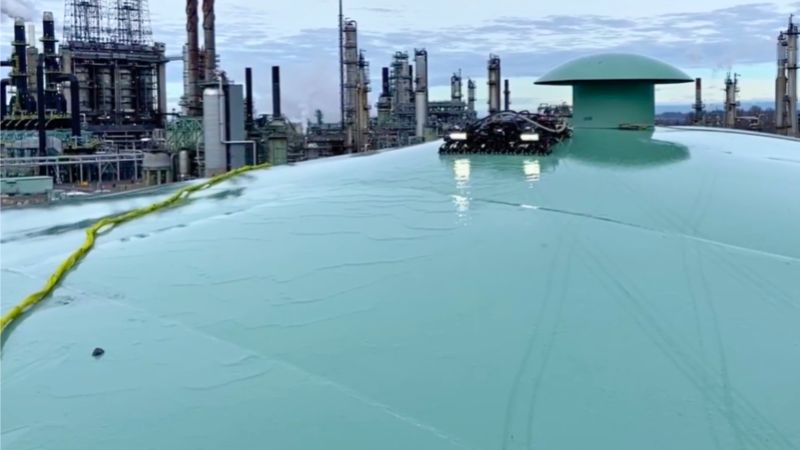
An AI robot crawls over infrastructure. Image used courtesy of Gecko Robotics
Gecko’s Robots and AI Platform
Gecko uses wall-climbing robots, robot dogs, drones, and fixed sensors to collect infrastructure data. They are equipped with the company’s Artificial Intelligence + Robots (AIR) technology. According to Gecko, the robots can “climb, crawl, swim, and fly” to create information data layers about the physical environment.
The data is sent to Gecko’s AI software platform, Cantilever, which identifies any problems and predicts the performance of the plant and its assets. The process can reduce downtime by allowing facility operators to avoid reactive maintenance.
Reactive, Preventative, and Predictive Maintenance
Grid assets require regular maintenance to stay in optimal working condition. This is especially important as assets age and parts wear out or become damaged. Reactive maintenance waits until a problem occurs before repairing or replacing equipment. This delay can affect grid performance, lead to outages, and increase costs. The National Institute of Standards and Technology estimates manufacturing plants using reactive maintenance to have 53% more downtime.
Preventive maintenance, like regular inspections and routine maintenance to restore or replace underperforming equipment, is usually scheduled on time intervals or usage cycles. Preventative maintenance can reduce downtime and prevent potential problems before they occur.
However, following a time schedule has drawbacks. Some assets may fail before their scheduled maintenance time, or companies may replace equipment needlessly because the maintenance schedule says it’s time to do so.
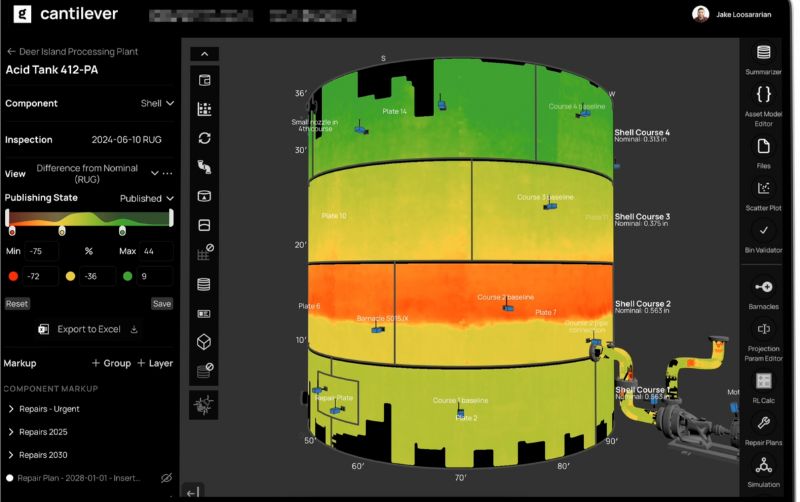
Gecko’s Cantilever system allows asset visualization. Image used courtesy of Gecko Robotics
Predictive maintenance is data-based, not time-based. It uses information about the assets’ actual conditions to estimate their remaining life and plan the schedule for replacements.
Predictive maintenance requires sensors to collect the data and a software platform to analyze it. Data analytics platforms with AI can create system visualizations using digital twins to prioritize maintenance schedules and predict how various factors may affect asset life and performance. The platform can use the information to recommend actions to optimize operations, decrease risks, and reduce costs.
Project Implications
According to Gecko Robotics, its robots, and AI platform can reduce reactive maintenance by 80%. In a press release, Gecko stated the two companies plan to “future-proof” the energy industry by seeking talent, investments, and government support.
NAES manages 65 GW of power and is the second-largest independent power operator in the U.S. Pennsylvania-based Gecko Robotics specializes in using AI and robotics to maintain, manage, and monitor infrastructure and grid assets.