Facebook
 Google
 GitHub
 Linkedin
A Novel Current Sensing Technology Utilizing III-V Compound Hall Elements
This article discusses a novel current-sensing technology to address the challenges of shunt resistors and isolated modulators used in applications such as AC servo drivers and robots.
Article co-authored by Asahi Kasei Microdevices’ Takenobu Nakamura, Takahisa Shikama, and Takaya Higa.
This article is published by EEPower as part of an exclusive digital content partnership with Bodo’s Power Systems.
Driven by the growing demand for automation in the manufacturing industry, the use of industrial robots in factories has been rapidly expanding in recent years. This trend is largely attributed to structural challenges such as labor shortages and the increasing need for high-mix, low-volume production.
At the same time, advances in AI technology have enabled robots to perform delicate tasks that previously required human intervention, as well as physically demanding operations, thereby accelerating the adoption of robotic solutions to address these challenges. Industrial robots widely employ high-performance motors based on servo motor systems. Motor drives and robot controllers are essential for controlling these motors and robotic systems.
However, these components occupy a certain footprint within factories, making further miniaturization of controllers essential to improve production density. In addition, as energy-saving requirements in factories continue to increase, there is a strong demand for improved energy efficiency in each of the electronic components that constitute servo motor systems and robot controllers.

Image used courtesy of Freepik
One of the key functions of servo drives and robot controllers is precise torque control and fault detection through high-resolution current sensing. Currently, shunt resistors are widely used for this purpose. To achieve high-resolution control, a Σ-Δ modulator is commonly employed following the shunt resistor.
Furthermore, since the current sensing section operates at high voltages exceeding several hundred volts, electrical isolation between the primary and secondary sides is required. In conventional systems using shunt resistors, significant heat generation in the shunt resistor and the large number of components - such as bootstrap circuit and Σ-Δ modules - present challenges in achieving miniaturization and energy efficiency. Therefore, there is a growing need to replace this approach with a novel current-sensing technology that can address these issues.
Current Sensors as an Alternative to Shunt Resistors
One of the most suitable solutions to these challenges is a magnetic current sensor that integrates a primary conductor carrying the current and a Σ-Δ modulator. Figure 1 illustrates the comparison of system configurations using shunt resistors and magnetic current sensors in the inverter circuit of a three-phase servo drive. For control in a servo drive, it is common to perform current sensing on two or all three phases of the three-phase system.
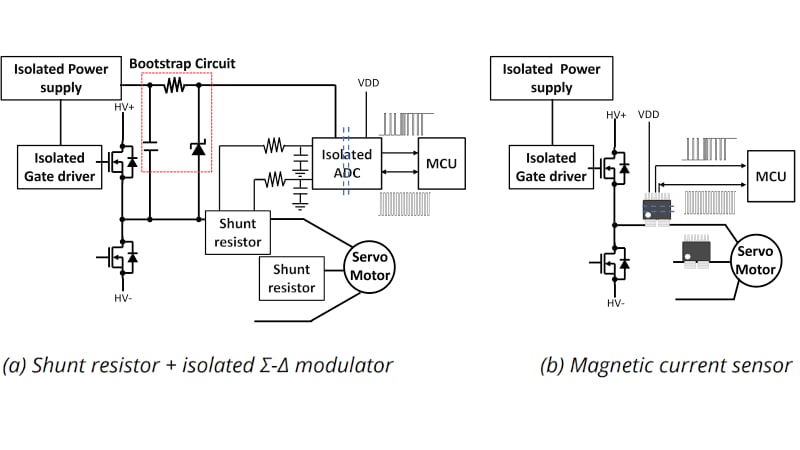
Figure 1. Comparison of system configurations using shunt resistor solutions and magnetic current sensor. Image used courtesy of Bodo’s Power Systems [PDF]
Magnetic current sensors provide galvanic isolation and can operate with only a single power supply on the secondary side, enabling replacement of all high-voltage-side peripheral components required in shunt resistor solutions with a single device. In addition, magnetic current sensors can suppress heat generation, which is a key issue when measuring large currents with shunt resistors. As a result, they enable both miniaturization and improved energy efficiency and are attracting attention as an alternative to shunt resistor solutions.
The performance of magnetic current sensors depends on the type of magnetic sensing element used. However, conventional magnetic sensors have faced challenges in achieving the current resolution required for servo drives and robotic applications. In the following, several candidate magnetic sensing technologies for current sensors are introduced, and their suitability for current sensing in servo and robotic applications is discussed.
The Challenges With Si Hall Element and xMR Elements
Si Hall elements are widely used in magnetic current sensors. However, their sensitivity is inherently limited by material properties, making it difficult to achieve high current resolution. One approach to improving the current resolution is to increase the current density in the primary conductor; however, this introduces a trade-off, as increased conductor resistance leads to higher heat generation.
As a result, it is difficult to simultaneously achieve the high current resolution and low heat generation required for servo drives and robotic applications. To address this, a common approach is to use a magnetic core to amplify the magnetic field applied to the Hall element, thereby improving resolution. However, the use of a magnetic core increases the overall size, and the magnetic hysteresis of the core material also degrades accuracy, which remains a challenge.
xMR elements generally provide higher sensitivity than Si Hall elements, making them a promising solution for achieving the current resolution required in servo drives and robotic applications. However, xMR elements typically exhibit a trade-off between input magnetic field range and sensitivity, which poses challenges for improving current resolution in high-current applications.
In addition, accuracy degradation due to magnetic hysteresis has been observed, and challenges remain in applying these sensors to industrial equipment that demands high-resolution and high-accuracy current sensing at large currents.
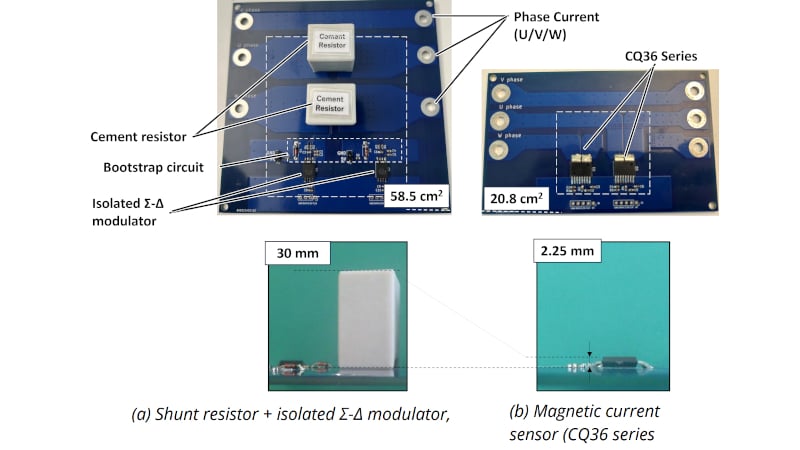
Figure 2. CQ36-enabled shunt system miniaturization. Image used courtesy of Bodo’s Power Systems [PDF]
III-V Compound Semiconductors Hold the Key
III-V compound semiconductor Hall elements are known to offer significantly higher sensitivity than Si Hall elements. This high sensitivity enables high current resolution without being limited by the input magnetic field, allowing large currents to be measured with both high resolution and high accuracy. It also permits the current density in the primary conductor to be reduced while maintaining high resolution, which in turn allows the conductor resistance to be minimized and low heat generation to be achieved. As a result, this approach is attracting attention as a solution that can achieve the current resolution required in servo drives and robotic applications while addressing the challenges associated with shunt resistors.
A representative example is the CQ36 series developed by Asahi Kasei Microdevices (AKM), which achieves an effective number of bits (ENOB) of 14 or higher - comparable to an isolated Σ-Δ modulator - using a sinc3 filter with an oversampling rate (OSR) of 256. It offers selectable interfaces, including 10 MHz or 20 MHz clock frequency, and internal(output) or external(input) clock. The sensor also features a very low current conductor resistance of 0.27 mΩ. The lineup covers a wide range from small- to large-capacity AC servos, supporting currents from ±10.5 Apeak to ±168 Apeak. With a creepage and clearance distance of 8mm, bootstrap circuits are not required, as the sensor operates using only the secondary-side supply.
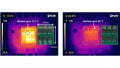
Figure 2 illustrates the size reduction achieved by replacing shunt resistors (cement resistors) and an isolated Σ-Δ modulator with the CQ36 series in the inverter circuit of a three-phase servo drive. The results show that the footprint can be reduced by more than 60%, and the height by over 90%.
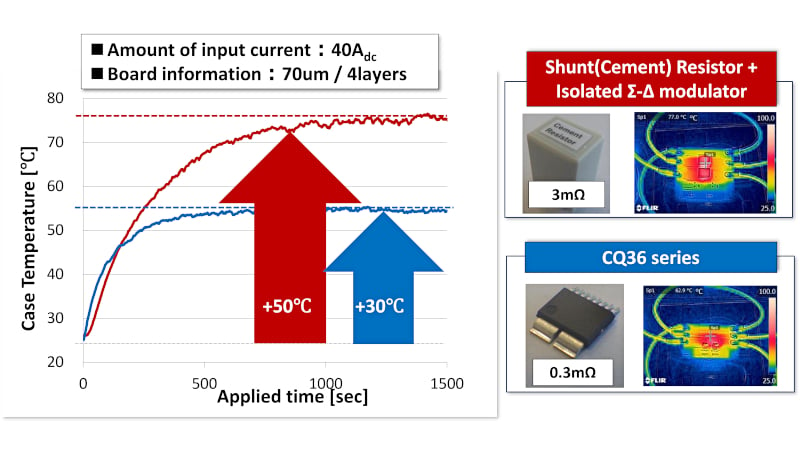
Figure 3. Heat reduction effect of the CQ36 series. Image used courtesy of Bodo’s Power Systems [PDF]
Figure 3 shows the results of thermal measurements using the board shown in Figure 2. While a cement resistor (2.7 mΩ) exhibits a temperature rise of approximately +50 °C when 40 A DC is applied, the CQ36 series shows a temperature increase of only around +30 °C.
Conclusion
A current sensor based on III-V compound semiconductor Hall elements can replace conventional shunt resistors and isolated Σ-Δ modulators. This enables miniaturization and energy savings in servo and robotic systems.
This article originally appeared in Bodo’s Power Systems [PDF] magazine and is co-authored by Miho Onuma, Technical expert of Current Sensors, Asahi Kasei Microdevices Corporation; Takenobu Nakamura, Technical expert of Current Sensors, Asahi Kasei Microdevices Corporation; Takahisa Shikama, Strategy & Business Leader of Magnetic Sensor Products, Asahi Kasei Microdevices Corporation; Takaya Higa, Field Application Engineer, Asahi Kasei Microdevices Europe GmbH
Related Content