Facebook
 Google
 GitHub
 Linkedin
Briefs: Forward Steps in Nuclear, EV Charging, and Battery Storage
GE Vernova, Tennessee Valley Authority, EVgo, Delta Electronics, Dukosi, Wärtsilä, and RCT Solutions have taken steps to meet future energy demands.
Tech companies have made several recent advances to meet the need for more reliable, efficient power infrastructure. GE Vernova and Hitachi Nuclear Energy have secured a Nuclear Regulatory Commission construction permit for their small modular reactor site in Tennessee. In California, EVgo and Delta Electronics are planning an electric vehicle charger that can deliver 750 W.
Two companies are focusing on battery energy storage systems. Dukosi released a contactless communication system for modular battery management architectures, and Wärtsilä and RCT Solutions created a new company for its Valo battery energy storage integrator.
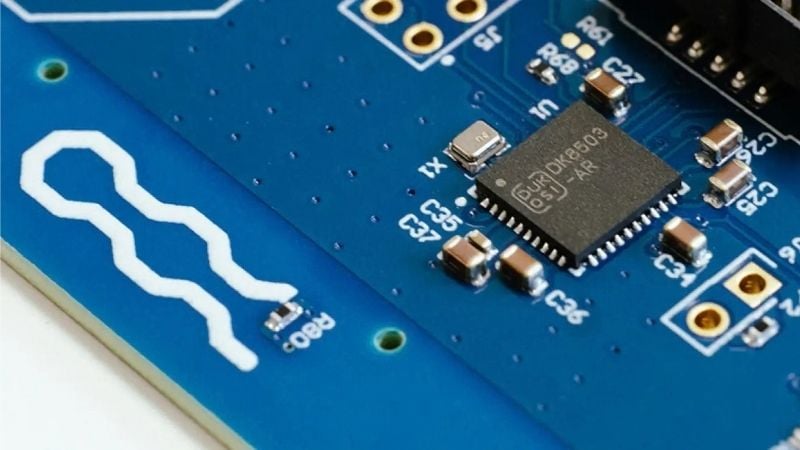
DK8503 with near-field antenna. Image used courtesy of Dukosi
NRC Allows Construction Permit for Tennessee Nuclear Site
GE Vernova Hitachi Nuclear Energy—a joint venture between GE Vernova and Hitachi, Ltd.—and the Tennessee Valley Authority secured the first U.S. Nuclear Regulatory Commission construction permit for a BWRX-300 small modular reactor. The approval advances domestic deployment of the 300 MW power unit at the Clinch River site in Oak Ridge, Tennessee.
GE Vernova Hitachi Nuclear Energy designed the BWRX-300 as a 300 MW boiling water reactor with a simplified configuration to reduce construction complexity. The project sits near the Oak Ridge National Laboratory, leveraging the local nuclear ecosystem.
The Ontario construction site for GE Vernova’s SMR. Video used courtesy of GE Vernova
The regulatory milestone follows prior approval in Canada, where Ontario Power Generation obtained a construction license for the same reactor model. Tennessee Valley Authority originally submitted the Clinch River permit application in April 2025, building on an existing early site permit. Blue Energy also filed a permit request in September 2026 for a planned installation in Texas.
Standardized reactor designs enable common licensing procedures and supply chain capabilities across multiple build locations. GE Vernova aims to establish a fleet deployment model using shared technology to lower deployment barriers across future project sites.
EVgo and Delta Electronics Promise 750W EV Charging
EVgo Inc. and Delta Electronics are developing a next-generation charging architecture that could deliver up to 750 kW of power, reducing EV charge times to roughly 10 minutes. The high-power platform aims to support faster charging at public stations.
EVgo plans to officially launch the finished charger design in 2027. The chargers will incorporate North American Charging Standard connectors to widen vehicle access across the network. Stations utilize dynamic power sharing to optimize energy delivery for connected cars. Real-time controls automatically adjust grid outputs to smooth local demand spikes during operation.
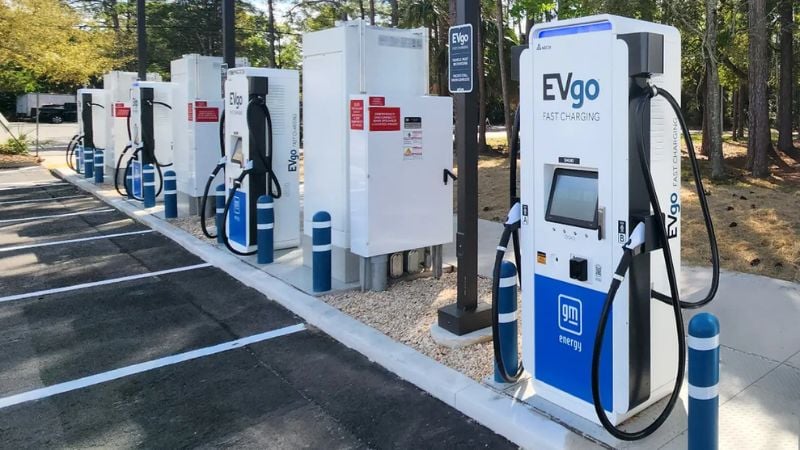
EVgo charger. Image used courtesy of EVgo
Hardware upgrades will focus on flexible cables, touchless payments, and revised firmware to raise system uptime.
EVgo gathered data across 10 million annual sessions to guide station design choices.
Dukosi Releases Contactless Communication System for Batteries
Dukosi Ltd. has introduced the DK-NFLNK contactless communication solution to replace physical wiring in traditional modular battery management architectures. The hardware uses a near-field bus antenna and the C-SynQ protocol to transfer cell data between analog front ends and host processors.
The chip architecture integrates the DK8503 Node unit and the DK8203 System Hub. The system interfaces with multi-channel analog front ends through a standard serial peripheral interface to build an isolated star network.
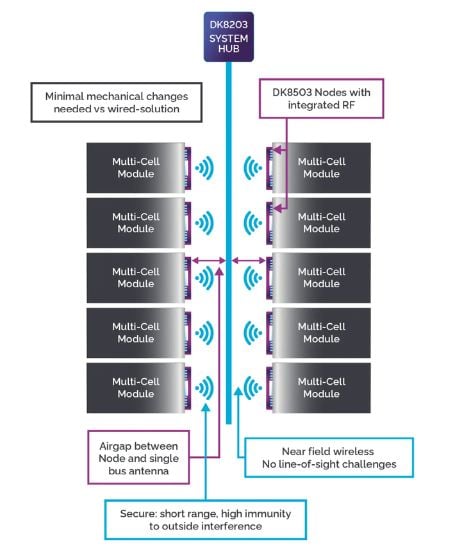
System diagram. Image used courtesy of Dukosi
Evaluation kits are available for electric vehicles, marine vessels, industrial robotics, and grid storage systems. Both integrated circuits carry AEC-Q100 certification and satisfy ASIL C safety requirements.
Wärtsilä and RCT Create Valo, a BMS Integrator
Technology group Wärtsilä and RCT Solutions GmbH have launched Valo, a global battery energy storage system integrator designed to streamline utility-scale project delivery and increase grid reliability. The joint venture combines project execution, intelligent software, and engineering expertise to manage system-level outcomes under one roof.
Previously, Wärtsilä operated its energy storage business as an internal division. This move formally combines that existing business and its operational 20 GWh portfolio with RCT Solutions under a new 50-50 corporate entity.
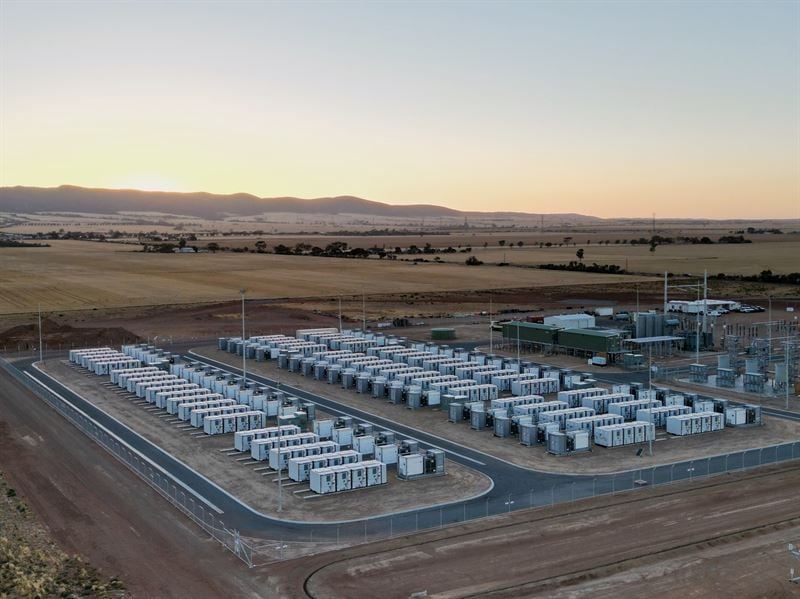
The Bungama battery energy storage system in Australia. Image used courtesy of Wärtsilä
Valo operates 20 GWh across 130 utility-scale energy storage projects worldwide. Existing customers maintain full continuity while gaining access to expanded engineering and supply chain capabilities. The venture unifies hardware, intelligent controls, and lifecycle services to support growing power market demands.