 Facebook
 Google
 GitHub
 Linkedin
Briefs: Tech Focuses on Decarbonization and Energy Efficiency
Amazon, X-energy, Hitachi, Brookfield Japan, Toshiba, Sungrow, onsemi, Infineon, and Wolfspeed are leading efforts to meet growing energy demand while reducing carbon emissions.
Energy companies are partnering up and investing to meet rising demand with efficient, no-carbon generation and technology. Amazon is planning to develop small modular reactors in Indiana to add 960 MW of power. Hitachi has agreed with three other companies to create green data centers in Japan.
Additionally, Sungrow will deploy onsemi’s silicon carbide technologies in its energy storage systems. Infineon is also investing in SiC through a deal with Wolfspeed to use its 200-mm SiC wafers in electric vehicles, renewable energy systems, and AI data center infrastructure.
Finally, the U.S. Department of Energy and the Tennessee Valley Authority have agreed to share costs for $331 million in 84 transmission and distribution projects across eight states.
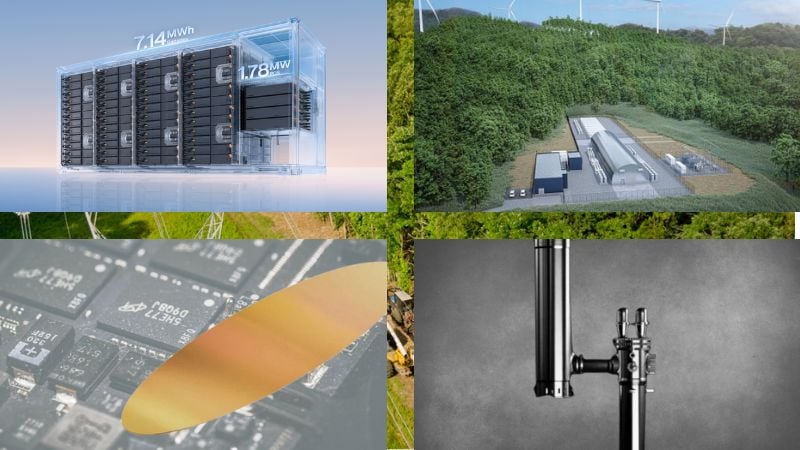
![]() Nuclear, energy storage, and transmission.
Amazon To Develop Nearly 1 GW of Power With SMRs in Indiana
Amazon, X-energy, and American Electric Power will team up to explore using small modular reactors in Indiana to supply up to 960 MW of carbon-free energy. The technology will feed power directly to the local grid while powering regional data center infrastructure.
The project calls for 12 X-energy’s Xe-100 high-temperature gas-cooled reactors at the former coal-fueled Breed Generating Station in Sullivan County. Each 80-MW unit uses helium coolant with tri-structural isotropic fuel to prevent meltdowns without requiring active safety systems or human intervention. Plants using these units can operate with air-cooled, water-cooled, or hybrid condensing systems to match local water constraints.
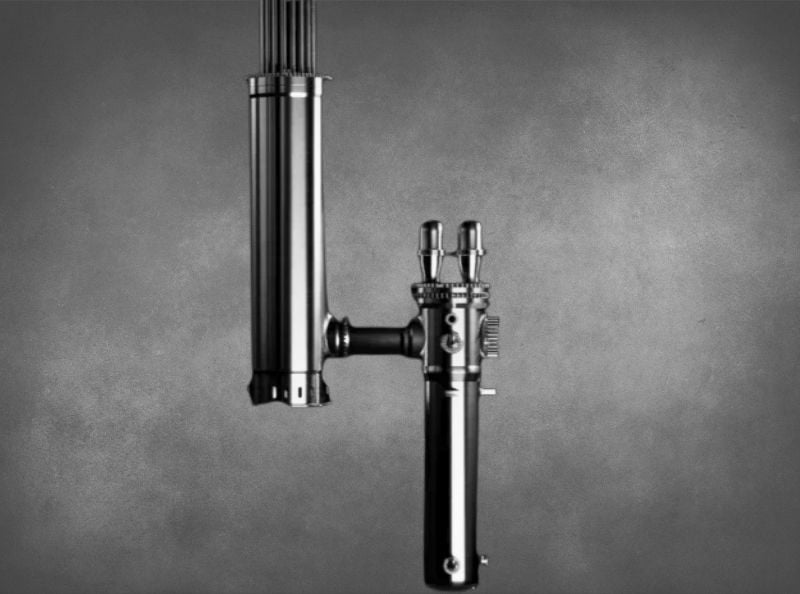
The Xe-100. Image used courtesy of X-energy
Amazon serves as the primary project development funder and initial energy customer. The agreement represents the second deployment under a broader partnership to add over 5 GW of total nuclear capacity across the U.S. by 2039.
Hitachi and Brookfield Lead Collaborative Plan to Develop Green Data Centers
Hitachi, Brookfield Japan, Hartree Partners Singapore, and Tokyo Gas have signed a Memorandum of Understanding to develop power-integrated green data centers in Japan.
The agreement adds Tokyo Gas to an initial partnership formed in July 2025 by Hitachi, Brookfield, and Hartree. The four entities will design standardized, self-powered data center architectures to reduce direct grid dependency, expand site availability, and shorten project development timelines.
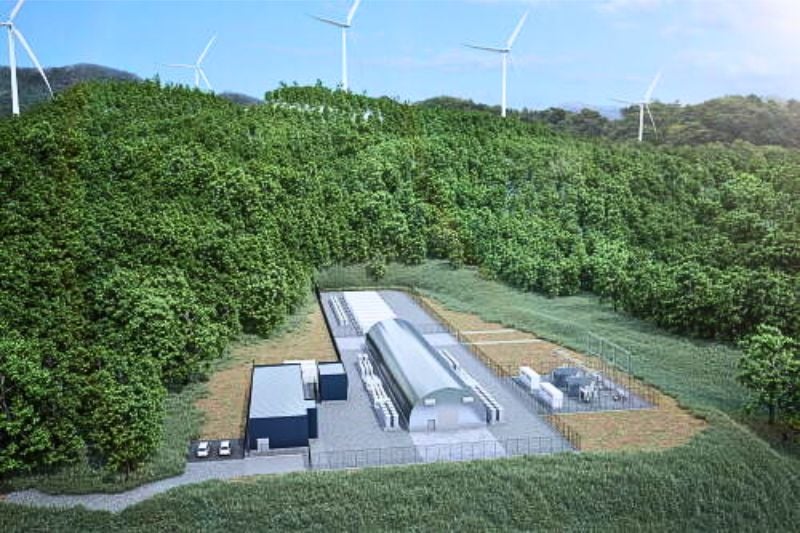
A green data center facility in Japan. Image used courtesy of Toshiba
Initial construction plans target facility sites within the Kanto and Kyushu regions. The facilities will use localized power-generation systems with efficiency-management software to achieve grid independence and support local energy consumption.
The partnership combines private equity, energy trading, utility, and industrial capabilities to deploy facilities that generate and manage localized carbon-free electricity.
Sungrow Deploys Onsemi’s SiC Hybrid Power Module in Energy Storage Platform
Sungrow has selected onsemi’s EliteSiC silicon carbide hybrid power module technology for its PowerTitan 3.0 energy storage platform. The hardware integration boosts inverter efficiency by 0.4%, maximizing usable output while lowering operational expenses for utility-scale grid installations.
The PowerTitan 3.0 uses the hybrid semiconductor modules to optimize high-power DC-to-AC energy conversion. Silicon carbide components enable power units rated up to 450 kW to exceed 99.3% peak efficiency. Higher power density allows compact equipment layout without causing heat damage under heavy use.
During extended operations, higher efficiency can limit overall system thermal dissipation. Onsemi estimates the efficiency gains could save over 475 MWh annually in a standard 100 MW battery installation. Lower waste heat generation protects core semiconductors and reduces auxiliary power demand required for liquid cooling units.
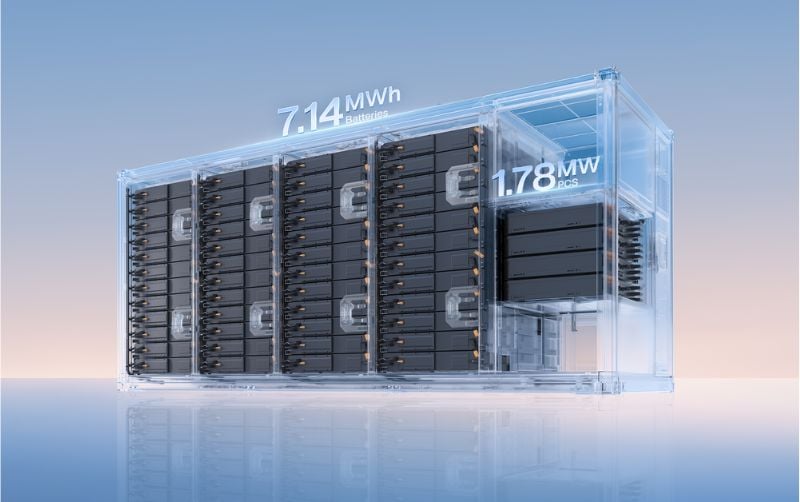
Power Titan 3.0 interior. Image used courtesy of Sungrow
The modular architecture can support the AI data center and industrial electrification energy demand.
Increasing usable discharge capacity boosts earnings for grid operators without expanding the energy storage footprint. Sungrow expects regional deployments across Europe to reach 10 GWh throughout 2026.
Infineon Deals With Wolfspeed for 200-mm SiC Wafer Supplies
Infineon Technologies AG and Wolfspeed, Inc. have signed a multi-year supply agreement for 200-mm SiC wafers to strengthen supply chain stability and increase flexibility in substrate sourcing. The long-term supply deal aids Infineon’s operational transition from 150-mm to 200-millimeter SiC manufacturing lines.
This transition scales production to meet growing demand for high-efficiency power semiconductors in key sectors. The larger wafer size lowers per-die manufacturing costs and boosts overall production capacity. These 200-mm substrates support power electronics installed in electric vehicles, solar power conversion systems, energy storage units, and artificial intelligence data center infrastructure.

Wolfspeed 200 mm SiC substrate. Image used courtesy of Wolfspeed
The deal expands upon a 20-year substrate procurement relationship between the two semiconductor companies. Securing reliable access to high-quality substrates reduces material availability risks across global manufacturing sites.
Wolfspeed manufactures the 200-mm substrates to enable higher energy-conversion efficiency, smaller device footprints, and lower system-level costs for end customers.
DOE Funds Millions in TVA Grid Improvements Across Eight States
The U.S. Department of Energy and the Tennessee Valley Authority are funding 84 transmission and distribution projects across eight states to lower power expenses and minimize widespread power outages. This joint effort supplies $581 million total, combining $250 million in federal backing with $331 million in cost-share funding.
The Resilience Amplified initiative adds 2.5 GW of grid capacity to secure electric delivery for 2.58 million customers. The infrastructure overhaul creates roughly 800 regional employment positions.
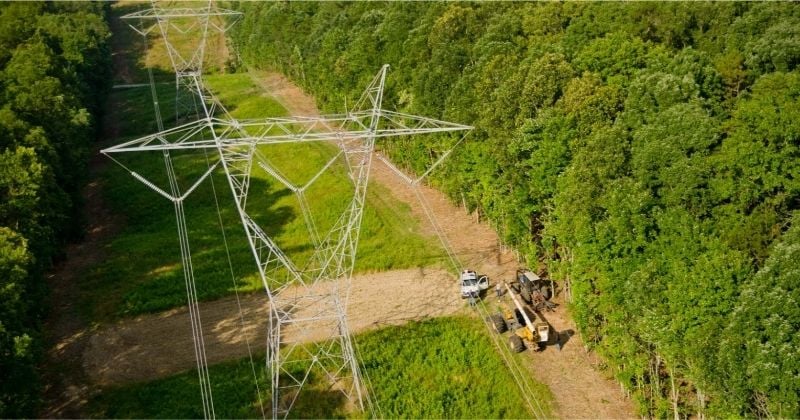
Transmission infrastructure in the TVA service area. Image used courtesy of TVA
The strategy expands a joint pipeline incorporating the Speed to Power through Accelerated Reconductoring initiative. Total combined investments reach $741 million, adding 4.3 GW of system capacity.
Crews plan to upgrade 125 miles of current power lines using high-capacity advanced conductors across Tennessee, Alabama, and North Carolina. The $159.7 million reconductoring segment adds 1,900 MW of capacity while removing heavy transmission bottlenecks. Final implementation terms remain subject to federal contracts and environmental clearances.