Facebook
 Google
 GitHub
 Linkedin
Fast Charging, High Density: CATL Expands EV Battery Chemistries
CATL's latest technical update includes multiple battery chemistries, ultra-fast charging, higher energy density, and integrated charging and swapping infrastructure.
CATL is expanding its electric vehicle battery development across multiple chemistries as limits emerge in existing lithium-ion systems. The company is advancing work across lithium iron phosphate, nickel-based, and sodium-ion batteries, alongside new designs aimed at higher energy density and faster charging.
The updates include a condensed battery architecture, ultra-fast charging systems, and integrated charging and battery-swapping infrastructure.
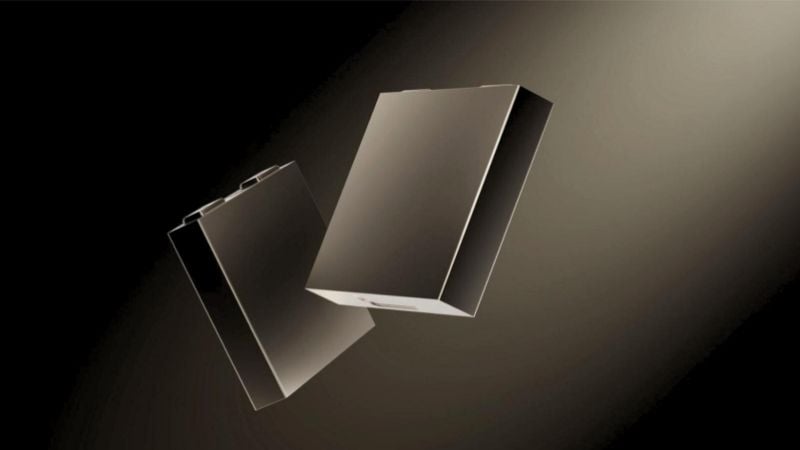
CATL's Qilin Condensed Battery concept. Image used courtesy of CATL
CATL's Multi-Chemistry Strategy
CATL's shift toward a multi-chemistry approach reflects the limits of any single battery technology, as no single chemistry can meet all performance demands at once.
Lithium iron phosphate (LFP) is nearing its practical energy density limits, with development moving toward extreme fast-charging performance. Nickel manganese cobalt (NCM) chemistries remain dominant where higher energy density is required. However, other engineers are exploring sodium-ion systems for improved performance in extreme temperatures and broader energy storage use.
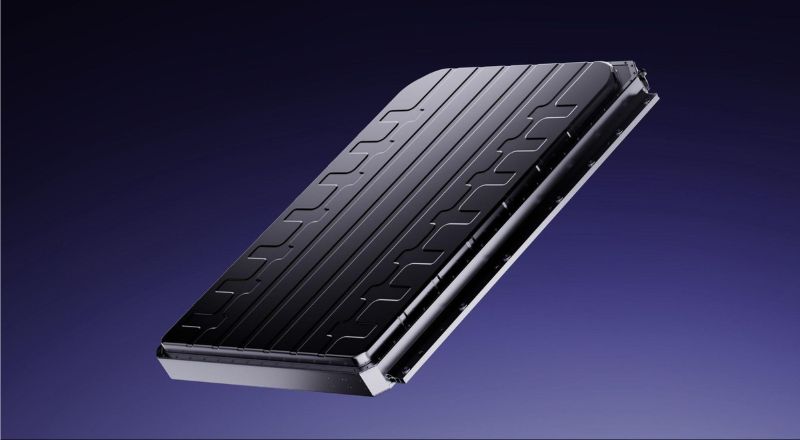
CATL's Freevoy hybrid battery. Image used courtesy of CATL
The company is applying this approach to its second-generation Freevoy hybrid battery, which blends LFP and NCM materials at the particle scale rather than separating them at the pack level. The system reaches about 230 Wh/kg and increases electric-only range for hybrid vehicles, with the NCM-based version extending beyond 600 kilometers on a single charge.
In sodium-ion development, CATL stated its new Naxtra Sodium-ion Battery has addressed key manufacturing challenges, including moisture sensitivity and gas production in hard-carbon anodes, clearing a path to gigawatt-hour-scale production by late 2026. While energy density remains below that of lithium-ion, sodium-ion systems are gaining traction for their improved performance in extreme temperatures and broader energy storage applications.
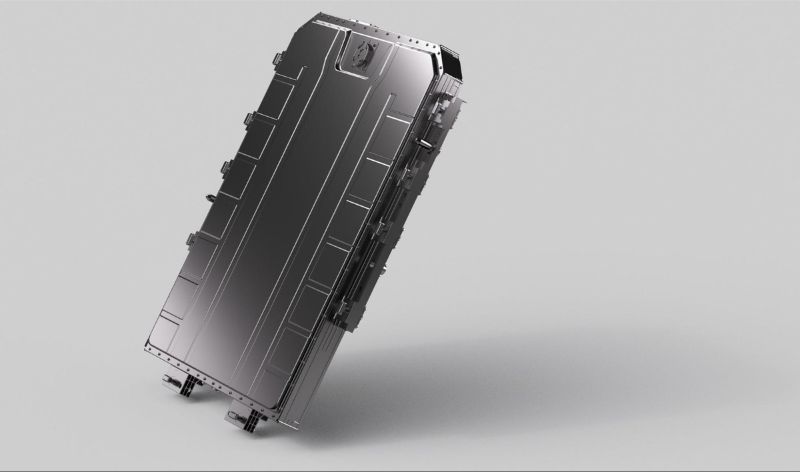
Production of CATL's Naxtra sodium-ion battery is slated for late 2026. Image used courtesy of CATL
CATL also introduced its third-generation Shenxing Superfast Charging Battery, which supports 10C-15C charging rates and can go from 10% to 80% state of charge in about 3 minutes, 44 seconds. It also charges in low temperatures through integrated battery self-heating, maintaining high performance in environments as low as -30°C.
CATL presented several thermal management improvements behind the Shenxing battery, including reducing heat generation, improving dissipation pathways, and tightening system control. The company reports more than 90% capacity retention after 1,000 full cycles at these charging rates, indicating improved durability under high-load conditions.
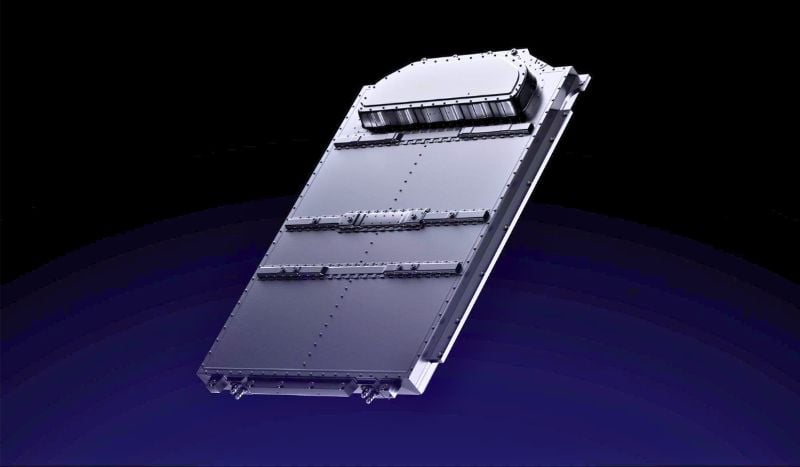
CATL's latest-generation Shenxing Superfast Charging Battery charges to 80% SOC in less than four minutes. Image used courtesy of CATL
Energy Density Gains Approach Aviation Thresholds
CATL introduced an updated Qilin battery and a more experimental “condensed” variant. The third-generation Qilin battery reaches about 280 Wh/kg at the cell level while reducing pack weight and volume, with improvements in vehicle efficiency and overall performance.
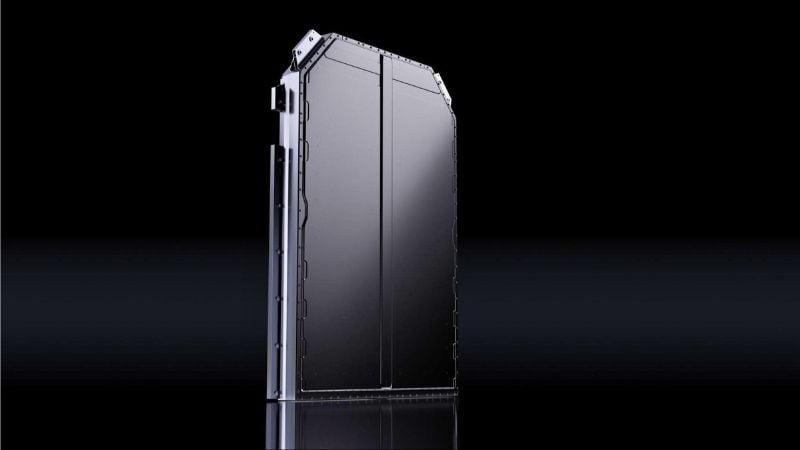
CATL's updated Qilin battery. Image used courtesy of CATL
The Qilin Condensed Battery architecture replaces conventional liquid electrolytes with a condensed system designed to reduce leakage and flammability risks.
Combining high-nickel cathodes, silicon-carbon anodes, and structural changes such as titanium alloy casings, the design reaches roughly 350 Wh/kg and 760 Wh/L densities. That level approaches energy densities targeted for electric aviation, and CATL said related systems have already undergone flight validation in multi-ton aircraft.
Battery Swapping and Charging Infrastructure Integration
CATL is also combining charging and battery swapping into a single infrastructure model. Its integrated stations pair high-power charging hardware with swap capabilities, using shared electrical systems to reduce conversion losses and lower capital costs.
By minimizing energy conversion steps and using shared substations, the system reduces power loss compared with conventional charging sites that rely on stationary storage. It also allows station batteries to feed directly into chargers during peak demand, increasing utilization rates.
The company plans to scale the network to 4,000 integrated stations across China by late 2026, with further expansion supported by partnerships with automakers and energy providers. The integrated concept is designed to increase charging utilization across both charging and swapping operations.