Facebook
 Google
 GitHub
 Linkedin
A Smarter Way to Charge Batteries
Iontra’s charge control MCU chips offer an innovative solution to improve battery charging performance, leading to faster and safer charging and extending battery lifespan.
Lithium-ion batteries are indispensable in our daily lives, powering everything from our smartphones to personal entertainment devices to electric vehicles. However, a fundamental limitation of existing technology challenges our experience: the gradual degradation of these batteries with each charge and discharge cycle. While significant research has focused on improving battery materials and design, the methods we use to charge them often contribute significantly to this wear. However, innovation in this area has been incremental and not transformative.
At Iontra, we saw an opportunity to make a difference with the current batteries that our customers need today. We realized that by truly understanding what's happening inside the battery during charging and how we can control charging, we could dramatically improve the user experience. We're leading the charge in this charging revolution, and we're excited to share with you how it works.
In this article, we’ll explore the inherent challenges in conventional battery charging, some solutions, and then introduce what we think is the best solution out there. Iontra’s charge control MCU chips leverage deep electrochemical and electrodynamic insights to dramatically improve battery charging performance. These MCUs can increase charging speed, extend battery lifespan, unlock cold-temp charging, and most importantly, ensure a safer charge.
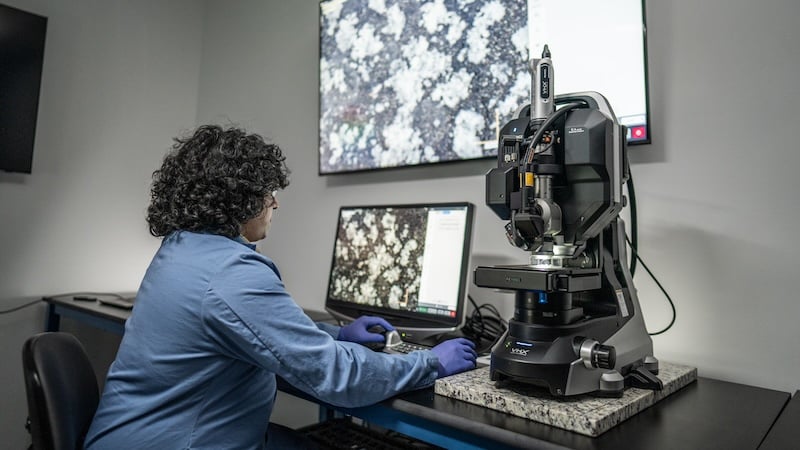
Understanding battery materials and chemistry is one key to improving performance. Image used courtesy of Iontra
Beyond Battery Tweaks: It's Time to Get Smart About Charging
For years, the battery industry has been primarily focused on unlocking battery performance through materials science—new chemistries, different cell designs, better electrolyte additives, the list goes on. These are important steps, but when it comes to actually charging these batteries, the focus on fundamental strategies for how charging is handled today has lagged behind. Traditional charging methodologies typically employ standardized current and voltage profiles based on electrochemical processes only. We analyze and include the impact of the complex electrodynamic processes impacting battery degradation during charging. This enables us to uniquely enhance battery longevity and performance by creating a healthier, more intelligent, and real-time adaptive approach to charging.
What Happens When You Charge
The process of charging a lithium-ion battery impacts several degradation mechanisms. Growth of the solid electrolyte interphase (SEI) layer on the anode consumes lithium ions and increases internal resistance, leading to capacity loss. Fast charging exacerbates these issues, leading to increased lithium plating on the anode and accelerated dendrite growth, which also pose safety risks.
Certain charging conditions, particularly at extreme temperatures, can accelerate detrimental chemical side reactions within the battery. While battery management systems provide essential safeguards by monitoring key parameters, their effectiveness in mitigating long-term degradation and preserving battery health is limited by the constraints of the underlying charging protocol.
The most common way to charge is using a constant current until a certain voltage is reached and then holding that voltage while the current drops off—that's the CCCV methodology. It's a standard approach, but it treats every battery and every charging session the same. Some more advanced techniques use steps of current to add more energy while the battery is empty, then lowering the speed of energy being added as the battery fills up. Some adaptive charging methods exist, either using basic feedback like voltage and temperature, or purely electrochemical information, such as Electrochemical Impedance Spectroscopy–based techniques, to adjust charging parameters. However, these approaches lack the granular, dynamic understanding of the battery's internal electrodynamic behavior required for truly optimized charging.
Introducing Intelligent Charging: A Data-Driven Approach
This is where Iontra brings something truly unique: a customized charging methodology leveraging electrodynamics. We have developed a way to "talk" with the battery, using carefully designed probing, custom mathematics, and advanced digital signal processing to get information from the battery that others can’t. By analyzing the battery's responses to voltage and current probing, this technology forms an incredibly detailed understanding of what's happening inside the battery.

Analyzing a battery's responses to voltage and current drives an understanding of what's happening inside. Image used courtesy of Iontra
Then, with this detailed understanding, we create an optimized, DC step charge profile and a custom waveform for that specific battery cell model and packs made with that cell model. This optimized recipe takes into account multiple parameters, including the harmonics and impedances at various states of charge, and is modified in various ways to get the healthiest and most effective charge into the battery. Based on customer requirements and product cost economics, the optimized recipes can be used as-is, or the optimized charging waveform can then be overlayed onto the optimized step-charge profile to get truly unrivaled performance.
The key to maximizing safety, minimizing battery degradation, and maximizing performance lies in operating right up to, but not beyond, the battery's true physical limits. Iontra’s intelligent system can identify these boundaries and then deliver them via a charge control MCU chip. The current process involves upfront work on the battery cells to determine the best charging steps and waveforms. For this, specific current and voltage signals are injected, and the response is analyzed to create an understanding of the battery. Various dynamic battery states, including impedances and the anode potential as it changes across a spectrum of frequencies and states of charge, are determined. This granular analysis provides the necessary information to precisely tailor the charging recipe, which is delivered through our charge control library on the IONTIC (or other) MCU chip in the charger or device. This ensures that the battery is charged healthily, without being pushed into damaging conditions that can otherwise lead to lithium plating, dendrite growth, or excessive SEI layer formation. This approach allows for faster charging and longer cycle life without compromising the battery's safety.
Product Applications
The benefits of Iontra's customized charging recipes extend across a wide spectrum of applications. In the realm of portable electronics, the technology can enable faster charging, longer battery life, colder weather, and safer charging for power tools, smartphones, power banks, and other devices. For electric vehicles, this promises significantly reduced charging times, extended driving range through optimized energy management, and prolonged battery lifespan. It addresses key consumer concerns, accelerates EV adoption, and enables second-life applications. Furthermore, in grid-scale energy storage systems, this technology has the potential to lower the levelized cost of energy by extending the operational life, improving system reliability, and, thus, maximizing the return on investment of these critical assets.

Battery storage systems. Image used courtesy of Adobe Stock
Case Study Overview—Salom
One of Iontra’s partners keen to be first to market with this new technology is Salom Power, a leading global power solutions manufacturer. We are collaborating on a variety of charging products, including USB-C Power Delivery Extended Power Range chargers. Salom is bringing an Iontra-enabled USB-C power supply to their partners and customers, enabling these consumer product OEMs to adopt Iontra technology in their products with zero-to-minimal hardware changes. Other potential future applications via this collaboration include eKick, eBike, and electrically assisted vehicle chargers, as well as chargers for various personal care products.
Future Trends & Innovations
The field of battery charging is going through a significant transformation. Future trends will undoubtedly focus on greater intelligence, adaptability, and speed. There will be a growing demand for charging technologies that can dynamically respond in real-time as the battery ages to each individual battery's condition, user profiles, and environmental factors. Current local processing solutions to execute this capability cost-effectively are limited. To accelerate adoption, Iontra is developing its own charge control chip that is cost-effective and has the ability to do the required local data processing and provide real-time adaptive charging. This adaptive charging solution (available 2H 2025) will modify the charge recipe on-the-fly as the battery ages to maintain an as-healthy-as-possible charge as the battery experiences changes to its internal electrodynamics (energy uniformity), electrochemistry (SEI and other degradation) and physics (swelling, thermal changes), and even respond to unexpected events like physical impacts or extreme user behavior.
The pursuit of ultra-fast charging or extending battery life significantly without compromising battery health will continue to be a major driving force for innovations in managing the charging power as it goes into the battery. We plan to remain at the forefront of these advancements, continually innovating on its technology to meet the evolving needs of the energy storage landscape.
The persistent challenge of lithium-ion battery degradation during charging demands a paradigm shift in how we approach battery current management. While traditional efforts have largely focused on looking at new battery chemistries and electrochemical parameters, or backing away from the battery’s full charging potential, Iontra has pioneered a patented, transformative solution by concentrating on the electrodynamics of the charging process. Its method of employing sophisticated electrodynamic probing provides unprecedented insight into the battery's dynamic internal states, enabling the creation of customized charging profiles. This intelligent approach allows batteries to be charged healthier, faster, safer, and with significantly reduced degradation, unlocking their true potential and extending their lifespan. Iontra's technology represents a step change in battery charging, paving the way for a more efficient, sustainable, and powerful future.