Facebook
 Google
 GitHub
 Linkedin
Tech Collaboration Drives Self-Driving Electric Vehicles Forward
Electric vehicle maker Leapmotor will collaborate with semiconductor company Ambarella to develop next-generation advanced driver assistance systems for electric vehicles.
Leapmotor, a China-based electric vehicle (EV) manufacturer, and Ambarella, a semiconductor ad processing company, will jointly develop intelligent driving solutions, also known as advanced driver assistance systems (ADAS), for next-generation EVs.
The companies will develop high-performance ADAS capabilities for Leapmotor’s passenger EV line. The technology will be based on Ambarella’s CV3-AD family of advanced automotive system-on-chip (SoC) processors.
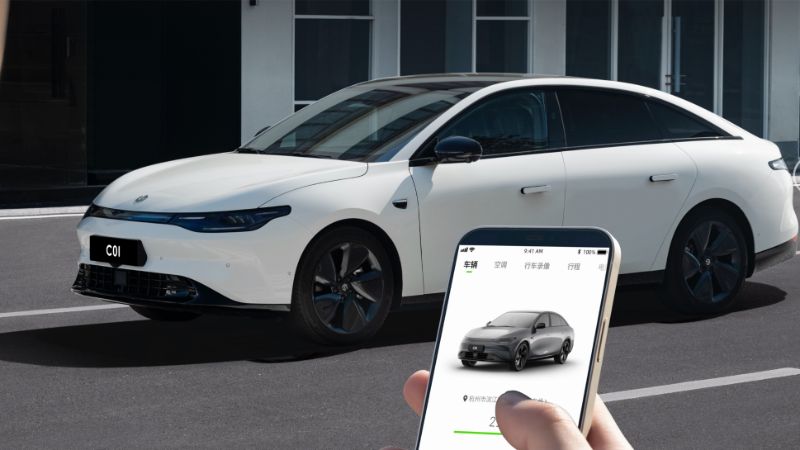
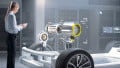
EV with intelligent features. Image used courtesy of Leapmotor
Intelligent or Autonomous Driving
Intelligent driving, or ADAS, has been a feature of modern automobiles for years, and these systems’ capabilities continue to advance rapidly toward the ultimate goal of fully autonomous (Level 5) vehicle operation.
Modern ADAS systems typically comprise external sensors, such as cameras, radar, and LiDAR, to monitor the external environment and provide alerts or other information to the driver in assisting with the vehicle’s safe operation. However, as the intelligence behind these systems improves, they promise to deliver more than just information but the ability to make actual driving decisions.
For its part, Leapmotor has been aggressive in developing intelligent driving capabilities for its fleet of EVs with a range of Level 2 driver assistance capabilities. The company’s latest intelligent driving system, Leapmotor Pilot 3.0, offers multiple advanced features, including 360-degree vision, among its 22 intelligent driving features.
By collaborating with Ambarella, Leapmotor is signaling its plans to advance its vehicles’ intelligent driving capabilities beyond Level 2 autonomy.
.jpg)
Advanced driver assistance system. Image used courtesy of Ambarella
Processor Controls for Advanced Driver Assistance Systems
The CV3-AD from Ambarella is a family of scalable, high-performance system processors built on a 5 nm automotive process node. It can meet ASIL-B/D functional safety standards.
To support intelligent driving systems, the processor features an integrated, high-quality image signal processor to meet computer vision systems’ low latency requirements and offers excellent signal quality and dynamic range. Onboard acceleration hardware serves as a sensor fusion hub for quickly processing LiDAR and millimeter-wave radar data.
According to Ambarella, the CV3-AD's neural vector processor, low-power AI capabilities, and neural network-based processing allow it to detect, classify, and track external objects in Level 4 autonomous systems. Level 4 vehicles are not fully autonomous but offer highly functional self-driving capabilities under certain conditions.
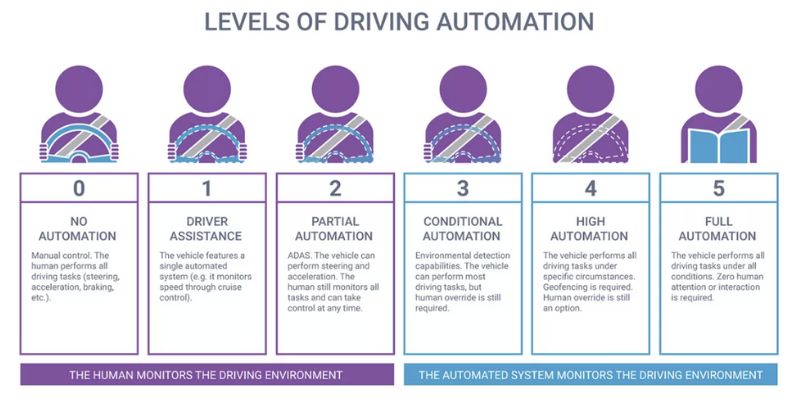
Levels of driving automation. Image used courtesy of Energy Information Administration
An Autonomous Future
Along with electrifying vehicle drivetrains, automotive OEMs are working furiously on new technologies to support higher autonomous vehicle operation levels. As sensors improve and processors become more powerful, more and more data can be sifted into precise, actionable information, enabling a future with ever-increasing levels of vehicle autonomy. We are just at the beginning.