Facebook
 Google
 GitHub
 Linkedin
Hybrid vs. EV: Japanese Automakers Betting on Beyond-Battery Solutions
Japanese automakers Subaru, Toyota, and Mazda will collaborate to develop compact and efficient next-generation engines designed to integrate with electric drive units, such as motors and batteries.
In the past, Toyota has faced significant criticism for focusing on hybrid vehicles instead of fully committing to electric vehicles (EVs). Critics have argued that Toyota's emphasis on hybrids is slowing down the much-needed transition to zero-emission EVs and hampering efforts to combat climate change. A sudden shift in public support for plug-in hybrid vehicles (PHEVs) has made Toyota’s foot-dragging on battery-powered EVs look like a winning strategy.
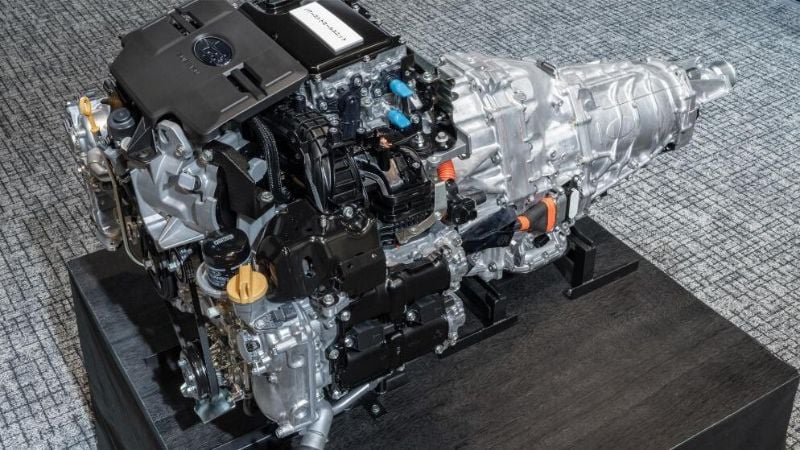
Subaru’s opposed engine hybrid concept. Image used courtesy of Toyota
Hybrid Alternatives
While car manufacturers focus on long-term EV goals, hybrid and plug-in hybrids are seen as a strategic move to provide customers with more electrified choices, meet emissions targets, and address the limitations of adopting EVs until the infrastructure and technology mature.
Hybrids combine gasoline engines with an electric motor and a rechargeable battery pack, allowing for some all-electric driving range before switching to hybrid mode. A traditional hybrid electric vehicle (HEV) uses the onboard gasoline engine while capturing braking energy to charge its battery. The plug-in hybrid electric vehicle’s battery can also be recharged at home or at public charging stations to provide limited EV range before resorting to gasoline power. For consumers who are nervous about EV range or charging infrastructure, HEVs and PHEVs remove most fears.
Several major automakers are shifting their focus toward hybrid vehicles rather than exclusively promoting all-electric vehicles. Ford Motor Company is delaying its new EV models to divert investments toward hybrid electric vehicles (HEVs) like the Maverick and F-150 hybrid trucks. Stellantis (Chrysler, Dodge, Jeep, Ram) is developing PHEVs for its electrification strategy. The company is adopting a "flexible architecture" to accommodate both hybrid and electric powertrains. General Motors plans to introduce plug-in hybrid electric vehicles in North America, reversing its previous strategy of focusing solely on all-electric vehicles. Other companies, like Mercedes-Benz and BMW, are backing away from their prior EV commitments to invest more heavily in hybrid vehicles.
Subaru, Toyota, and Mazda’s Plan
While current hybrid systems have made significant strides in efficiency and emissions reduction, Subaru, Toyota, and Mazda's collaborative efforts aim to push the boundaries further. Their new engines are specifically tailored for the electrification era. They offer improved compatibility with sustainable fuels, more compact designs for better integration, higher power density, and the ability to meet tightening emissions regulations.
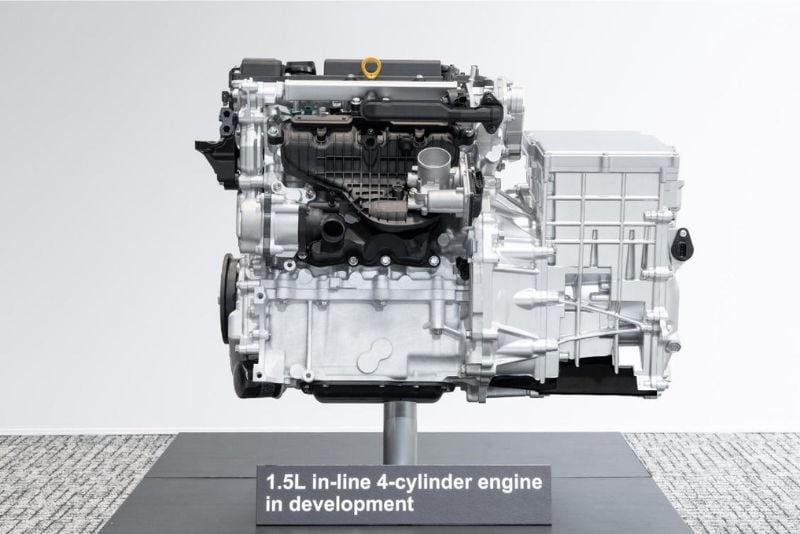
Next-generation auto engine. Image used courtesy of Toyota
The companies aim to optimize engine performance, integrate with electric powertrains, and broaden options for carbon-neutral fuels through "friendly competition." Subaru will enhance its horizontally opposed engines for carbon-neutral fuel compatibility, Toyota will evolve its engines for future energy environments, and Mazda will continue developing its rotary engines for electrification and carbon-neutral fuels.
By working from similar game plans, the three companies could avoid the accusations of foot-dragging directed toward Toyota.
Existing hybrid systems primarily rely on gasoline or diesel, which still produce emissions but are lower than those of conventional engines. A key advantage to the Japanese three’s engine programs is their compatibility with various carbon-neutral fuels like e-fuels, biofuels, and liquid hydrogen. This allows internal combustion engines to significantly reduce their carbon footprint, although nowhere near as low emissions as a battery EV would provide.
New Engine Design
The automakers are designing the new engines to be more compact, enabling better aerodynamics, lower hoods, and improved overall efficiency. This compact design facilitates tighter integration with electric motors and batteries in hybrid powertrains for optimized performance.
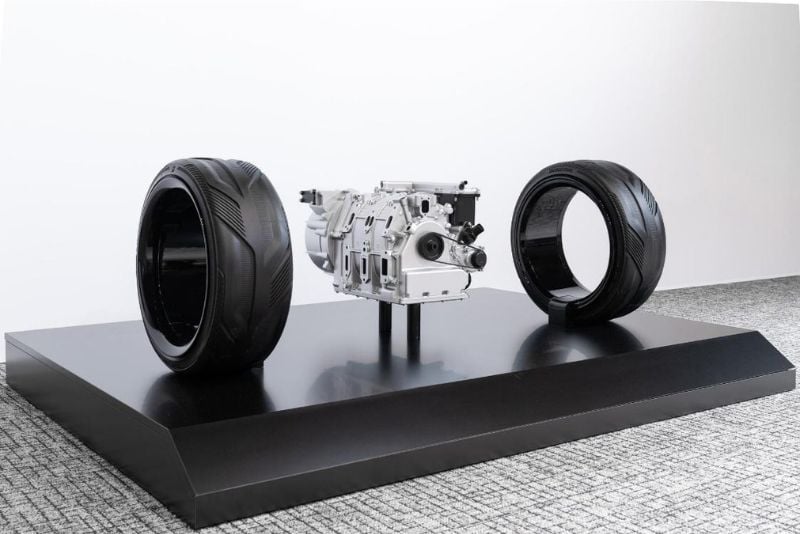
Mazda’s rotary engine hybrid concept. Image used courtesy of Toyota
The engines aim to achieve higher power density by concentrating power output in a smaller package. Combined with the instantaneous torque from electric motors, this can translate to better acceleration and drivability in hybrid vehicles.
Without further advancements, existing hybrid technologies may face challenges in meeting increasingly strict emissions norms. These next-generation engines are engineered to meet future stringent emissions standards while delivering robust performance through electrification.
Meeting Emissions Challenges
Subaru, Toyota, and Mazda make it clear they are not opposing or dismissing EVs. Instead, they aim to provide diverse options to achieve carbon neutrality, including EVs and other technologies. They say their approach recognizes that different markets and customers have varying needs and preferences, requiring multiple pathways to sustainability. According to the companies, this allows hybrids to serve as an interim solution and a complementary technology to EVs on the path to full electrification and carbon neutrality.
Critics point out that while hybrids are more efficient than traditional gasoline vehicles, they still produce significant emissions and do not offer the same level of sustainability as fully electric vehicles.
While the U.S. government supports PHEVs in the near term, analysis indicates they cannot enable long-term climate goals to be met. These three Japanese automakers recognize the challenges of rapid mainstream EV adoption, such as affordability, charging infrastructure, and grid capacity concerns. They are also concerned with protecting their enormous investment in gasoline engine manufacturing and are trying to avoid a sudden abandonment of those investments.