Facebook
 Google
 GitHub
 Linkedin
Wolfspeed Intros 3.3 kV SiC Power Modules
Wolfspeed has released two 3.3 kV SiC modules: an LM half-bridge reducing switching losses by 42% and a WolfPACK full-bridge offering 50% smaller SST footprints.
Grid converters, solid-state transformers, and utility-scale storage systems have historically required multilevel topologies because no single SiC device could block the full DC-link voltage with acceptable switching losses. Wolfspeed is addressing that with two silicon carbide module families built around Gen 4 SiC MOSFETs: one in a high-current baseplate package and the other a baseplate-less design for modular and stacked architectures.
Both are aimed at 2 kV and higher DC-link systems where engineers are looking to move from multi-level to 2-level converter topologies. They were demonstrated this week at PCIM Europe in Nuremberg.
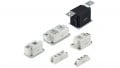
_and_HAB900C33LM4_half-bridge_LM_platform_module_(bottom).jpg)
Wolfspeed's IBB020A33GM4 full-bridge WolfPACK module (top) and HAB900C33LM4 half-bridge LM platform module (bottom). Image used courtesy of Wolfspeed
HAB900C33LM4: Half-Bridge Baseplate Module
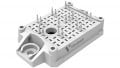
The HAB900C33LM4 is a half-bridge module in the LM platform package (144 × 100 × 40 mm), rated at 900 A, 3,300 V, with an Rdson of 2 mΩ at 25°C and stray inductance of 9.5 nH. It uses a copper die-top interconnect with sintered die attach, which reduces thermal resistance between the die and substrate and extends power-cycling lifetime.
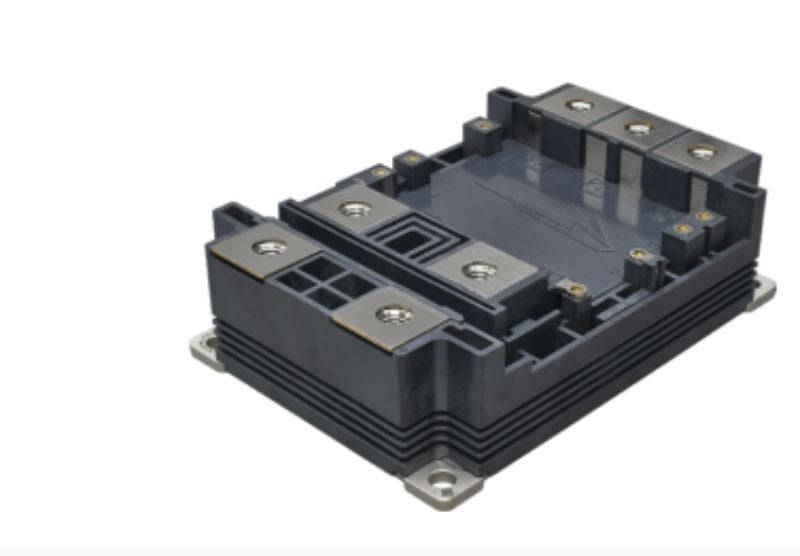
HAB900C33LM4 half-bridge module. Image used courtesy of Wolfspeed
The module delivers up to 42% improvement in switching losses compared to other available SiC modules in the same package and over 90% lower than IGBTs, both measured at 125°C on a 1.8 kV bus. Switching performance remains consistent across the full operating temperature range.
Target applications are solar and wind inverters, grid-scale energy storage, and high-power converters above 800 A.
IBB020A33GM4: Full-Bridge WolfPACK Module
The IBB020A33GM4 is a full-bridge, baseplate-less module in the Wolfspeed WolfPACK family, rated at 100 A with an Rdson of 20 mω at 25°C. It uses a sintered die attach with epoxy encapsulant in place of standard silicone gel, which improves power-cycling life. A pre-applied TIM variant, the IBB020A33GM4T, is also available.

IBB020A33GM4 full-bridge WolfPACK module. Image used courtesy of Wolfspeed
The IBB020A33GM4 is designed for parallel or series-stacked converter architectures. In SST designs, the module's switching performance reduces system footprint by over 50% compared to conventional grid equipment. SST manufacturer Amperesand has adopted the IBB020A33GM4 in a 6+ MW medium-voltage SST design, targeting a 20 to 30-year operating lifetime.
Target applications include solid-state transformers, modular renewable energy converters, grid-tied distributed generation, and DC fast chargers.
Shared Features
Both modules are built on Gen 4 SiC MOSFETs with improved cosmic-ray susceptibility ratings, relevant for high-voltage outdoor and grid-tied installations. Both support 2-level converter topologies for DC-link voltages of 2 kV or higher, reducing the number of power stages compared to multi-level designs that use lower-voltage devices.
Switching performance is consistent across the operating temperature range for both families, which reduces magnetics and EMI filter sizing requirements.
Availability
Samples of all three part numbers are available to select customers through Wolfspeed's direct sales team. Datasheets are posted on the product pages: HAB900C33LM4, IBB020A33GM4/4T.
Looking Ahead
As the power demands of AI infrastructure continue to scale, with some experts projecting data center power consumption doubling within the next few years, the pressure on medium- and high-voltage conversion will only intensify. The ability to fit a 6+ MW solid-state transformer into half the footprint of legacy equipment, while sustaining 24/7 operation for decades, is precisely the kind of engineering argument that could accelerate SiC adoption well beyond automotive into the utility and hyperscaler segments.