Facebook
 Google
 GitHub
 Linkedin
Toshiba Intros High-Speed Comparator for Industrial Safety
Toshiba has expanded its lineup with the TC75W71FU dual comparator with a 30-45 ns response and rail‑to‑rail I/O for safer overcurrent detection.
The need for smaller, faster, and more efficient electronics hasn't slowed. Motors, power converters, and robotic equipment are running at higher current densities than they did before, often without any increase in physical space. That shift leaves less margin for engineers designing new products.
At the same time, overcurrent events that might have been tolerated in older designs can put components under real stress or cause immediate failures. Even brief current spikes can significantly disrupt processes or trigger safety circuits if not quickly detected.
This need for rapid detection is prompting component manufacturers to prioritize response time as much as accuracy in their designs. Toshiba developed the TC75W71FU to detect abnormal current behavior so protection circuits can react before a fault turns into permanent or irreversible damage to the component.
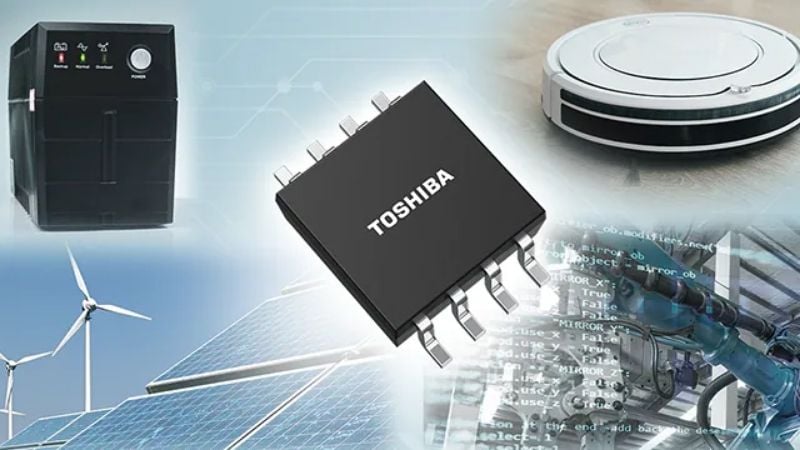
The TC75W71FU dual comparators. Image used courtesy of Toshiba
Rising Demands in Industrial Power Systems
Running higher power density brings clear benefits, but it also narrows the margin for error. Electrical spikes that once showed up as noise or a brief hiccup can now shut down a line or create a real safety concern.
Manufacturers are prioritizing the speed of their protection circuits in addition to their accuracy. Toshiba created the TC75W71FU with this need in mind. The TC75W71FU is designed to respond almost immediately when conditions exceed safe limits, providing engineers with a solution to address potential problems early, before damage to hardware or lost production time.
Faster Response and Design Flexibility
The TC75W71FU is faster than Toshiba’s earlier TC75W56FU. At 3.3V, it has propagation delays of up to 45ns for low-to-high transitions and 30ns for high-to-low transitions, which is about 10 times faster than the previous model. This speed allows equipment to shut down almost right away when an overcurrent event happens.
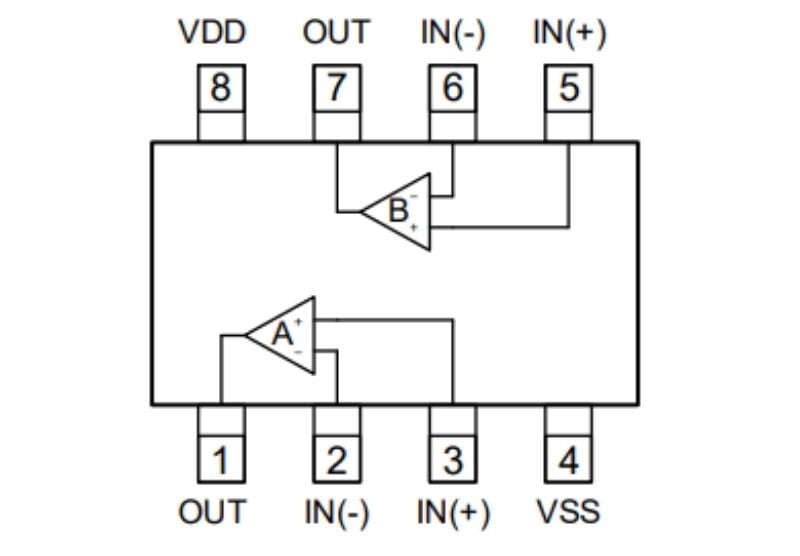
Pin out diagram for the TC75W71FU. Image used courtesy of Toshiba
The TC75W71FU operates within a supply voltage range of 1.8 V to 5.5 V and is rated for industrial temperature use from -40°C to 125°C. It will have a maximum propagation delay of 45 ns for low-to-high transitions and 30 ns for high-to-low transitions when supplied with 3.3 V, making it suitable for fast fault detection in high-speed protection circuits.
The TC75W71FU’s rail-to-rail input and output capabilities allow the comparator to process signals throughout the entire supply range without additional level shifting. This push-pull output stage enables rapid rise and fall times without requiring pull-up resistors.
Expanded Lineup Coming in 2026
The TC75W71FU is just the starting point in Toshiba’s updated comparator lineup, as there are two additional versions expected to enter mass production in February 2026. The TC75W72FU adds built in hysteresis, which helps deal with electrical noise and reduces the chance of false trips. The TC75W73FU builds on that by pairing hysteresis with an open-drain output, making it easier to connect to systems running at different voltage levels.
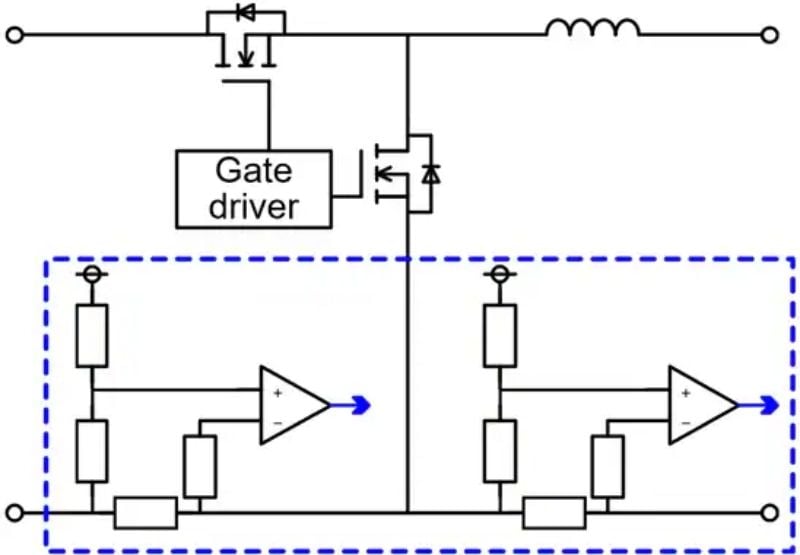
Overcurrent detection in a circuit. Image used courtesy of Toshiba
Those options widen the range of systems these comparators can fit into, ranging from industrial robots, UPS systems, photovoltaic inverters, and power supplies. These components all benefit from faster and more dependable overcurrent detection. The same applies to certain consumer products, including home appliances and compact power supplies.
With the TC75W71FU and its upcoming companion models, Toshiba is strengthening its position in the industrial safety and control market. The TC75W71FU comparators will offer faster reaction times, flexible voltage operation, and design‑friendly features that help engineers build equipment capable of protecting itself in industrial environments.