Facebook
 Google
 GitHub
 Linkedin
TDK Launches 1500 W DC-DC Converter Series With 99% Efficiency
The buck-boost DC-DC converter series with patented pass-through technology delivers up to 99% efficiency and 1500 W output.
TDK has introduced the TDK-Lambda i9C series, a family of 1500 W non-isolated DC-DC buck-boost converters designed for industrial and battery-powered applications. The series introduces patented Programmable High-Efficiency Pass-Through (PHEPT) technology, allowing the module to reach efficiencies as high as 99% while reducing heat generation and extending runtime in battery-powered systems.
The first release supports 9-80 V input and 9.6-60 V output ranges, with output currents up to 30 A. A second version is planned to support 9-40 V input and 5-36 V output ranges, with output currents up to 50 A. TDK is targeting applications including AGVs, AMRs, commercial drones, robotics, communications equipment, and test systems where power efficiency and thermal management directly affect system performance.
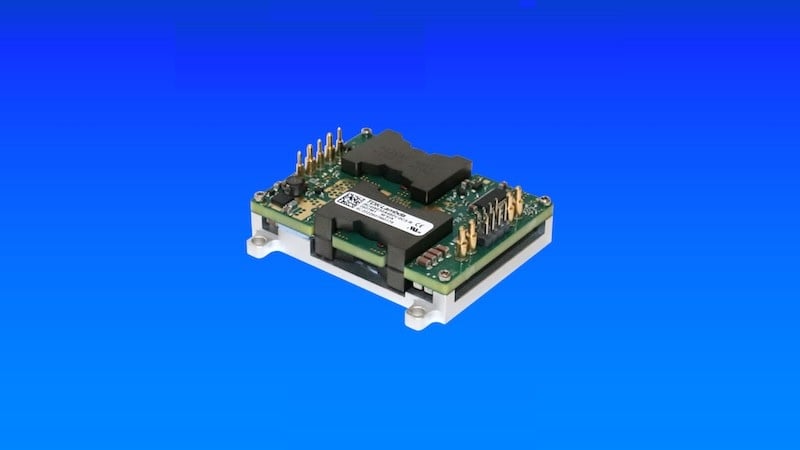
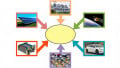
The i9C series delivers up to 99% efficiency using PHEPT technology. Image used courtesy of TDK
Patented Pass-Through Mode Eliminates Conversion Losses
The i9C buck-boost converters will feature TDK-Lambda’s patented PHEPT technology. Under normal operation, DC-DC converters continuously regulate and convert incoming power, but that process also creates switching losses and heat. PHEPT allows users to define an input voltage window where regulation is bypassed, and the module directly passes input power to the output.
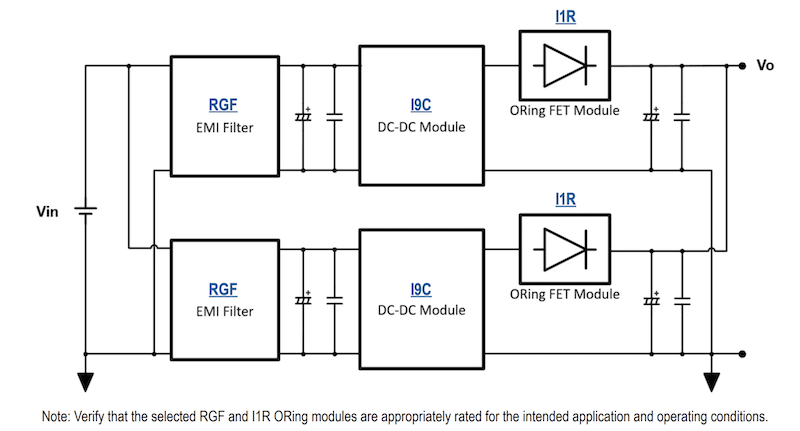
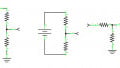
Typical block diagram that shows redundant/parallel configuration for the i9C series. Image used courtesy of TDK
Inside the programmable PHEPT window, the converter bypasses normal power conversion and directly passes input power to the output. TDK says this can push efficiency as high as 99%, which in turn reduces heat generation and helps improve battery runtime. For systems such as AGVs, mobile robots, and drones, reducing conversion losses can simplify thermal management while improving overall system efficiency.
Wide Input Flexibility Supports Multiple Power Configurations
The i9C series buck-boost converters can support broad operating ranges and are intended to fit multiple system types. Current versions support 9-80 V inputs with outputs from 9.6-60 V at up to 30 A, while upcoming versions will support 9-40 V inputs and outputs ranging from 5-36 V at up to 50 A.
The i9C series modules can deliver up to 1500 W while maintaining a compact, wide quarter-brick footprint. That combination allows designers to support common 12 V, 24 V, 48 V, and 60 V bus systems without requiring multiple converter designs.
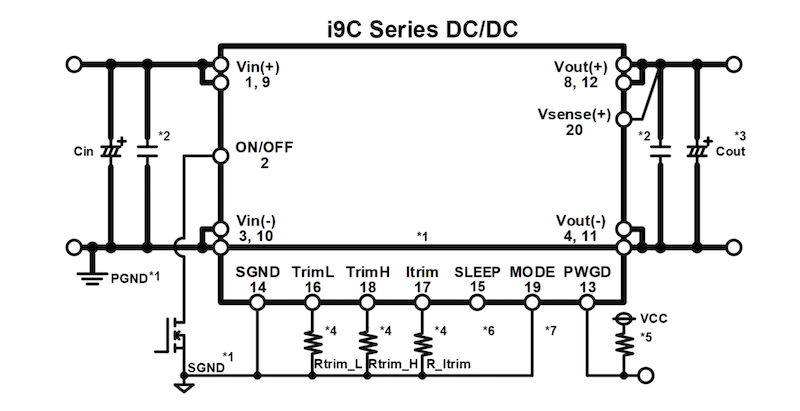
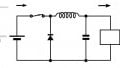
Typical application circuit for the i9C series converter. Image used courtesy of TDK
TDK also integrated several system-level features, including remote sense, power-good signaling, negative-logic on/off control, adjustable overcurrent protection, and full auto-recovery protection. Adjustable current limiting can reduce stress on both the converter and connected loads while minimizing the need for additional external circuitry.
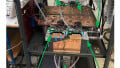
The i9C Handles Thermal Stresses
High-power converters can sometimes create packaging and cooling challenges, especially in systems operating in higher ambient temperatures or limited-airflow environments. The i9C has an advantage in handling thermal stresses, as it uses a compact, wide quarter-brick package with an integrated baseplate that supports convection, conduction, or forced-air cooling.
The i9C buck-boost converter will also include a configurable low-power sleep mode. This mode reduces power dissipation during idle or light-load operation. Combined with its compact quarter-brick package and multiple cooling options, the module is aimed at industrial, communications, and battery-powered systems where thermal limits, power density, and available space all compete with each other.
The i9C series DC-DC buck-boost converters address efficiency losses that become increasingly important in battery-powered and mobile systems, such as in mobile robots or drones. By combining up to 99% efficiency, wide operating ranges, and programmable pass-through operation, TDK is targeting applications where reducing heat and extending runtime can have a measurable system-level impact.