Facebook
 Google
 GitHub
 Linkedin
New EV Converters Pack Power and Efficiency
Power converters from Vicor and Infineon can save space and reduce manufacturing costs in EVs, and address other automotive needs.
Electric mobility has become a fundamental driver of change in the power electronics industry. Electric vehicles’ unique demands have required power electronics companies to develop novel solutions that blend power output, size, and efficiency.
Vicor and Infinity have released upgraded power converter solutions for the e-mobility market. These advances offer high efficiency in a compact space.
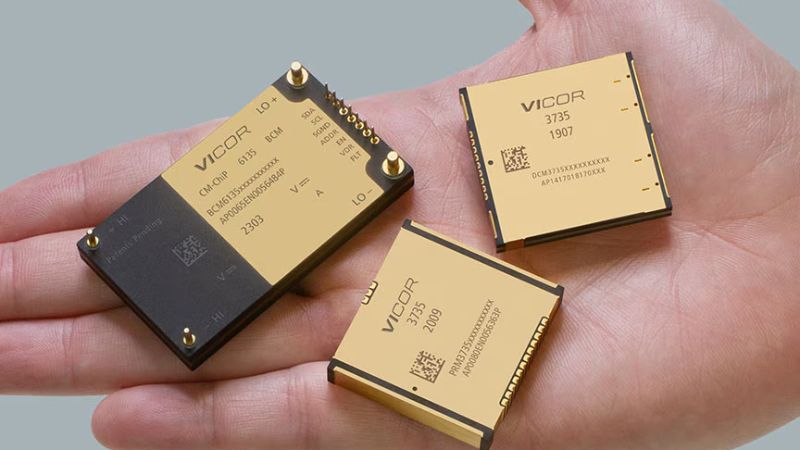
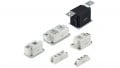
Vicor’s automotive-grade power modules. Image used courtesy of Vicor
Vicor’s Trio of DC-DC Converters
A 48 V zonal architecture is becoming central in automotive electrical systems. By organizing the vehicle's electrical network into multiple "zones," each with a controller and connected by a 48 V power supply, this architecture reduces the need for heavy copper cabling and wiring. The result is reduced vehicle weight, enhanced fuel efficiency, increased range, and simplified wiring systems.
Vicor has released three DC-DC converter modules (BCM6135, DCM3735, PRM3735) to support 48 V power distribution in vehicles and to promote 48 V zonal architectures with high power density. These modules provide 800 V-to-48 V conversion, 48 V regulation, and 48 V-to-12 V conversion to accommodate legacy 12 V subsystems.
The Vicor PRM3735 DC-DC Converter power modules are non-isolated, zero-voltage switching buck-boost regulators optimized for high-efficiency electrification. With a compact design and high power density of 260 kW/L, these modules reduce space requirements and overall DC-DC power supply needs. PRM3735 achieves up to 99.2% peak efficiency, supports constant-current battery charging, and includes voltage, current, and temperature protections.
The DCM3735, packaged in an SM-ChiP format, employs Vicor’s ZVS buck-boost regulation and Sine Amplitude Converter technology. The BCM6135 converter, featuring high bandwidth and low series impedance, also acts as an efficient capacitance multiplier. This chip effectively reduces the size and number of capacitors needed in 48 V point-of-load regulators, saving space at the load site.
Infineon’s HybridPACK Drive G2 Fusion
The automotive field is shifting from silicon to silicon carbide (SiC) power electronics due to silicon’s limitations in handling high power and efficiency demands. Silicon’s relatively low thermal conductivity and lower breakdown voltage hinder its ability to manage heat and withstand high voltages, causing efficiency losses and requiring bulky cooling systems. Its slower switching speeds result in greater energy loss during each cycle, reducing overall system efficiency.
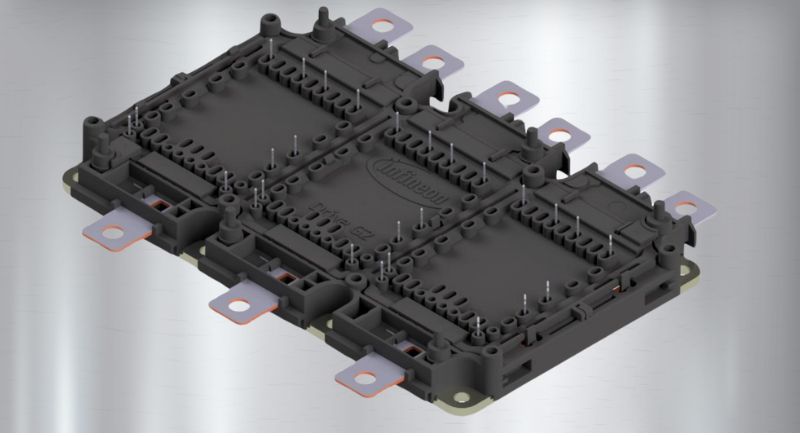
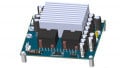
HybridPACKDrive G2 Fusion. Image used courtesy of Infineon
Infineon has introduced its HybridPACK Drive G2 Fusion module: a high-performance power module designed for e-mobility. Combining Infineon’s CoolSiC technology and silicon IGBT technology, this solution blends cost and efficiency in a single module. This fusion architecture allows 70% silicon and 30% SiC usage, nearly matching the efficiency of a full SiC solution while reducing system costs and maintaining high thermal conductivity and switching performance.
Operating within the 750 V class, the module provides up to 220 kW of output power at temperatures from -40°C to +175°C, integrating.
The Future Power Conversion Landscape
As the automotive sector embraces higher efficiency and compact power solutions, advancements in power converters will likely become central to future vehicle design. These developments promise more streamlined architectures, improved system efficiency, and minimized vehicle weight.