Facebook
 Google
 GitHub
 Linkedin
London Microgrid Turns Buildings into Local Power Generators
The microgrid combines wind, solar, and energy storage at the building level to provide 80% of a London college’s energy needs.
A microgrid in East London could serve as a model for distributed energy generation in densely populated cities. The London Design and Engineering University Technical College (LDE UTC) has secured full planning permission from the London Borough of Newham to build the city’s first urban building-mounted wind and solar microgrid.
Designed by Texas-based microgrid developer Hover Energy, the system combines rooftop wind generation, solar panels, and battery storage, transforming the building into a self-sustaining power generator. On completion, the project will generate, manage, and optimize over 80% of the institution's overall electricity footprint on-site.
The government-funded science and engineering school will serve as a live operational model for edge generation. It can establish a technical framework for retrofitting microgrids into existing buildings without requiring additional land or infrastructure upgrades.
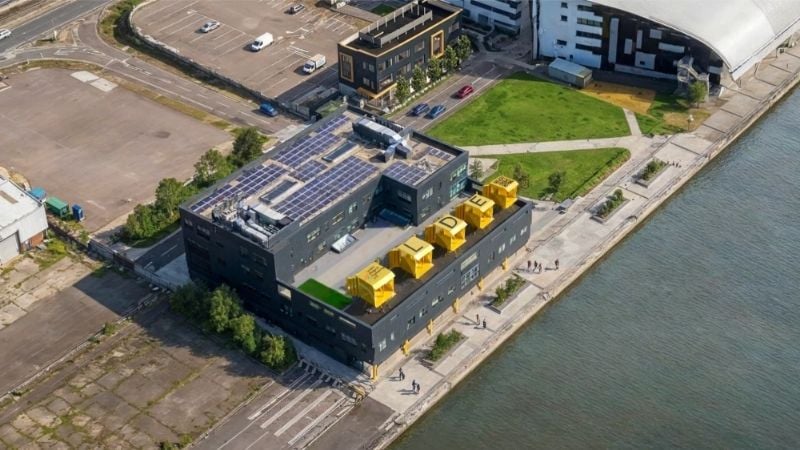
The microgrid at LDE UTC. Image used courtesy of Hover Energy
Aerodynamic Turbines Harness Roofline Airflow Patterns
The microgrid introduces the first commercial deployment of rooftop vertical-axis wind turbines in London. Five turbines sit along the parapet line of the building, positioned precisely where ambient wind strikes the vertical facade and flows upward over the roof structure.
Unlike traditional horizontal-axis turbines used in utility-scale wind farms, these compact units feature a fully enclosed design with no exposed blades. The reduced opening size compresses and speeds up the air as it enters the turbine.
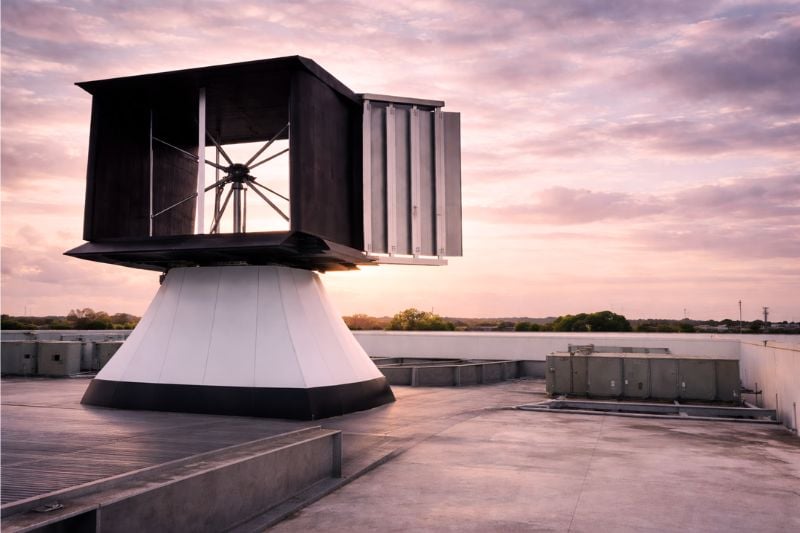
Close-up of Hover’s vertical-axis wind turbine. Image used courtesy of Hover Energy
In tests, the compressed-air design boosted energy production capacity by up to 50% compared to un-shrouded vertical systems. It operates at noise levels around 64 dB and produces zero structural vibration. The wind system passed visual, acoustic, and safety assessments required by local authorities and nearby London City Airport.
Intelligent Agentic Controls Drive Multi-Source Optimization
The wind turbines link directly into an existing rooftop solar array and a dedicated battery energy storage system. A localized control architecture co-developed with IBM and WatsonX governs the entire physical network.
The microgrid management platform operates locally on an edge data center consisting of a Qualcomm-based server rack. This setup enables continuous power balancing even if the main power grid fails or loses cloud connection.
An agentic artificial intelligence engine continuously analyzes historical demand curves and predictive generation data to optimize output. Algorithmic tuning is projected to increase overall energy production by an additional 15% to 20% over standard hardware baselines.
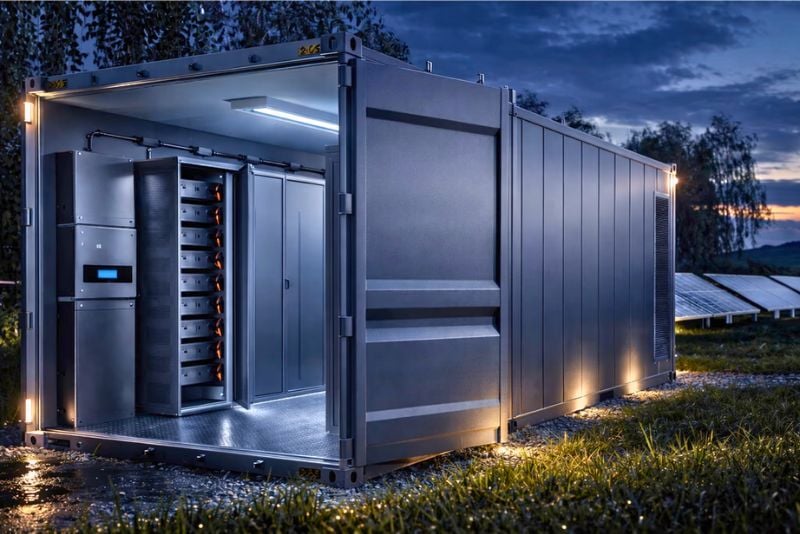
Hover’s AI management system integrates technologies and optimizes energy use. Image used courtesy of Hover Energy
The AI system targets each generation source independently to maximize efficiency. Software adjustments drive an 8% to 10% yield increase for the wind turbines and a 3% to 5% increase for the solar array, while the battery system stores excess power for strategic release. The paired battery system absorbs transient generation spikes and releases power during peak demand.
Edge Generation Relieves Central Grid Constraints
Since the hybrid microgrid generates clean power directly at the point of consumption, it changes the energy profile of the LDE UTC building. On a larger scale, on-site power production reduces demand on the main distribution grid and frees up regional substation capacity for surrounding urban developments. The microgrid’s analysis software also saves energy by evaluating the building’s power needs and consumption.
After final regional approvals, construction will begin, with operational startup anticipated within nine months.
The building-level hybrid microgrid can serve as a model for future expanded microgrid deployments in London and elsewhere. Next, Hover Energy plans to build a similar system at the University of East London’s Docklands campus while collaborating with the London Renewable Energy Laboratory on smart microgrid research.