Facebook
 Google
 GitHub
 Linkedin
Blade Recycling Turns Wind Into Storage
Swedish startup Sinonus is transforming discarded wind turbine blades into large batteries to create a cutting-edge energy storage solution. Here’s how.
Wind turbines evolve daily as engineers push the envelope, building offshore wind farms far out to sea and creating ultra-high-altitude wind farms. However, as wind farms expand, decommissioned towers and turbines will ultimately litter landfills or consume energy during recycling.
Sinonus, a Swedish startup, plans to transform these old turbine blades into a bold new energy storage solution. They have found a way to charge the blades’ lightweight carbon fiber to function like any other battery, repurposing these blades for a second wind past their prime.
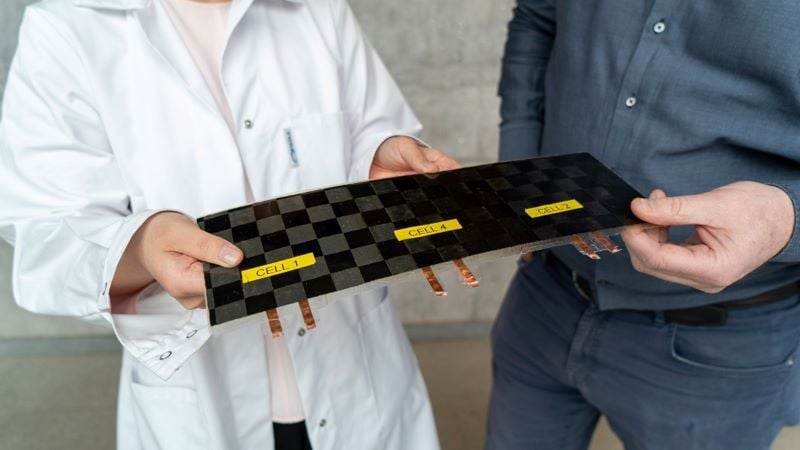
Sinonus’ multipurpose carbon fiber composite. Image used courtesy of Sinonus
Lithium-Ion Batteries in Grid Energy Storage
As wind farms proliferate, minimizing waste as old equipment fails is not the only problem. Increasing reliance on solar and wind power makes massive energy storage solutions urgent. Sometimes, natural energy sources are abundant when demand is low. That excess energy has to be stored for future demand.
Lithium-ion batteries (Li-ions) are the preferred energy storage method in the U.S. About 77% of electrical storage systems rely on Li-ions to store energy and accommodate fluctuating supply and demand cycles.
However, using Li-ions to store solar and wind energy presents several significant challenges and limitations. One major challenge is their limited lifespan and cycling capabilities. Li-ions generally last around 4,000 to 8,000 charge-discharge cycles, translating to roughly 10 to 20 years, depending on usage patterns. This lifespan may not be sufficient for grid-scale applications where long-term reliability is crucial.
While Li-ions have a lower energy cost than other battery types, the overall lifecycle energy consumption, including mining and manufacturing processes, can still be significant. These environmental costs can offset some benefits of using renewable energy sources.
Using Li-ions for utility-scale energy storage carries an increased potential for thermal runaway. The safety risks associated with TR are significant. Fire hazards pose a serious challenge, particularly for large-scale installations meant to support the utility grid. TR risk grows as the cell number increases because TR events propagate to neighboring cells. Even one cell experiencing TR can trigger a dangerous cascading effect. This risk becomes even more salient for large-scale energy storage solutions as the magnitude of TR impact increases.
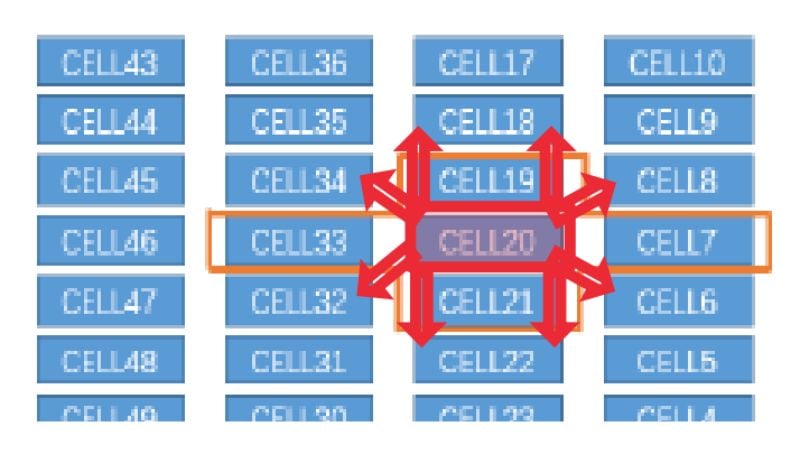
Illustration of fire propagation from one cell to adjacent cells. Image used courtesy of Sandia National Laboratories
Aside from lifecycle limitations, environmental concerns, and TR safety hazards, integrating Lithium-Ions into the existing grid infrastructure is complex due to varied state regulations and the need for standardized codes and safety measures. This regulatory patchwork can hinder the widespread deployment of lithium-ion storage systems across different regions.
Charging Lightweight Carbon Fiber for Energy Storage
Rather than trying to improve Li-ions, Sinonus engineers are considering bold energy storage alternatives. Massive turbine blades are made of lightweight carbon fiber, which can be “charged” to function as an energy storage solution.
Lightweight carbon fiber can be engineered to store energy by integrating it with conductive materials and electrochemical components. Carbon fibers, known for their excellent electrical conductivity, can serve as electrodes when embedded with active materials such as lithium iron phosphate. This creates a composite structure, allowing carbon fibers to function as a mechanical reinforcement and an integral part of the battery.
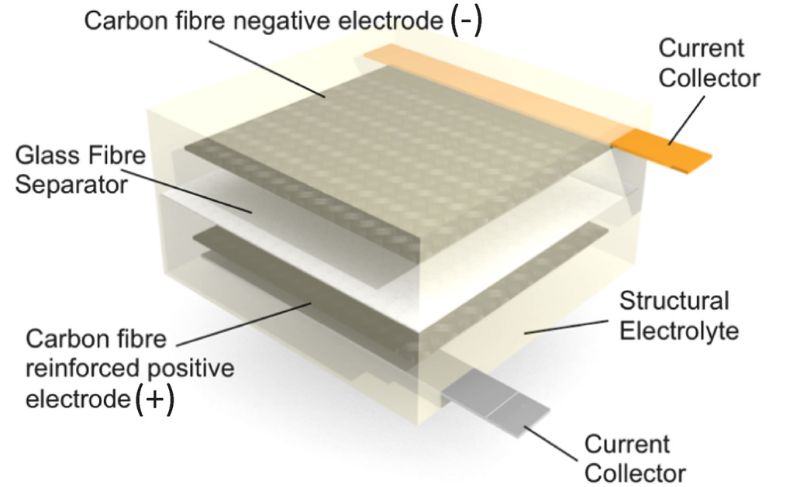
Diagram of a carbon fiber-based structural battery. Image used courtesy of ScienceDirect
The composite material is formed by embedding these conductive carbon fibers in a polymer matrix containing electrolytes to facilitate ion movement between electrodes during charge and discharge cycles. This multifunctional approach allows the carbon fiber to provide structural integrity and participate in energy storage.
Sinonus is planning multiple applications for its technology. Eventually, it could be incorporated into EV frames or building walls, providing structural support and energy storage.
Sinonus has successfully tested its carbon fiber units in low-power devices that typically use AAA batteries. It plans to scale up the storage capacity to compete with Li-ions.
Given the power load looming on the horizon from EV market growth and renewable energy technologies, alternative energy storage solutions will play a critical role in defraying grid stress. These self-charging carbon fiber turbine blades are an exciting innovation that diversifies collective energy storage options.