Facebook
 Google
 GitHub
 Linkedin
AI and Machine Learning in Industrial Power Management
Artificial intelligence and machine learning in industrial facilities can optimize energy consumption and conserve resources.
Artificial intelligence (AI) and machine learning (ML) are redefining how industrial facilities generate, distribute, and consume energy. For power and energy engineers, these technologies open the door to smarter, more efficient, and more resilient power management systems. By leveraging data-driven insights, AI and ML can optimize energy usage, anticipate system failures, improve grid stability, and streamline resource allocation.
As industries transition toward digitalization and decarbonization, adopting AI and ML is essential for meeting the growing demands of reliability, sustainability, and cost control.

AI and ML can optimize energy management. Image used courtesy of Adobe Stock
Optimizing Energy Consumption
One of the most immediate benefits of AI and ML in industrial power management is improved energy efficiency. Traditional energy systems rely on fixed schedules and operator judgment, which can lead to unnecessary energy waste or missed savings opportunities. AI algorithms, on the other hand, continuously analyze real-time and historical data to identify patterns, anomalies, and optimization potential.
For instance, ML models can dynamically adjust lighting, HVAC, and production schedules based on usage patterns, weather forecasts, and occupancy trends. This intelligent automation reduces excess consumption without compromising operational goals. AI-powered platforms also perform energy benchmarking across facilities, flagging outliers and suggesting corrective measures. Digital technologies, including AI, can reduce industrial energy use by up to 10% globally by 2040 through smarter process control and optimization.
Predictive Maintenance of Power Assets
Unplanned equipment failures are costly in terms of repairs and lost productivity. AI and ML enable predictive maintenance by analyzing sensor data to detect early signs of wear, malfunction, or degradation. Instead of waiting for equipment to fail or relying solely on time-based inspections, predictive models forecast when maintenance should be performed.
These models rely on inputs such as vibration signatures, thermal readings, voltage irregularities, and acoustic patterns. Combined with historical maintenance logs, they offer remarkably accurate predictions about component health. ML algorithms continually refine their predictions as they encounter new data, making them more reliable over time.
Power transformers, generators, switchgear, and battery storage systems all benefit from this proactive approach. Facilities that adopt AI-driven maintenance strategies often see dramatic reductions in downtime, lower repair costs, and longer asset lifespans.
Enhancing Grid Stability and Reliability
In facilities that operate microgrids or rely on variable renewable energy sources, AI and ML play a crucial role in maintaining grid stability. Energy flows in such systems can be volatile, especially when solar or wind output fluctuates. AI algorithms help balance supply and demand in real time, smoothing out inconsistencies and avoiding disruptions.
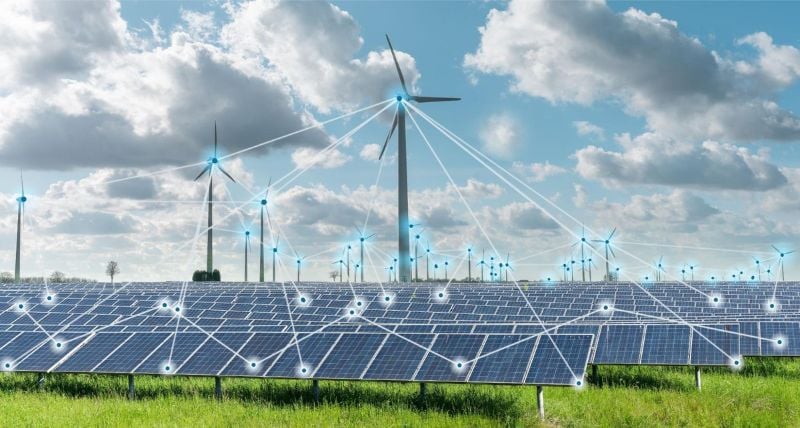
AI and ML can assist in managing renewable energy resources. Image used courtesy of Adobe Stock
Grid-edge AI applications monitor distributed energy resources, battery charge levels, and demand response signals. When energy imbalance is detected, control systems—guided by ML—can adjust generation or load shedding automatically to restore equilibrium.
Reinforcement learning, a subset of ML, is particularly useful for managing grid control strategies. These algorithms learn from simulations and real-world events to make better decisions over time. They are used to optimize inverter behavior, coordinate distributed storage, and enable fast fault recovery.
Smarter Resource Allocation and Cost Efficiency
AI also drives smarter resource allocation, helping engineers determine when and where to use energy most effectively. For example, demand forecasting models anticipate peak periods and recommend load-shifting strategies to minimize demand charges. Energy purchasing algorithms analyze utility rates and market signals to suggest the most economical times to draw from the grid or rely on on-site generation.
This optimization level is especially valuable for energy-intensive industries such as metal processing, manufacturing, and data centers. These sectors can leverage AI not only to cut energy bills but also to earn revenue through participation in demand response programs or ancillary service markets.
Additionally, AI enables carbon tracking and environmental impact assessments. Engineers can monitor emissions tied to energy consumption and optimize cost and sustainability, aligning with corporate ESG goals and regulatory compliance.
Real-World Challenges and Considerations
- Data quality and availability. Many facilities lack sufficient sensor coverage or standardized data formats, making it difficult to generate reliable AI insights. Incomplete or inconsistent data undermines model performance, requiring engineers to improve instrumentation, data collection methods, and system integration before AI can deliver meaningful results.
- Legacy systems and cybersecurity. Retrofitting older infrastructure to support AI often involves costly upgrades and complex integration. At the same time, connecting power systems to digital networks increases exposure to cyber threats. Ensuring secure data flow and implementing robust cybersecurity protocols is essential for safe and effective AI adoption.
- Explainability and model transparency. Complex AI models can produce opaque results, which makes it hard for engineers to trust or act on recommendations. Emphasizing interpretable algorithms and human-in-the-loop approaches helps build confidence, ensures operational accountability, and maintains control over critical decision-making processes.
- Workforce readiness and collaboration. Engineers need foundational knowledge in data science to effectively apply AI in power systems. Training and upskilling are vital, along with fostering collaboration among electrical, data, and control engineering teams to ensure smooth implementation and long-term success.
Industrial Networking Solution: The Connectivity Backbone
To fully realize the benefits of AI and ML in power management, robust communication infrastructure is non-negotiable. A well-designed industrial networking solution connects sensors, edge devices, controllers, and cloud platforms, enabling seamless data exchange and system coordination.

AL and ML provide data in real-time for efficient decision making. Image used courtesy of Adobe Stock
These networks must support real-time data transmission, low latency, high reliability, and cybersecurity protocols. Ethernet/IP, Modbus TCP, and emerging standards like time-sensitive networking (TSN) ensure interoperability and precision. When paired with edge computing and AI modules, these networks form the digital backbone of intelligent power systems.
Moreover, the rise of 5G and private wireless networks offers new possibilities for scalable, flexible deployments across large industrial campuses or remote facilities.
Shaping the Future of Power Management Through Intelligent Automation
AI and machine learning are fundamentally reshaping the future of industrial power management. From predictive maintenance and adaptive control to energy forecasting and autonomous decision-making, these technologies offer a powerful toolkit for engineers tasked with building resilient, efficient, and sustainable energy systems.
As adoption grows, the key to success lies not only in algorithm development, but in system-level thinking—integrating data, infrastructure, and human expertise into a cohesive, intelligent framework.
Power and energy engineers who embrace this transformation will enhance their facility’s performance and help shape the next generation of industrial innovation.