Facebook
 Google
 GitHub
 Linkedin
Fossil Fuels Down: Signs of an Evolving Power Grid
Renewable sources and natural gas led the growth in power generation and infrastructure in 2024.
Two data releases from the U.S. government shed light on the nation’s rapidly evolving power grid.
The Energy Information Administration (EIA) released its full-year 2024 statistics last month, showing a 12.9% growth in generation from renewable energy resources (excluding hydroelectric). Utility-scale solar thermal and photovoltaic plants generated 32% more than in 2023, while wind plants also grew by 7.7%. Small-scale solar facilities, listed in a separate category from larger plants, increased their output by 15%.
2024 also saw significant new-build activities and expansions in solar facilities, according to the Federal Energy Regulatory Commission’s (FERC) latest Energy Infrastructure Update. The year added 725 new solar generators in service, totaling 30 GW, compared to just 20 GW in 2023. This brings solar’s share of total installed generating capacity to 10%, almost matching wind’s 11.6%. Together, these renewables account for about one-fifth of the grid and are expected to rise substantially in the next decade.
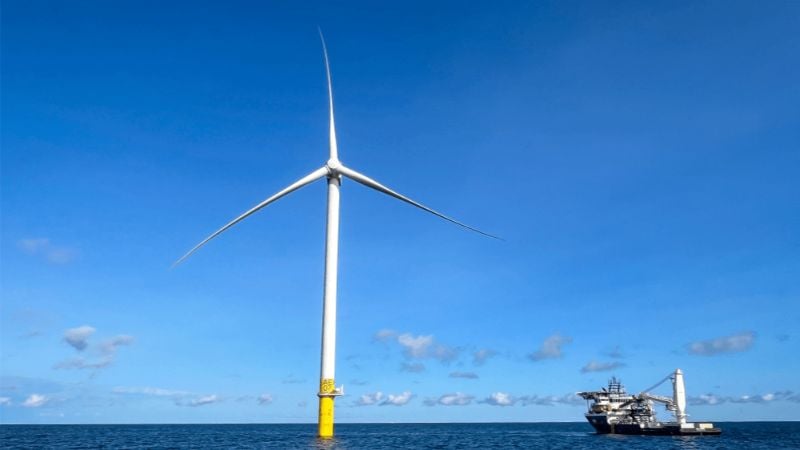
In September 2024, Revolution Wind installed its first turbine off the coast of Rhode Island. Image used courtesy of Ørsted /by Kate Ciembronowicz
Solar and Wind Generation Increase, Fossils Decline
Solar and wind claimed a larger share of 2024’s generation mix, but those gains were partially offset by reductions in other renewable categories like geothermal (down 4.3%) and biomass excluding wood (-4.6%). Outside of renewables, nuclear generation stayed relatively unchanged (+0.9%). Natural gas increased by 3%, while other fossil fuels dropped, including coal (-3%) and petroleum coke (-30%). This trend is expected to continue in 2025, with about 4.7% of the coal fleet scheduled to retire by December.
A separate EIA data release estimates that solar and battery storage will lead the 63 GW of new utility-scale generating capacity that’s expected to be added to the grid this year, accounting for 81% of all additions. That’s a nearly 30% jump from last year’s 48.6 GW of installations.
Both resources achieved record growth last year, with 30 GW of utility-scale solar and 10 GW of battery storage capacity installed. Another 32 GW and 18 GW are expected this year, respectively.
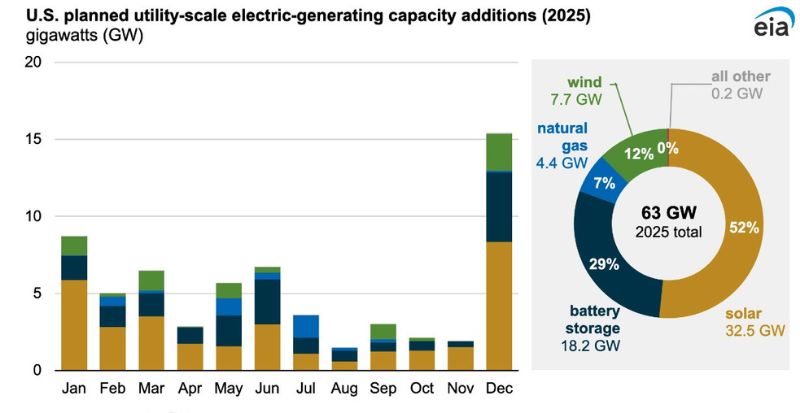
Planned 2025 utility-scale capacity additions. Image used courtesy of EIA
EIA predicts wind capacity to grow by 7.7 GW, up from last year’s 5 GW. Around half will be developed in Texas, Wyoming, and Massachusetts. Two major offshore wind projects are underway, though construction is stretching longer than expected. Ørsted’s 704 MW Revolution Wind project in Rhode Island was originally planned to begin operating this year, but commissioning was delayed to 2026. The 800 MW Vineyard Wind 1 in Massachusetts started delivering its first electricity to the grid last year, but completion was paused after a GE Vernova blade failed and released debris. The project is now expected to come online in 2025.
Natural gas developers plan to add 4.4 GW of capacity this year, half from simple-cycle combustion turbines and over one-third from combined-cycle blocks.
Infrastructure Growth Trends
While solar development rose throughout 2024, FERC data shows a sharp decline in newly built wind generators in service. In 2024, 25 units added just 3 GW of capacity compared to the previous year’s 6.3 GW from 48 units.
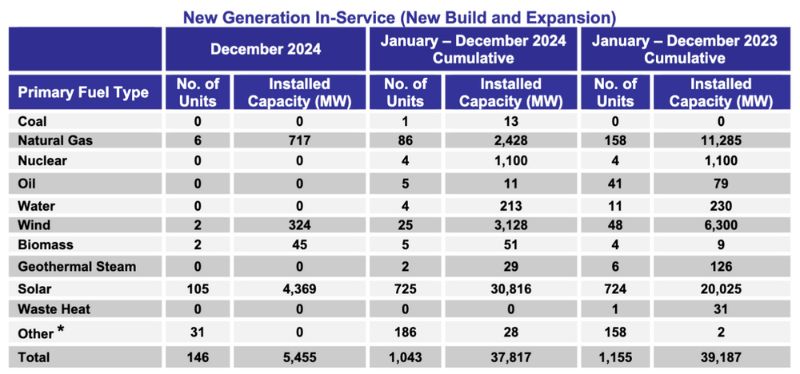
Data on newly built generators in the U.S. Image used courtesy of FERC
Even with wind and solar together claiming over 20% of total installed capacity in the U.S., the grid remains dominated by natural gas (43%), coal (15%), and nuclear (7.8%). Still, FERC’s data shows continued activity from alternative renewables like biomass (with five units adding 51 MW), water (+213 MW from four units), and geothermal steam (+29 MW from two). However, new nuclear builds and expansions remained unchanged from 2023, with four units contributing 1.1 GW.
Looking ahead, FERC reports substantial growth in high-probability projects likely to be completed between 2025 and 2027. Those projections include over 1,000 solar units, adding 91 GW, 92 wind units supplying 23 GW, and natural gas totaling 15 GW across 112 units.
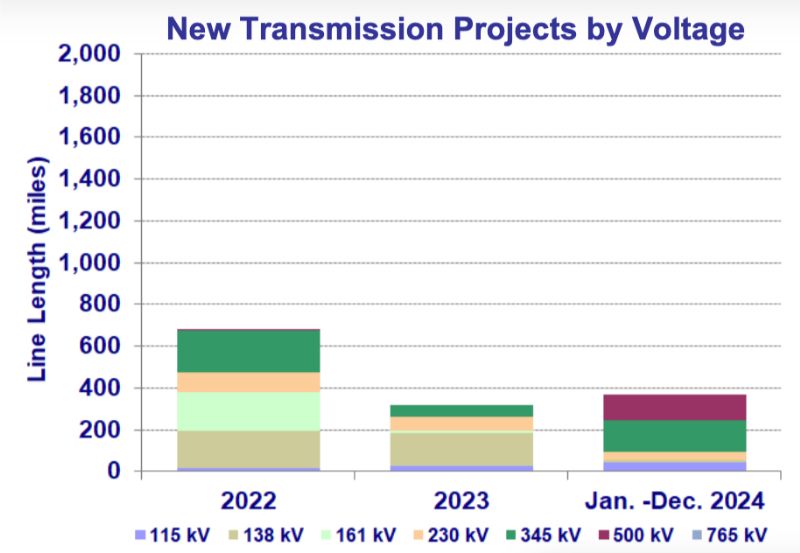
New transmission projects by voltage. Image used courtesy of FERC
The electric transmission system also grew in 2024, adding 369 miles of high-voltage power lines, up from 319 miles the previous year. Another 2,982 miles of proposed projects could enter service by mid-2027, with activity concentrated in the southeast, mid-Atlantic, central states, and Texas.