Facebook
 Google
 GitHub
 Linkedin
Doubling Up DERMS for Efficient Grid Management
Grid operators can manage distributed energy resources more efficiently by combining platforms.
Distributed energy resources (DER)—primarily in the form of wind turbines and solar cells—can harness more energy than before. Utilities may struggle to manage the expanding numbers of DERs and their impacts, such as intermittent energy spikes.
Distributed energy resource management systems (DERMS) have become the method for managing DERs. Traditionally, DERMS have been either centralized or decentralized. However, the two DERMS types converge, which could help improve local and regional grid management.
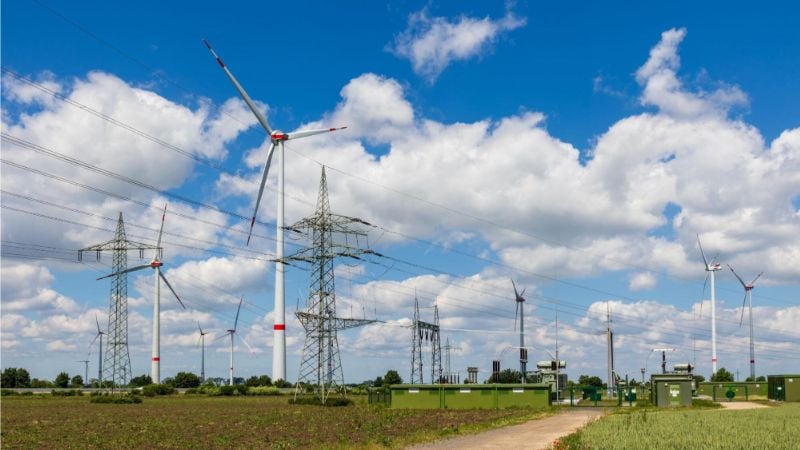
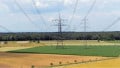
DERMS must manage renewable and conventional energy sources. Image used courtesy of Adobe Stock
Increasing DERs in the Grid
DERs reduce reliance on fossil fuels and aid decarbonization efforts. They can provide intermittent power distribution when the grid is down—planned or otherwise. In this aspect, DERs help improve reliability and resilience during extreme weather events.
However, managing DERs is challenging because they introduce energy into the grid intermittently. During peak demand, the sudden energy influx can further slow down the grid and cause congestion. However, with advancements in battery storage technologies, renewable energy can be stored rather than pumped straight into the grid.
DERMS can manage renewable energy generation, energy storage devices, and energy transfer to and from the grid. This helps to optimize the energy flow and balance supply and demand.
Grid-Centric DERMS
Utility companies usually use centralized, grid-centric DERMS to manage and optimize DERs. This type of DERMS optimizes DERs to ensure grid stability and efficiency. Some common approaches to using DERs to support grid operations include load balancing, frequency control, managing fluctuations and demand, and voltage regulation.
Grid-centric DERMS manage wind farms and utility-scale solar with large batteries by optimizing operations to focus on bulk energy optimization, grid stability, and grid reliability. This DERMS approach directly interacts with transmission and distribution grids through energy management systems (EMS), advanced distribution management systems, and supervisory control and data acquisition.
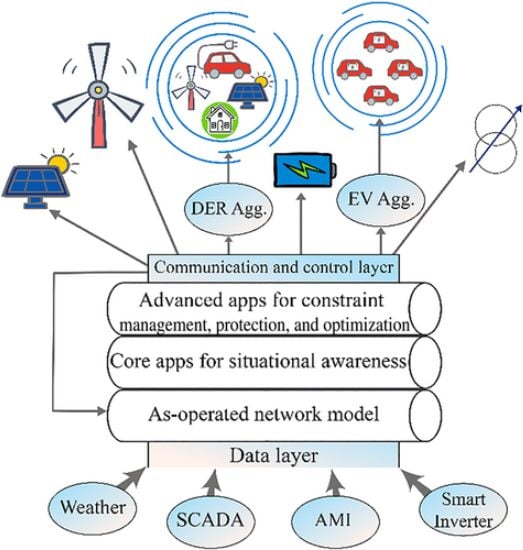
Model of DERMS. Image used courtesy of Strezoski
Grid-Edge DERMS
The second type of DERMS is grid-edge DERMS, a decentralized system allowing small-scale users to access their own energy resources, such as solar panels, electric vehicles, and smart appliances. These DERMs enable users to integrate their own systems into the grid. Once integrated, utility companies can then manage, monitor, and optimize the DERs in real time.
Grid-edge DERMS control and optimize energy at the individual points where it is generated and used. The decentralized nature of grid-edge DERMS allows users to meet energy demands on a local level. Optimization efforts with grid-edge DERMS focus on grid resilience, demand response, and energy self-consumption. The grid-edge DERMS interacts with distribution networks via home EMS and advanced metering infrastructure.
How the Two DERMS Are Converging
Grid-centric DERMS can exchange information with grid-edge DERMS. They may request instructions for demand response or access aggregator and grid topology information. They can also access short-term forecast data, real-time energy consumption patterns, and operational constraints affecting different resources’ performance. They can monitor whether DERs are acting according to instructions.
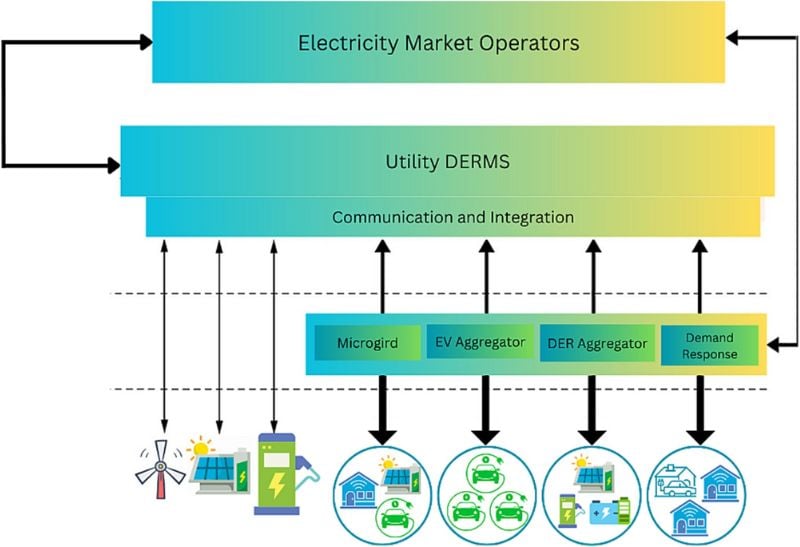
Convergence of grid-centric and edge DERMS. Image used courtesy of Strezoski and Stefani
Grid-centric DERMS rely on the grid-edge DERMS to aggregate all the information. Once the grid-centric DERMS collects and analyzes all the data, it then communicates with the grid-edge DERMS again to provide up-to-date information about the power needs at certain locations and times. If an urgent need for power arises, the grid-edge DERMS can mitigate demand increases using energy stored in the batteries connected to the DERs.
While the grid-centric DERMS provide centralized DER control and instructions for demand, grid-edge DERMS send information to the grid-centric DERMS to reduce congestion, balance supply and demand, and maintain the correct voltage levels. Information sent to the grid-centric derms from the edge DERMs can be used to switch DERs on and off to increase or decrease power generation, charge or discharge batteries connected to DERs, schedule power output levels based on grid demand, and provide grid condition information.
DERMS Convergence in the Future
When utility companies use grid-edge and grid-centric DERMS in tandem, the data transmitted can be too much for the centric DERMS to process since edge DERMS process their own and edge data.
Nevertheless, grid-edge DERMS are crucial for processing and transmitting vital data to the central grid. As DERMS technology continues to improve, grid-centric DERMS may absorb all the functionalities of grid-edge DERMS to perform both functions seamlessly.