Facebook
 Google
 GitHub
 Linkedin
Google AI, PJM Team Up for Grid Connection and Reliability
Google and PJM Interconnection will use artificial intelligence to add more energy resources to the grid and enhance reliability.
Google will use its artificial intelligence tools to strengthen power grid resilience and expand capacity across much of North America. The tech giant is teaming up with PJM Interconnection, a major grid operator, to provide more reliable and affordable electricity for 67 million people.
How can Google use AI to improve the grid? Video used courtesy of Google
The project will employ Tapestry, an AI grid visualization platform launched by Google’s parent company, Alphabet, to accelerate grid connections and plan for future energy needs.

Concept of Tapestry-powered grid operations. Image used courtesy of Google
How Google Tapestry Can Help
Tapestry uses two Google AI tools, Google Cloud and DeepMind, to enhance its grid planning and simulation capabilities. The platform allows operators to visualize the grid to increase efficiency and plan for future needs, including the integration of renewable energy and other distributed energy resources.
Grid planners can use Tapestry to create simulations of various scenarios that might affect grid operations at present or in the future. To anticipate power usage, they can adjust simulated variables of temperature, other weather conditions, and available resources. The information can assist in making decisions about infrastructure upgrades, such as adding transmission lines or allowing new grid connections.

A grid operator in Chile using Tapestry’s tools. Image used courtesy of Google X
Google’s multiyear agreement with PJM has three main objectives:
- Faster energy capacity increase. Tapestry’s AI tools aim to streamline interconnections and automate data verification to speed up project approvals and connections to PJM’s grid.
- Efficiency and affordability. Tapestry will integrate multiple databases and tools to evaluate interconnection requests and create a unified model of PJM’s network to allow planners and developers to work together. The goal is to send power power to the grid and increase affordability.
- Diverse energy resource integration. AI automation and planning can accelerate the interconnection of diverse energy projects awaiting grid integration.
Google’s Energy Goals
Google is among the world’s largest energy consumers. In the latest figures (2023), Google used 25,307 GWh of electricity, and that has grown significantly as the company adds more data centers for AI training and processing. It currently runs data centers in multiple locations in nearly 40 countries. Simply put, the company needs more power to run its data centers.
In a press release, Google stated that Alphabet is committed to leading efforts to increase energy capacity, reliability, and affordability. It also mentioned its efforts to develop advanced nuclear energy and geothermal developments. The company asserts that AI can expand the power grid and maintain security and reliability.
PJM Interconnection
As a regional transmission organization, PJM Interconnection coordinates wholesale electricity in all or parts of 13 states, primarily in the Eastern U.S.
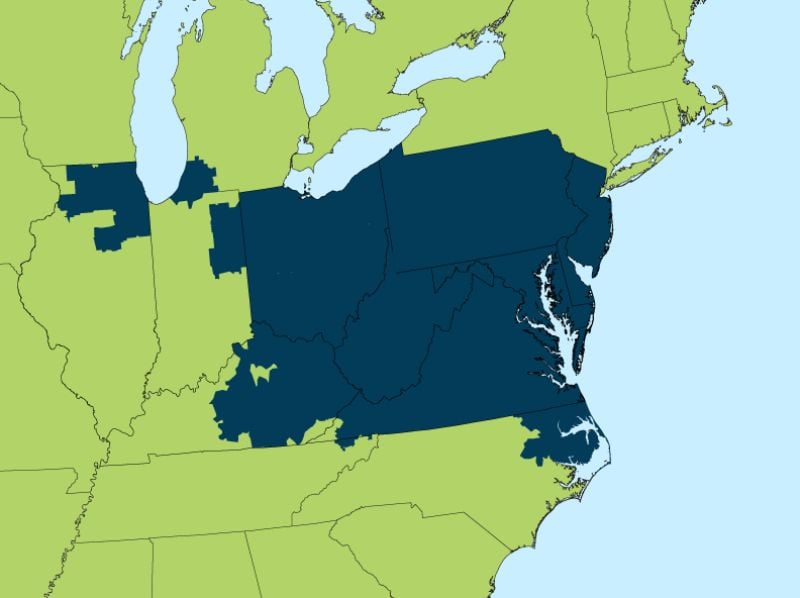
PJM’s service area. Image used courtesy of PJM Interconnection
PJM has more than 3,000 requests waiting for grid connection. Some have been waiting for a year or more. They paused accepting connection applications in 2022 and began reforming the interconnection process in July 2023.
This year, PJM launched its Reliability Resource Initiative and has already received 94 applications, totaling about 26.6 GW of capacity. About half are uprates, which involve modifying existing resources to generate more electricity. The remaining are projects for new generation, primarily nuclear, natural gas, and battery storage.