Facebook
 Google
 GitHub
 Linkedin
Can Underground Aquifers Provide Data Center Cooling?
University of Illinois researchers examined the potential of using aquifer-based geothermal energy to cool data centers while reducing energy use and water consumption.
The U.S. is home to around 45% of the world’s data centers and is the leader in AI infrastructure. In 2024, data centers consumed roughly 180 TWh of electricity, accounting for 4.4% of US electricity generation. As AI adoption accelerates, that demand is projected to rise to between 6.7 and 12% of the nation’s total electricity use.
High-performance hardware and systems within the data centers are driving much of the energy demand. These systems generate significant amounts of heat, requiring intensive cooling to operate safely and efficiently. Cooling alone can account for close to 40% of data centers' energy use.
To save energy and reduce carbon emissions, University of Illinois (U of I) researchers have proposed using aquifer-based geothermal systems, also known as aquifer thermal energy storage (ATES), as a cooling solution for data centers.
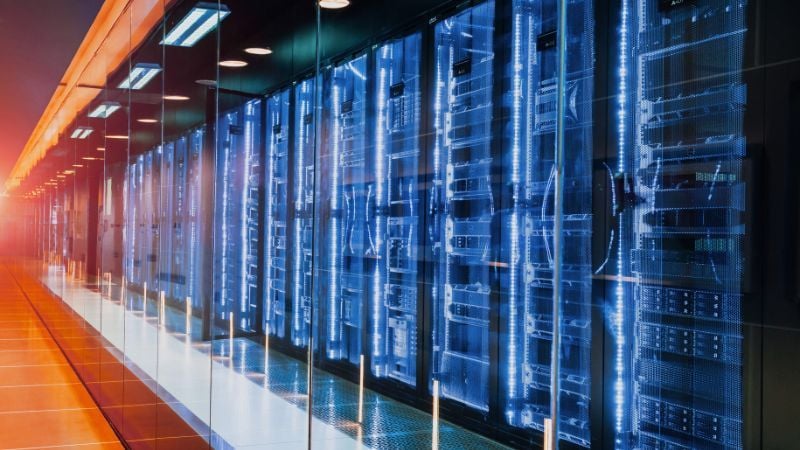
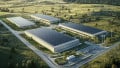
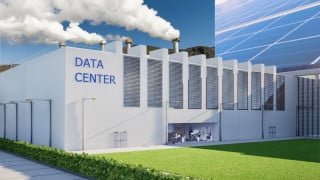
Data centers produce high heat. Image used courtesy of Canva
The Problem With Data Center Cooling
Cooling systems account for a major share of data center electricity consumption, ranging from 10% to 40% of a data center's electricity budget. Heat produced by the servers must be immediately removed to prevent system failure. This typically involves pumps, fans, and compressors, which create an additional power drain.
The environmental toll also creates obstacles. The authors estimated data centers could amass an annual water footprint of 731 to 1,125 million cubic meters. Carbon dioxide emissions are expected to increase from 24 to 44 million tons across the U.S. between 2024 and 2030.
A natural, recirculating water source could reduce energy use and environmental impacts. The U of I researchers found that tapping into underground aquifers could address the issues.
How ATES Works
ATES operates on principles similar to traditional geothermal systems, but rather than circulating water in a closed loop, it transfers water between two aquifers while taking advantage of the relatively constant temperatures found underground.
For data centers, an ATES system can provide natural cooling. Cool groundwater is pumped from an aquifer through a heat exchanger, where it absorbs heat generated by servers. The warmed water is then returned underground and stored for later use.
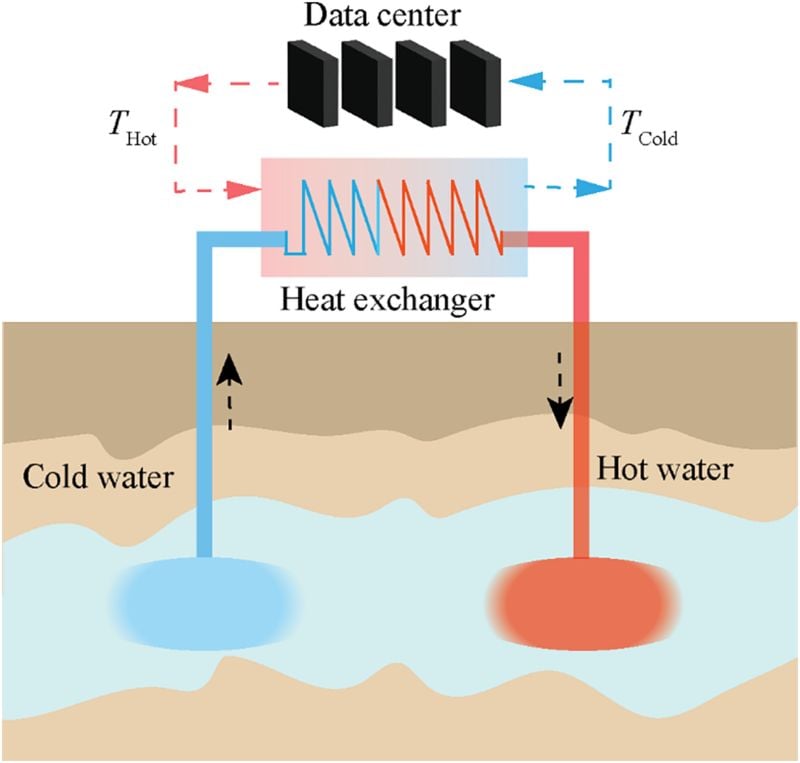
Operational schematic of an ATES. Image used courtesy of Pandey et al.
That stored heat can be reused in winter where needed. And during the colder months, naturally cooler groundwater can be stored for use in the next summer cooling season.
Researchers said aquifers are particularly well suited for thermal energy storage because of their large storage capacity. Regions with pronounced seasonal temperature swings, such as Illinois and much of the Midwest, are especially favorable because the greater difference between underground and surface temperatures improves the effectiveness of thermal storage.
Economic Barrier to Entry
While ATES systems can provide long-term economic benefits from reduced cooling loads, the biggest barrier to widespread adoption is higher upfront investment compared with conventional cooling technologies.
Many projects are evaluated on much shorter investment timelines of only 5 to 10 years, making it difficult to realize the full return on investment. In the U.S., higher drilling costs, fragmented regulations, and limited financial incentives are also slowing adoption.
However, the systems are considered highly scalable. The U.S. has vast regions of suitable geology and an existing network of wells that could support broader deployment. Researchers noted that the necessary drilling expertise already exists within the oil, gas, and water well industries. While technical challenges such as groundwater chemistry, well clogging, and the need for detailed geological assessments also exist, these are viewed as engineering hurdles rather than fundamental limitations.
ATES could become an effective cooling solution for data centers, especially if integrated into broader energy support systems to reduce initial costs. However, additional site-specific studies and supportive policies would accelerate deployment.