Facebook
 Google
 GitHub
 Linkedin
Building Sector Getting 2025 Energy Makeover
Sustainable alternatives are at the forefront in 2025, from solar shingles to electric bulldozers.
The building and construction sector produces 37% of greenhouse gas emissions globally and about 35% in the United States. Energy costs and emissions regulations have pushed developers towards energy-efficient alternatives across their value chain, from material selection to work site operations.
Construction firms are entering the energy mix and driving the demand for sustainable building solutions like solar shingles. Leading companies are decarbonizing their operations by switching from diesel-powered equipment to hybrid-electric variants.
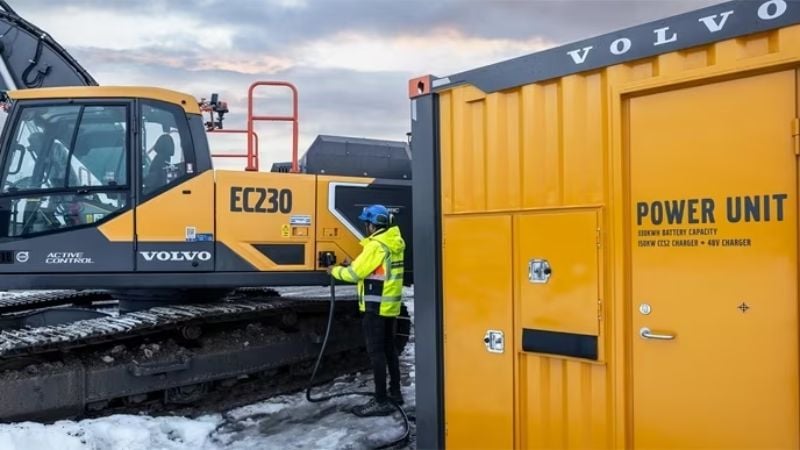
Volvo’s zero-emission EC230 electric excavator. Image used courtesy of Volvo
Hybrid and Electric Equipment
Construction firms are increasingly switching to hybrid or battery-powered excavators, bulldozers, backhoes, and other heavy equipment. One of the largest builders in the U.S., DPR Construction, swapped out all standard diesel vehicles with electric models and cleaner fuels. Several recent DPR projects have transitioned from diesel- to solar-powered light towers or replaced diesel generators with battery packs. The company integrated hundreds of hybrid or electric trucks into its fleet last year, including Ford’s F150 Lightning model.
Another major player, Virginia-based Bechtel Corporation, recently adopted Caterpillar’s hybrid D6XE Dozer. Bechtel found the unit used nearly 30% less fuel than other dozers and cut 6,714 pounds of monthly carbon dioxide emissions. The vehicle is significantly more fuel-efficient, moving 35% more material per gallon.
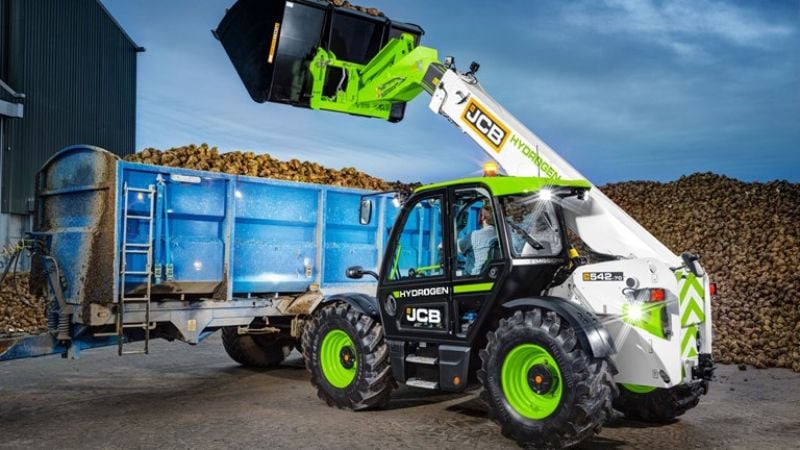
JCB’s hydrogen motor powers a backhoe loader. Image used courtesy of JCB
In 2024, Skansa piloted a battery-powered compaction roller for a transit project in Los Angeles, among the first of its kind to be deployed in the U.S. This came after completing a 90-day pilot program using Volvo’s EC230 electric excavator to reduce hourly carbon emissions by 66%.
Construction equipment suppliers are also embracing hydrogen-based systems. JCB developed a hydrogen motor for its prototype backhoe loader, offering the same performance as diesel-powered equipment but with zero CO2 emissions.
Solar Roofs and Windows
Solar shingles and windows are gaining interest. Building-integrated solar photovoltaics (PV) addresses several limitations facing conventional rooftop solar panels, offering simplified installation and a lower environmental and physical footprint.
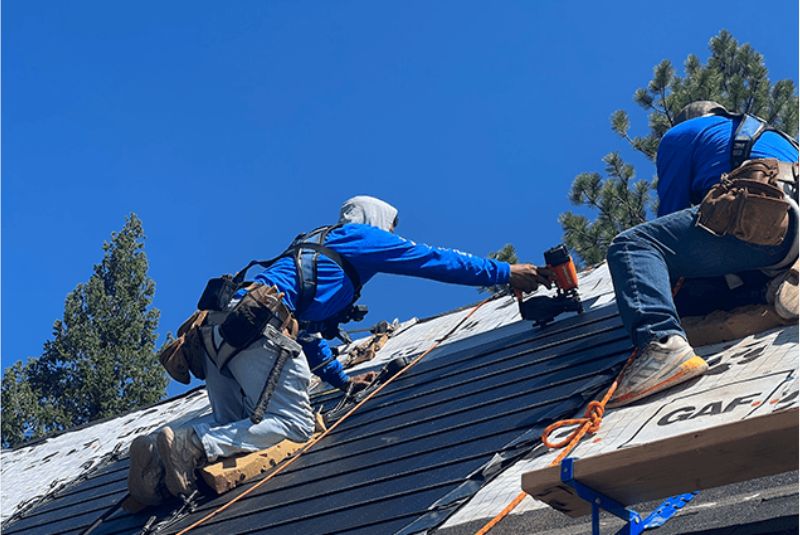
Solar shingles. Image used courtesy of GAF Energy
Some products, like GAF Energy’s Timberline portfolio, incorporate PV shingles with traditional asphalt roofs, utilizing the same installation process and roofing nails. Unlike solar panel frames and racks, Timberline solar shingles have no exposed metal or module-level power electronics like microinverters or DC-DC converters.
Solar windows are another emerging trend, albeit less developed than PV shingles. Arizona-based SolarWindow is a frontrunner, introducing an electricity-generating coating for glass, films, and flexible plastics. The company claims its self-charging system outperforms rooftop solar by 50 times, based on modeling an installation on a 50-story building.

SolarWindow’s LiquidElectricity coating generates electricity via organic photovoltaics. Image used courtesy of SolarWindow
AI and Digital Twins for Building Information Modeling
Artificial intelligence and digital twin technology make building information modeling (BIM) systems more advanced than ever. Generative AI can comb decades of building data in seconds, identifying metrics like indoor environmental quality, electricity consumption, and CO2 emissions—all valuable insights.
Digital twin software streamlines engineers’ material choice and planning with 3D representations of entire projects. A Deloitte analysis cited digital twin-integrated BIM systems as a critical construction tool in 2025. Deloitte’s report also mentioned that an unnamed construction company unlocked higher margins by doubling its BIM designers and investing in prefabrication resources.
Some of these technologies are more common in Europe, which mandates energy performance certificates in building sales and rentals. The European Union-funded BIMprove project recently introduced a dynamic BIM digital twin interface allowing engineers to map data capture routes, link progress plans, speed up scheduling, and improve safety protocols with image recognition tools.