Facebook
 Google
 GitHub
 Linkedin
Driving Farming 4.0 With Electric Machinery
This article examines how electrical conductors are enabling the electrification of the agricultural industry.
The agricultural sector is undergoing a technological revolution driven by the growing demand for sustainability, productivity, and efficiency. At the heart of this shift is electric agricultural machinery, poised to transform how farming is powered and managed. In the era of Farming 4.0, these electric machines, integrated with real-time data and automation, are set to make agriculture greener, smarter, and more cost-effective.
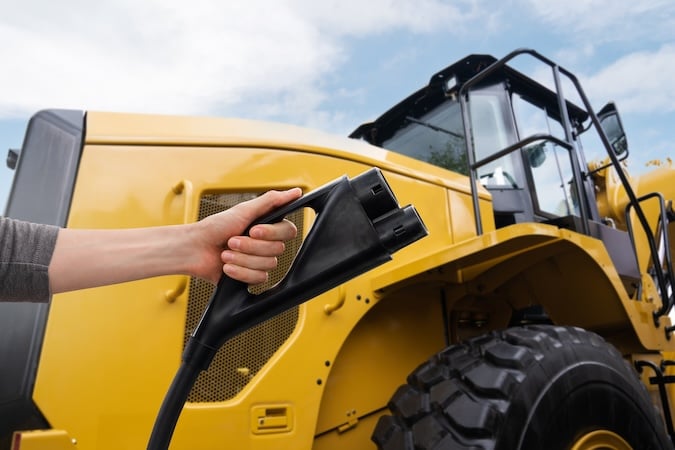
Image used courtesy of Adobe Stock
For years, agriculture has embraced technology in the form of drones and precision farming tools, using aerial imagery and sensor data to monitor crops, assess field conditions, and optimize inputs like water and fertilizer.
While drones handle surveillance and scouting, electric tractors, harvesters, and tillers are poised to revolutionize ground operations. By electrifying these heavy-duty machines, agriculture can significantly reduce its carbon footprint and operational costs while benefiting from the enhanced automation and efficiency that Farming 4.0 offers.
The Shift Toward Electric Agricultural Machinery
Traditional agricultural machinery, which relies heavily on diesel and other fossil fuels, is not only environmentally taxing but also expensive to maintain. The high cost of fuel and the long-term maintenance of combustion engines have driven the industry to explore more sustainable and cost-efficient alternatives. Enter electric agricultural machinery—vehicles and equipment powered by electricity, either from batteries or renewable energy sources such as solar power.
The transition to environmentally friendly farming is supported by institutions like the National Institute of Food and Agriculture (NIFA) in the United States. NIFA supplies competitive grants and programs to support farms in making sustainable decisions and to generate collaborative research projects on innovative sustainable farming methods – such as electric machinery.
Electric tractors, harvesters, and tillers are becoming more common, and there are numerous advantages. Electric machinery reduces carbon emissions, cuts operational costs, and provides a cleaner and quieter working environment. Additionally, electric vehicles (EVs) in agriculture often have fewer moving parts, which translates into lower maintenance costs and longer equipment life. These benefits are critical for reducing environmental impact and operational expenses.
Farming 4.0: The Smart Farming Revolution
The rise of electric agricultural machinery aligns with the broader concept of Farming 4.0, the latest phase in the evolution of agriculture, which builds upon previous agricultural revolutions by incorporating advanced technology such as automation, sensors, and data analytics. This new model leverages the IoT, artificial intelligence, machine learning, and robotics to enable smarter farming practices.
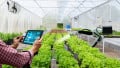
In Farming 4.0, interconnectivity plays a central role. Farms are now equipped with sensors that monitor soil conditions, weather patterns, crop growth, and even machinery performance in real time. This data is processed through cloud-based platforms that provide actionable insights for informed decisions on when to plant, irrigate, fertilize, or harvest.
It’s this AI-driven predictive style of farming that optimizes agricultural processes and allows the tracking of weather patterns, pest infestations, soil conditions, and crop yields before they become critical issues, investing minimal costs towards prevention rather than extortionate mitigation methods.
Similarly, digital twins can be paired with IoT equipment to create a virtual replication of a real farm and the varied conditions it could experience. This allows not only for informed predictions but also experimentation with different strategies by testing scenarios in a risk-free virtual environment—without endangering crops or livestock.
4.0 Challenges
Like many innovations, the far-from-traditional 4.0 overhaul of farming comes with its own set of challenges. Whilst its long-term benefits are conclusive, there are some short-term hurdles when implementing the new technology.
Advanced technologies such as electric tractors, IoT sensors, AI-driven analytics, and autonomous machinery require significant capital investment. In addition to investing in the machinery itself, infrastructural changes like installing charging stations must be made to keep up the tech.
Technological barriers also coexist with higher investment costs. Traditional farming equipment is not designed to integrate with digital systems, meaning additional costs are needed to replace old equipment. Once the smart farms are operational, they generate vast amounts of data that need to be efficiently processed.
Connectors Shaping the Future
One of the key enabling technologies behind electric agricultural machinery and Farming 4.0 is advanced connectors. They serve as a power bridge between various components in electric machines and the broader interconnected farming ecosystem.
A connector’s versatility could be the most effective option when implementing automated systems on farms. Industry-standardized connectors enable the gradual integration of new components into existing farming equipment, reducing the need to replace entire machines, which can increase downtime. Standardized connectors conform to industry-wide specifications to ensure compatibility, meaning that equipment from different manufacturers can seamlessly interconnect without requiring custom adaptations.
Standardized connectors also provide the high performance required to process large amounts of data driven by smart farms. Common transfer speeds of these electrical connectors reach 10 Gigabits per second (Gbps), which allows real-time decision-making. These speeds also enable autonomous farm equipment and AI-powered analytics platforms to function without delays or data loss.
Electrical connectors and enclosures for smart agricultural systems need to be highly reliable and durable, designed to withstand harsh conditions such as dirt, fine dust, wind, mud, snow, and ice, as well as exposure to industrial fluids and corrosive fertilizers. These components must also endure rigorous cleaning processes, as the equipment, including control panels, often requires safe and thorough cleaning. In many cases, the only effective way to maintain cleanliness in agricultural machinery is through the use of pressurized water or cleaning agents.
This is precisely why the IP rating of connectors used in Farming 4.0 systems is so critical. Connectors must meet stringent standards to ensure they perform reliably under extreme environmental conditions. For instance, IP67-rated connectors are designed to withstand temporary submersion in water, while IP68-rated connectors can endure submersion at depths of up to 10 meters for 24 hours. The highest level, IP69K-rated, ensures that connectors can resist high-pressure water jets, even at over 2,000 psi.
When it comes to Farming 4.0 power management, the Amphenol ATP Series, offered by PEI-Genesis, delivers exceptional performance, featuring an IP67 rating and high-temperature silicone seals for enhanced durability. These connectors are built with a thermoplastic housing and an integrated latch to ensure secure mating. Designed for use with 10-14 AWG wires and size 12 contacts, they can handle up to 25A and are available in 2- or 4-position configurations.
A New Age of Smart Farming
The visionary smart farm is projected to flourish only within the next decade, leveraging new opportunities for innovation. The global market for smart agriculture, which includes automation and robotics, is projected to grow from approximately $15 billion in 2022 to $33 billion by 2027 and could present tech like automated farming robots or agricultural supply blockchains as the next wave of interconnected farming.
Electric agricultural machinery is more than a trend—it's essential to the future of sustainable, efficient farming. Combined with Farming 4.0’s interconnected systems, electric equipment marks a major advancement, boosting productivity, resilience, and profitability while reducing environmental impact. Connectors play a vital role in this shift, ensuring reliable power, data flow, and durability.