Facebook
 Google
 GitHub
 Linkedin
Electrifying Port Operations With Self-Driving LiDAR Trucks
Westwell and Hesai will partner to use LiDAR technology to develop autonomous driving vehicles for use in ports around the globe.
Larger vehicles used for freight and cargo have been struggling to adopt and apply electric vehicle technology to semi-trucks, cargo ships, and other heavy-load vehicles and vessels. In addition to moving cargo long distances, numerous support vehicles are needed in port environments to carefully move freight around busy shipping hubs. Trucks, tractors, and forklifts are all staples of port operations, yet they have not seen the same level of renewable energy innovation as other industry segments.
Watch autonomous trucks operate at a busy Thailand port. Video used courtesy of Westwell
Westwell, an autonomous vehicle manufacturer, and Hesai, an industry leader in light detection and ranging (LiDAR) tech, will develop a fleet of electrified port vehicles that use LiDAR tech to make port operations safer and more efficient.

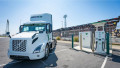
The Q-truck, an autonomous truck from Westwell. Image used courtesy of Hesai
Obstacles to Camera-Based Autonomous Driving Solutions
Ports demand precision. Heavy loads are moved around in tight proximity while various vehicles dart through the port yard to keep pace with the speed of global shipping.
Most autonomous driving solutions have focused on developing camera technology, but using camera tech alone to enable self-driving vehicles in a shipping yard presents several hurdles to overcome. First, limited visibility in harsh environments such as rain, fog, and low-light conditions can impair the camera’s ability to detect obstacles accurately.
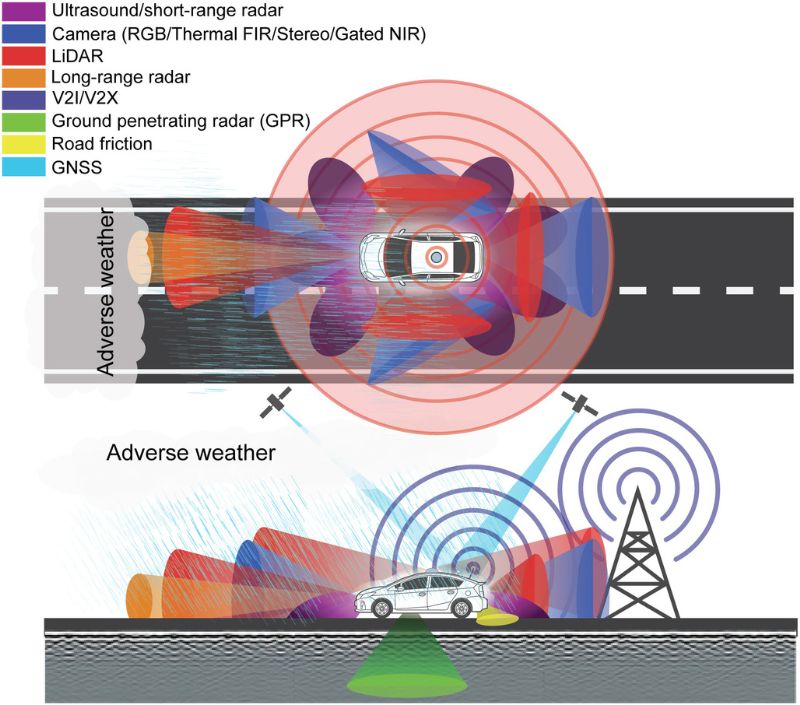
Illustration of camera scope and range in an autonomous driving system. Image used courtesy of ScienceDirect
In shipping yards with heavy machinery and container stacks constantly moving, cameras might struggle to capture reliable data, leading to safety risks. Additionally, camera-based systems require extensive training and calibration to recognize shipping yards’ unique, complex environments, and standard road-based algorithms may not apply.
When used alone, camera systems can have difficulty handling depth perception and 3D spatial mapping—key factors in navigating large and often unstructured environments like ports.
LiDAR tech offers a potential solution by providing accurate distance measurements and 3D mapping. However, LiDAR faces challenges, too, including high costs and sensitivity to environmental interference such as dust, salt, or adverse weather. Integrating LiDAR into autonomous systems is still developing, and achieving seamless coordination with cameras requires advanced algorithms and high computational power. These limitations delay the broad adoption of self-driving technologies in port environments.
Combining LiDAR With Algorithms
Despite these limitations and challenges, Hesai has invested in long-term LiDAR development that has generated over 500 patents from their 1,000-person team, and they are ready to adapt their innovations for autonomous driving port vehicles.
Hesai’s laser lights supporting its LiDAR products can track distance and movement within 5 millimeters of accuracy, a level of precision crucial in the port environment where one collision can derail tons of freight. Hesai’s autonomous driving trucks deploy LiDAR tech to develop countless data points uploaded to a cloud, and then self-driving algorithms can process and use that data to ensure safety and optimize performance.
The automotive-grade ultra-high resolution AT128 sensor is designed to combine camera-based tech with LiDAR to ensure accuracy and improve the sensor’s capabilities. Using 128 channels, this sensor can detect over 1.53 million points per second to visualize the surrounding environment.
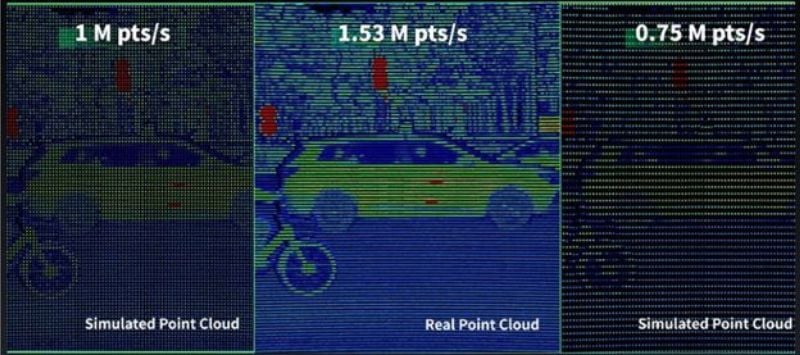
Point rate comparison of the AT128. Image used courtesy of Hesai
This improved visualization will make it possible to outfit multiple on-site electric vehicles with autonomous driving capabilities, and they can operate in harmony without risking damage to freight or vehicles.
Beyond Autonomous Vehicles
The partnership will help reduce carbon emissions and address a growing labor shortage in the heavy equipment industry. Currently, the field is experiencing a 9% deficiency in workers, and experts anticipate the shortage will continue to grow as young people seek out the tech sector rather than heavy equipment operation for their long-term careers.
This partnership between Westwell and Hesai shows the potential of collaboration when adapting tech for novel applications like autonomous driving in port and shipping environments.