Facebook
 Google
 GitHub
 Linkedin
Substation Components—Part 7: SCADA and Protection Integration
Learn how modern substation integration merges protection and SCADA over digital networks and requires security and human-centered HMIs for grid resilience.
Modern substations are no longer collections of isolated devices connected by copper. They are engineered digital systems where protection, control, and supervision converge over deterministic networks. Integrating SCADA with protection systems has become foundational for reliability, safety, and maintainability—especially as substations adopt process-bus architectures, connect distributed energy resources, and operate under evolving cybersecurity requirements.
This article outlines practical integration considerations, focusing on remote monitoring and control, device and protocol choices, cybersecurity, and the human–machine interface in centralized control environments.
SCADA and Protection Integration
At its core, integration aims to deliver consistent, timestamped visibility of primary equipment conditions and to execute controls without compromising protective performance. That means mapping protection IED data models into station-level SCADA, coordinating interlocking and command authority, and ensuring that event-driven protective logic (trip, block, permissive) can coexist with supervisory polling/reporting traffic on the same Ethernet fabric.
IEC 61850 was designed precisely for this purpose: it provides standardized logical nodes and services, and specifies mappings to MMS for client–server exchanges; to GOOSE for fast peer-to-peer events; and to Sampled Values for process measurements. This standardized information model supports interoperable engineering and consistent naming across vendors, which is critical as substation assets evolve over time.
IEC 61850’s architectural split between a station bus (SCADA, HMI, gateway traffic) and a process bus (merging units, sampled values, and trip signals) helps separate deterministic protection flows from higher-latency supervisory exchanges. In practice, GOOSE is used for fast, peer-to-peer interlocking and trips, while MMS-based reporting and control handle most supervisory functions. Typical protection applications target millisecond delivery for GOOSE, whereas SCADA reporting is optimized for reliability and bandwidth. This layered approach is foundational to today’s “digital substation” designs.
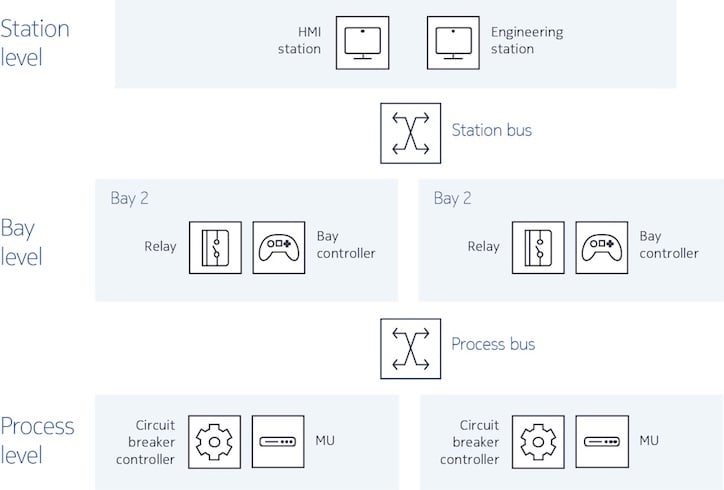
Figure 1. IEC 61850-based substation network layout. Image used courtesy of T&D World.
Remote Monitoring and Control
Remote monitoring centers depend on timely, accurate telemetry—breaker positions, analogs, fault indicators, sequence-of-events, disturbance records—and controlled operations such as open/close, reclosing enable, tap changes, and switching orders. Supervisory exchanges typically follow a mix of cyclic polling and event-driven reports.
With IEC 61850, buffered and unbuffered report control blocks (BRCB/URCB) support event-driven updates, while traditional SCADA deployments may rely on DNP3 event classes, unsolicited responses, or Modbus polling, depending on the installed assets. The operational goal is consistent timestamping and deterministic behavior under stress (faults, storms, or communication degradations). IEC 61850’s data model and services, coupled with deterministic Ethernet and priority tagging, are used to meet these demands in modern substations.
For time-critical controls, engineers commonly implement command interlocks in relays or bay controllers, validating prerequisites (ground switches, earthing, permissives) before execution. Fast trips and blocks remain within protection logic and GOOSE exchanges so that SCADA write operations cannot delay protection. In parallel, condition-based maintenance and asset analytics rely on high-fidelity measurements and event logs streamed to historian or enterprise systems—another driver for engineered, semantically consistent data sets at the substation boundary.
RTUs, PLCs, IEDs, and Communication Protocols
- RTUs aggregate field I/O and provide a communication front end toward the SCADA master. They bridge legacy sensors/contacts to wide-area protocols and often serve as gateways when mixed-protocol IED deployments exist.
- PLCs execute deterministic control sequences—interlocks, automatic switching, or auxiliary logic—in environments historically dominated by manufacturing, but increasingly present in utility yards for balance-of-plant tasks.
- IEDs are the protection and control core devices—microprocessor relays, bay controllers, regulator controllers—exposing measurements, settings, and controls directly to the substation LAN. Many IEDs natively speak IEC 61850, DNP3, or other utility protocols, reducing the need for separate concentrators.
Integration patterns vary. In retrofit stations, an RTU may remain the SCADA concentrator, with protocol gateways translating between DNP3/Modbus and the control center. In greenfield digital substations, an IEC 61850 station bus connects IEDs, HMI, and an engineering workstation; the “gateway” often exports ICCP/TASE.2 to the utility EMS for control-center interoperability.
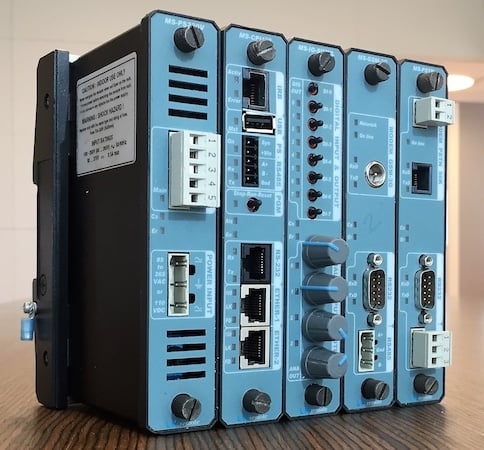
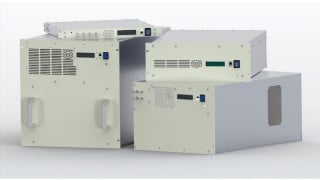
Figure 2. Remote Terminal Unit (RTU). Image used courtesy of Wikipedia.
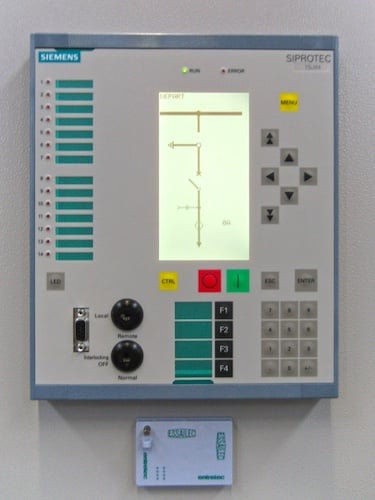
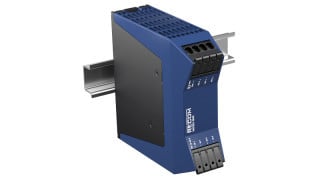
Figure 3. This protective relay is an example of an Intelligent Electronic Device (IED). Image used courtesy of Wikipedia.
IEC 61850
IEC 61850 standardizes logical nodes and services to enable interoperable engineering and operation. MMS (Manufacturing Message Specification) provides client–server services (read/write, reporting, logging) for SCADA and HMI. GOOSE offers multicast, publisher–subscriber messaging for high-speed trips, blocks, and interlocks. Sampled Values transport time-critical current and voltage streams from merging units to protection devices on the process bus. In utility practice, GOOSE (Generic Object-Oriented Substation Event) messages for protective schemes target delivery on the order of a few milliseconds, enabling replacement of hardwired interlocking in many applications.
The benefits extend beyond performance. The Substation Configuration Language (SCL) captures device capability and system design, supporting repeatable engineering and change management across the lifecycle. This model-based approach reduces integration errors and accelerates testing during factory and site acceptance.
DNP3 (IEEE 1815)
DNP3 remains widely deployed across North American transmission and distribution. Its robust data typing, event buffering, and time synchronization make it suitable for remote telemetry over mixed communications media. The 2012 IEEE 1815 revision added Secure Authentication (Version 5), enabling public key infrastructure options and remote key change—important steps toward stronger, standards-based security in legacy assets.
Modbus
Modbus remains prevalent in auxiliary systems and balance-of-plant devices because of its simplicity and broad vendor support. Its straightforward register model is easy to integrate but lacks rich semantics and native security. The Modbus Organization now publishes a security profile that wraps Modbus in TLS and uses X.509 certificates, addressing authentication and integrity gaps for networked deployments.
ICCP/TASE.2 between Control Centers
Beyond the substation, ICCP/TASE.2 (IEC 60870‑6) is used for secure, standards-based exchange of real-time data and controls between control centers, regional operators, and market entities. It builds on MMS, provides object models tuned for EMS/SCADA exchanges, and is a fundamental enabler for coordinated operations across organizational boundaries.
Cybersecurity in Substation Automation
Cybersecurity must be engineered into station architecture, device configuration, and operational processes. Two standards frameworks shape current practice:
- NIST SP 800‑82 Rev. 3 provides technology-agnostic OT (operational technology) security guidance—network segmentation, access control, remote access governance, monitoring, and incident response—for ICS/SCADA systems. Its principles inform architecture decisions such as zones and conduits, DMZs (demilitarized zones) between enterprise and OT, jump hosts, and defense-in-depth across field networks.
- The IEC 62351 series defines security profiles for power-system protocols. IEC 62351‑6 addresses security for IEC 61850 (including peer-to-peer profiles like GOOSE and Sampled Values), while IEC 62351‑9 specifies interoperable key and certificate management—essential for multicast group security and lifecycle operations at scale.
In North America, NERC CIP (North American Electric Reliability Corporation Critical Infrastructure Protection) adds mandatory controls for Bulk Electric System assets. For substation deployments, controls commonly referenced include electronic security perimeters (CIP‑005), system security management (CIP‑007), configuration change management and vulnerability assessments (CIP‑010), information protection (CIP‑011), communications between control centers (CIP‑012), and supply-chain risk management (CIP‑013).
These requirements drive practical measures such as allow-listed communications, firewall rule governance, MFA for interactive remote access, baseline/hardening, patch/vulnerability processes tailored to OT constraints, and retention of forensics-evidentiary logs.
Within IEC 61850 stations, additional considerations include:
Process-bus resilience and trust: native GOOSE/SV frames are not encrypted by default; applying IEC 62351‑6 security profiles, MACsec at Layer 2, or tightly controlled VLANs with access control lists are common compensating strategies on trusted LANs. Where group security is applied, 62351‑9 provides interoperable key management to keep multicast protection maintainable.
Role-based access control for IEDs and engineering tools, aligning with IEC 62351‑8 principles, and ensuring credential lifecycle management extends to outstation devices.
Monitoring and NSM: leveraging 62351‑7 objects for health and security telemetry enables consistent OT monitoring without disrupting deterministic traffic.
For mixed-protocol yards, many deployments must secure DNP3 and Modbus alongside IEC 61850. Where possible, enable DNP3 Secure Authentication from IEEE 1815‑2012-capable endpoints; for Modbus, use the Modbus Security profile (TLS on port 802) or gateway encapsulation inside secured tunnels. Across all protocols, policies should prefer inbound-deny with explicit allow lists, deterministic QoS, and east–west segmentation to constrain lateral movement.
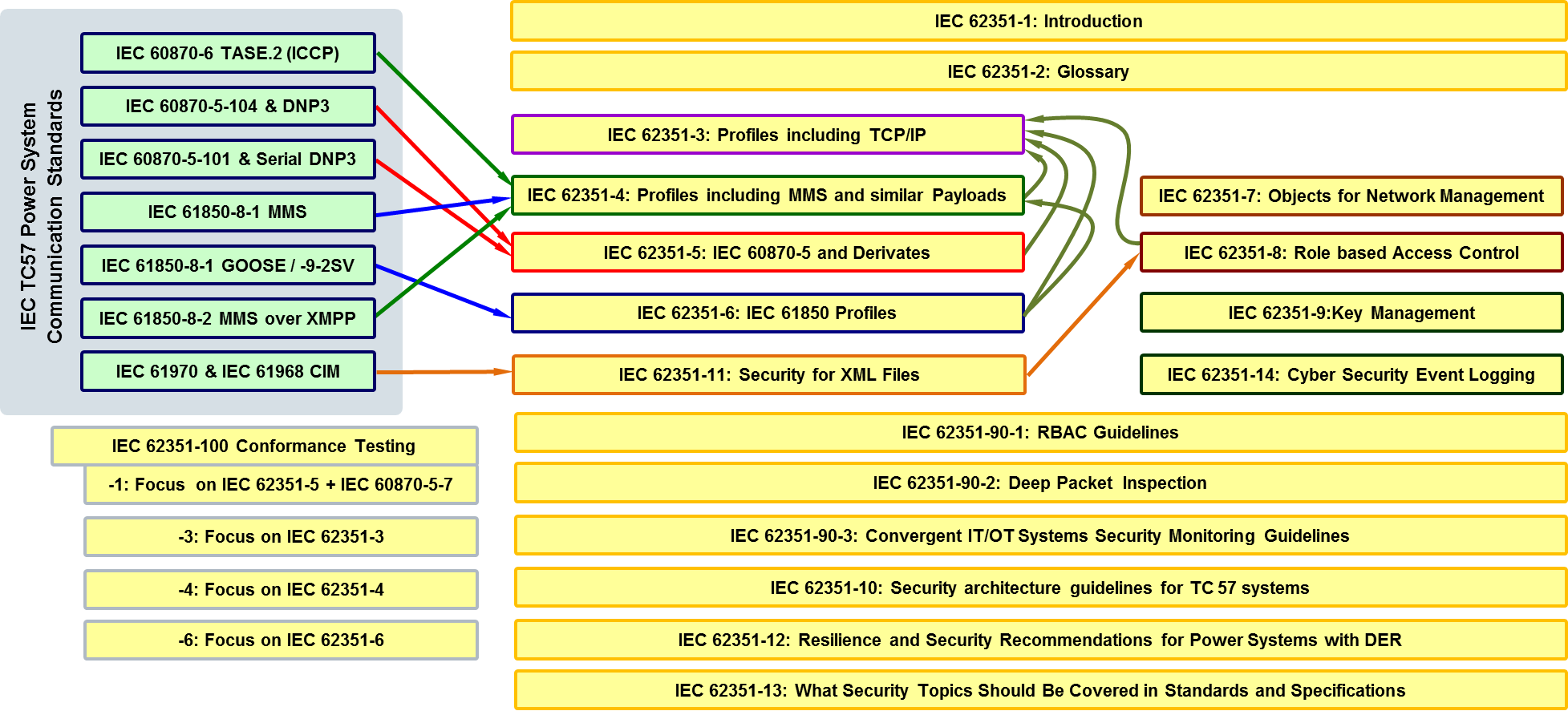
Figure 4. Correlation between Protocols and IEC 62351 Cybersecurity Standards. Image used courtesy of IEC 61850. (Click on image to enlarge)
Human–Machine Interface (HMI) and Centralized Control Centers
A high-quality HMI does more than display measurements; it supports situational awareness, error-resistant operations, and consistent execution of switching orders. Two standards are frequently referenced in utility control environments:
- ISA‑18.2 establishes an alarm management lifecycle, emphasizing rationalization (only annunciating operator-relevant conditions), prioritization, shelving/suppression rules, and performance KPIs (such as standing alarms, alarms per hour, acknowledgment times). These practices reduce alarm floods during disturbances and ensure that truly actionable alarms stand out.
- ISA‑101.01 provides guidance for HMI philosophy and design—display hierarchy, navigation, color usage, and consistency—so that operators can find and act on information quickly and reliably in normal and emergency states.
In substations, these principles translate into clear one-lines with consistent symbols, state-driven highlighting of energized sections, and constrained control dialogs with permissive checks and plain-language confirmations. Alarm lists should be filtered and grouped to reflect electrical context (bay, feeder, bus), with alarm shelving integrated into standard operating procedures. Trend data and event sequence replay aid post-fault analysis when correlated with disturbance records retrieved from IEDs.
At the grid level, EMS/HMI in centralized control centers depends on reliable, standards-based inter-control-center exchanges. ICCP/TASE.2 data flows feed state estimation, contingency analysis, and wide-area visualization; consistent device naming and engineering data models in substations reduce mapping errors and accelerate restoration after disturbances or maintenance.
Key Takeaways
Effective SCADA and protection integration in substations balances three imperatives: interoperable data and deterministic messaging for protection, maintainable supervisory control and visibility for operations, and robust cybersecurity that respects OT constraints. IEC 61850 enables a consistent, model-driven architecture across station and process buses, while DNP3 and Modbus continue to serve legacy and auxiliary roles—now with security enhancements available.
Cybersecurity must be woven into device configuration, substation networks, and enterprise processes, guided by NIST SP 800‑82 and implemented in the power-system context using IEC 62351 profiles and NERC CIP controls. Finally, engineered HMIs grounded in ISA‑101 and ISA‑18.2 principles sustain situational awareness and safe execution when it matters most. Together, these practices turn a substation’s many components into a coherent, resilient system fit for modern grid operations.