Facebook
 Google
 GitHub
 Linkedin
Performance Index-Based Security Assessment and Screening Effect: Part 2
Learn how to address the screening effect in performance index-based security assessment in power systems.
Be sure to check out Part 1 of this two-part article series.
The single numerical value aggregated from performance index-based security assessment in large power systems is often faced with screening effects that influence the critical vulnerabilities within the system. This effect brings inaccuracy to the final performance index (PI) results and may suggest that the overall power system is falsely “secure” while, in reality, there is a severe issue within the system.
To address the screening effect, we are going to look at mitigation strategies, including exponent tuning, importance-based weighing, normalization enhancement, and composite PI implementation.
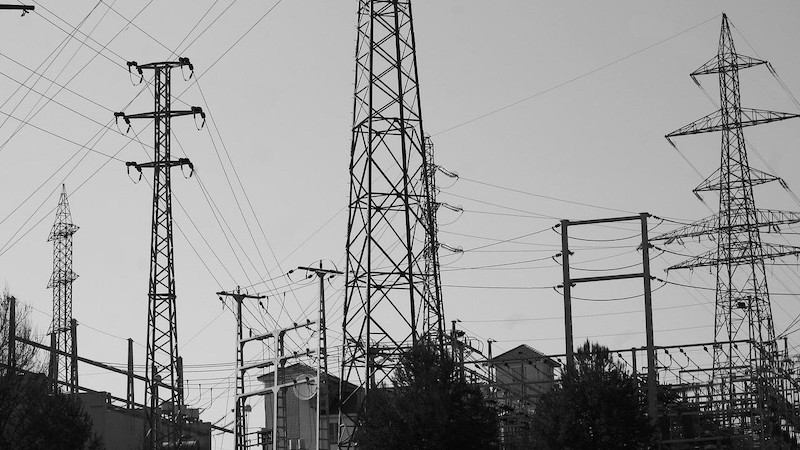
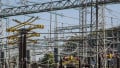
Figure 1. Transmission lines, forming part of a power system. Image used courtesy of Pixabay.
Strategic Exponent Tuning and Normalization
As mentioned in the previous foundational article, the tuning of exponent (n) to adjust sensitivity and normalization are some of the contributors to screening effects in PI-based security assessment in power systems. With the exponent handling the aggressiveness of the power system’s response to anomalies in the PI formula, it can sometimes fail to note the dynamic stresses experienced within the system as in most cases the values are often fixed at 1 or 2 static exponents.
When the value of the exponent is fixed (n =1) to signify low severity, the voltage is treated linearly, understating large violations resulting from low PI results. When the fixed value signifies high sensitivity (n = 3), there is heavy penalization of large deviations as a result of cubic exponent leading to over-amplified localized issues.
To mitigate this, adaptive adjustment can be done based on the stress experienced. In this case, instead of the exponent being equal to a value, it can be adjusted dynamically to be equal to or greater than a value (i.e. n ≥ 2) increasing non-linearization making the exponent more sensitive to large violations.
Despite the extreme scenario detection in the non-linear method, it should be implemented with careful consideration as the value spikes can induce instabilities. The adaptive exponent approach can however be tuned to combine the best of detecting minor and major issues, for instance handling small violations lightly (n=1) and significantly raising PI to indicate violations (n=3).
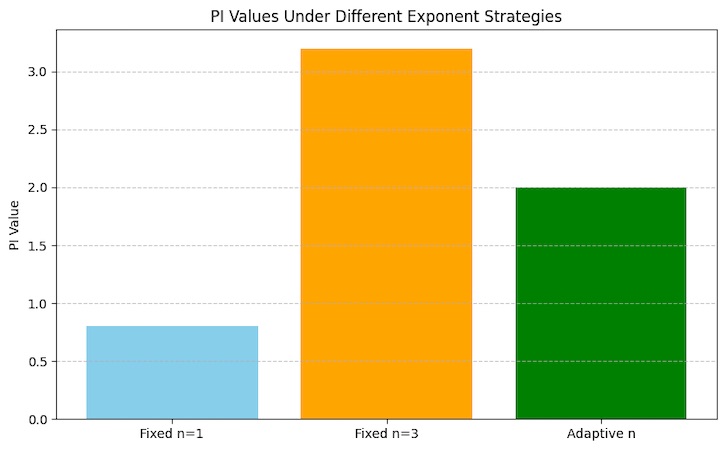
Figure 2. Graph showing PI value comparison with different exponent strategies. Image used courtesy of Bob Odhiambo.
When it comes to normalization, the PI values are directly affected by the approach taken. In this case, it is often best to implement improved normalization methods including, max-based, percentile-based, and hybrid normalization.
The max-based normalization method mitigates the screening effect by focusing on the maximum allowable limit rather than the average that might miss a critical error in a power system. This method considers the worst-case component in the system, making it feature high sensitivity to critical components.
Percentile-based normalization often uses the 95th percentile of the deviation to handle the top 5% of the violations in the system, reducing sensitivity to rare data sets that significantly differ from the normal setpoints within the power system.
When it comes to the hybrid mean-max normalization approach that features a weighted combination of the maximum and the mean values, there is a balance of the worst-case detection with the global trends represented by α as shown in the formula for evaluating the normalization factor.
$$\text{Nomalization Factor} = \alpha \cdot \text{Mean} + (1-\alpha) \cdot \text{Max}$$
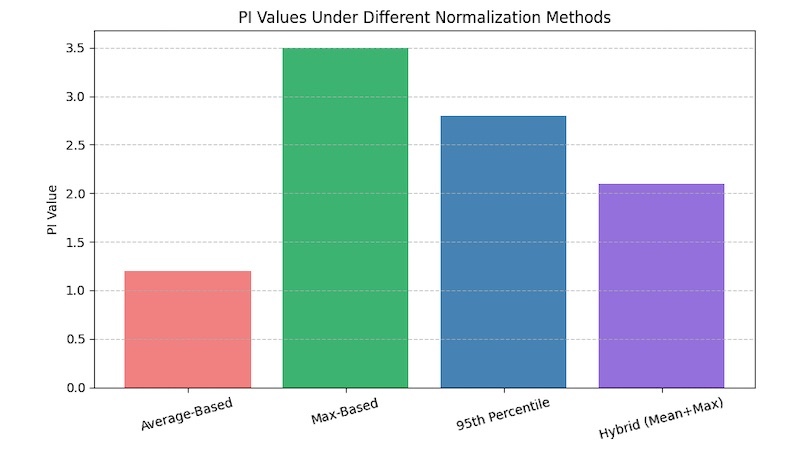
Figure 3. A comparison chart showing the effects of the different normalization approaches on the final PI value. Image used courtesy of Bob Odhiambo.
Intelligent Weighing of Components in a Power System
Power system components like buses or transmission lines are often treated in PI security assessment as equally important units. With this assumption, one critical component's behavior can be masked by a perfectly functional one. To solve this screening effect, the approach of using intelligent weighing of these components can be taken to ensure accuracy in the security assessment.
One of the approaches that can be taken to resolve the screening effect is intelligently weighing the PIs based on how critical a component is in the power system. By improving prioritization and sensitivity, the weight factor (Wi) at the power bus (i) can be introduced in the PI formula.
The prioritization of components is done by considering the heaviness of the load, where failure can affect a big part of the power system. Additionally, bus types, whether slack bus that ensures a balanced system, PV bus that controls the magnitude of the voltage, or PQ bus that represents loads, can be used as a weighing method. With this, prioritization should be given to load-intensive centers and critical areas like hospitals or airports.
We can, therefore, update the PI formula by adding the weight factor as shown below, where the exponent (n), voltage change at bus (i), and the allowable voltage change (Vi, limit) remain the same as featured in the original PI formula.
$$PI = \Sigma_{i=1}^{N_b} w_i \big( \frac{|\Delta V_i|}{V_{i, i\text{ }t}} \big)$$
Another intelligent weighing approach to mitigate the screening effect is by using machine learning (ML) for dynamic weight assessment. This involves the acquisition of training data from historical occurrences of aspects like outages and N-1/N-K contingency analysis, after which a regression model is trained to identify the components in the power system that are most likely to fail or cause instabilities in the power system.
The model can then output a risk score that translates to weight factors for PI analysis, resulting in a more objective, data-driven assessment. It should however, be noted that while ML-based weighing sounds promising, it is still an emerging area of research and greatly depends on reliable data and validation.
Combining Voltage and Overload PIs Hybrid Approach
To produce a hybrid security assessment in power systems, the voltage deviation index (PIv) and the line loading index (PIl) can be combined to form a composite performance index that ensures that voltage collapse and overload are simultaneously accounted for by adjusting the tuneable weight factors α and β.
$$PI_{composite} = \alpha \cdot PI_V + \beta \cdot PI_L$$
Composite PI can be incorporated with dynamic stability indices such as frequency deviation metric after disturbances, as they capture system response based on time, ensuring PI values that are more tuned to real-world operational threats.
When it comes to real-time adaptation, pairing composite indices with responsive control actions works well to resolve the screening effect. This may involve using adaptive load-shedding schemes that are more risk-informed. Based on the local PI, the threshold of the index in each power line or bus can be defined in a way that, when a critical limit is exceeded, proportional load shedding can be triggered in the affected region.
For instance, a congested urban area with an overload PI value in its buses that exceeds 0.9 could trigger a 10% load reduction at 0.9 and increase the reduction percentage by 20% at 0.95. This concept ensures that the load shedding only takes place when needed, reducing disruptions in the power system.
$$\text{If } PI_i > PI_{critical}, \text{ trigger } \Delta P_{load_i} = f(PI_i)$$
Secure Grid with Fast Response Controllers
To conclude, the response to PI surges is also significantly affected by the control method employed in the power system. This involves the configurations of devices like FACTS and HVDC links to respond based on the PI values. For instance, thyristor-controlled series capacitors (TCSCs) can relieve overloaded power lines by dynamically modulating the line’s impedance.
Static VAR compensators, on the other hand, can improve the local voltage stability in regions where PIs have high voltage deviations from the reference voltage. Finally, in congested AC transmission lines, HVDC links can ease the stress in the power lines by re-directing power away from these congestions.
As the importance of implementing reliable grids grows, power engineers are working to make the tools for assessing vulnerabilities in power systems more accurate. This included mitigating screening effects to ensure that their performance index-based security assessment offers accurate data to respond to outages.