Facebook
 Google
 GitHub
 Linkedin
Design and Test Challenges of High-Voltage MIL-Aero Applications
This article explores the unique design, testing, and reliability challenges of high-voltage power supplies used in military and aerospace applications.
Military and aerospace sectors rely heavily on high-voltage power supplies (HVPS), which work to provide power control for a range of electrical systems. With the demand for reliability under extreme environmental conditions, designing and testing the HVPS for such applications can pose challenges.
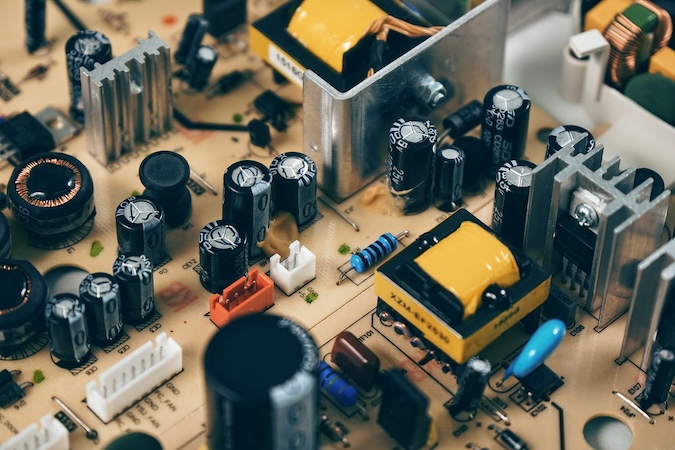
Figure 1. A power supply designed for military and aerospace should withstand extreme conditions. Image used courtesy of Pixabay
Design Challenges in HVPS
Designing an aerospace and military-grade HVPS demands the attention of some technical factors for reliability in harsh environments, and failure is not an option in their applications. When designing an HVPS for aerospace and military applications, the first aspect to consider is what type of components offer a reliable power supply. In this case, temperatures, moisture, radiation, and vibrations are factors of concern in this design process. One of the most essential aspects to consider is the selection of components for the power supply. For instance, choosing a capacitor with a low equivalent series resistance (ESR) significantly reduces heat generation and power losses in the power supply. The power dissipated in a capacitor due to ESR can be evaluated by finding the product of ESR and the current through the capacitor for a more optimized choice for reduced heat buildup. The voltage rating and derating of a capacitor is another aspect to consider when selecting the right capacitor for the power supply. It is crucial for the capacitor chosen for the supply to have a voltage rating that is well above the operating voltage and to ensure reliability over time in high-temperature environments. A derating factor might be at 50%, meaning that if the capacitor has a 1000V rating, it can be used at 500V.
Regarding the selection of semiconductors, WBG semiconductors like silicon carbide (SiC) and gallium nitride (GaN) make the best choice for the HVPS compared to silicon semiconductors due to their superior electrical properties. One of these properties is a higher breakdown voltage that allows the semiconductors to handle higher electric fields without undergoing avalanche breakdown. To estimate the breakdown voltage (VBR) of the semiconductor of choice, you can consider its doping concentration (N), the depletion region's thickness (L), and the electric field strength (Ec). Higher electric field strength significantly reduces breakdown voltage, making the semiconductor suitable for high-voltage applications.
For instance, the choice of GaN (3.3 MV/cm) and SiC (2.8 MV/cm) over silicon (0.3 MV/cm) semiconductors is backed by their higher critical electric field strength. For example, a SiC device can have a breakdown voltage that exceeds 5000V, whereas a silicon semiconductor breaks down at 600V under similar dimensions and doping.
\[V_{BR}\propto\Big(\frac{E_{C}}{N}\Big)\times L\]
Conduction losses are another property that affects the selection of a suitable semiconductor for HVPS. Wide band gap semiconductors have lower conduction losses due to lower on-state resistance (RDS(on)) than silicon semiconductors with the same voltage rating. With reduced on-state resistance, electrons are more mobile even in high temperatures. Before selecting a semiconductor for your HVPS, conduction loss (Pcond) can be evaluated by considering the semiconductor’s on-state resistance and the drain current (ID), as shown below.
\[P_{cond}=I^{2}_{D}\times R_{DS(on)}\]
Consider the power supply's size and weight when designing an HVPS for military and aerospace applications. In military aircraft, vehicles, and spacecraft, weight restrictions and limited space are issues of concern, meaning that maintaining a design that meets such standards while maintaining high performance poses some engineering challenges. Therefore, the power output per unit volume can be increased to achieve a maximized lightweight and compact design. This also involves using a lighter chassis for the HVPS and materials like light aluminum alloys and carbon composites while still maintaining the structural integrity of the casing.
Reliability Requirements and Environmental Conditions
Reliability engineering forms one of the top considerations during the design and testing of HVPS for military and aerospace applications, ensuring operational consistency in harsh conditions over long periods of operation. In such an application, the failure of a single component in the power supply can mean the possibility of problematic consequences, which, therefore, calls for a redundant design. A redundant design allows for a reliable power supply by adding components or systems in the HVPS design that can take over if a component in the HVPS fails, ensuring uninterrupted operation. Depending on the system needs, parallel or series redundancy or a combination of both configurations can be implemented. For instance, an HVPS with parallel redundancy configuration may consist of multiple power supplies sharing the load by operating simultaneously, ensuring reliability if one of the power supplies fails. When designing an HVPS, you can define the probability of operating in a specific period (t) without failure by evaluating its reliability R(t). If the HVPS has (n) parallel components, each having its reliability function Ri(t), the overall reliability of the power supply can be evaluated using the formula:
\[R(t)=1-\prod^{n}_{i=1}\Big[1-R_{i}(t)\Big]\]
While parallel redundancy improves reliability in HVPS, it introduces a set of challenges like complexities of control systems for management, maintenance, failure detection, and isolation if not properly managed.
Environmental testing is an important aspect of evaluating the reliability of the HVPS design. Factors like thermal cycling, radiation, vibration, and shock can greatly impact the HVPS design. A thermal cycling test can be done to identify potential stress imposed on the HVPS under repeated heating and cooling cycles. Simulating temperature variations and closely examining thermal expansion can help in the material choice for a reliable power supply. When it comes to vibration and impact testing, a variation in resonant frequency due to vibration from military and space environments can be evaluated to prevent any mechanical failure by designing an HVPS that can withstand the effects of large oscillations. These environmental tests are essential in helping power engineers make potential HVPS adjustments based on the test results.
Regulatory Standards and Compliance
When designing an HVPS for military and aerospace applications, compliance with regulatory standards cannot be overlooked as they ensure that the power supply meets the stringiest safety, reliability, and performance requirements. Below are some standards to be considered in the design process.
- MIL-STD-810, Environmental testing for military equipment: This military standard offers performance and durability testing guidelines for equipment and devices like HVPS under different environmental conditions. In this case, HVPS can undergo thermal cycling, vibration, and shock tests to ensure they can handle stress encountered during military operations. Featuring global acceptance, the MIL-STD-810 standard offers the freedom to customize the testing protocols based on the working environment of the equipment for reliability.
- RTCA DO-160, Environmental conditions for airborne equipment: This standard ensures the safety and reliability of electronic equipment, including the HVPS, in an aircraft. The test scope for this standard considers a range of environmental conditions that airborne equipment may be subjected to, including factors like electromagnetic interference (EMI), lightning strikes, and rapid decompression. For HVPS design for aerospace use, compliance with these standards forms part of industry requirements in aviation, offering reliability and safety in demanding environments.
- NASA-STD-8739.8, Guidelines for space flight electronic assemblies manufacturing: Developed by NASA, the standards ensure reliability and quality in electronic assemblies, including HVPS, for use in space flight. With guidelines for wiring, soldering, and conformal coating, the HVPS is inspected and tested at various manufacturing stages, ensuring it is built to withstand vacuum, exposure to radiation, and extreme temperatures. This ensures quality, and with documentation and traceability, potential issues can be easily linked to their source, allowing corrective measures to be taken.
High-Voltage Power Supplies for Military and Space Applications
Designing a redundant and reliable HVPS for military and aerospace applications ensures performance in extreme environments with minimized downtime. Through compliance with regulatory standards, engineers can further optimize their HVPS design and testing for reliability. With the growth in technological advancements, HVPS faces new challenges, and with the use of advanced materials and additive manufacturing, performance reliability can be improved.