Facebook
 Google
 GitHub
 Linkedin
Thermal Batteries Heat Up in 2025
Thermal batteries could replace conventional batteries in storing renewable energy.
Thermal batteries are a promising solution to meet growing energy demands and facilitate renewable energy integration. Unlike conventional lithium-ion batteries, thermal batteries store energy as heat, offering a sustainable and cost-effective alternative for industries and homes. With the International Energy Agency (IEA) forecasting a 3.4% annual increase in global electricity consumption through 2026, the need for novel energy storage solutions has never been more critical.
Thermal energy storage technology made strides in 2024 and has the potential to reshape energy systems in 2025 and beyond.
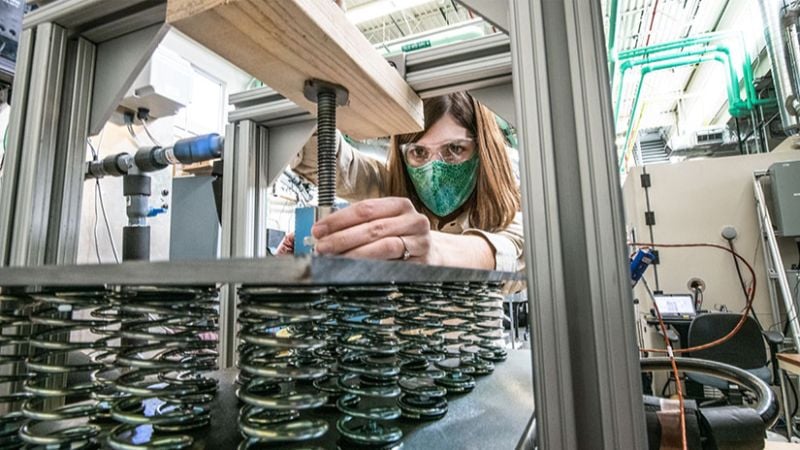
Thermal battery research. Image used courtesy of National Renewable Energy Laboratory
Firebricks as Thermal Batteries
Cement and steel manufacturing require high temperatures and energy. Together, these industries contribute 17% of global carbon dioxide emissions.
In 2024, Stanford University proposed reusing firebricks – an ancient thermal storage technology – for energy storage. Firebrick energy storage uses high-temperature-resistant ceramic bricks, or firebricks, to store thermal energy generated during periods of low electricity demand. The stored heat is later converted into electricity using a heat exchanger and turbine system.
The researchers estimate that by 2050, firebricks could reduce reliance on batteries by 14.5%, hydrogen production by 31%, and underground thermal storage by 27.3%. Meanwhile, the technology can potentially cut global capital costs by $1.27 trillion during the energy transition, accelerate the adoption of renewables, and reduce air pollution-related health risks.
Salt-Vinegar Thermal Battery
A major hurdle in thermal energy storage is developing robust materials that consistently store and release heat efficiently while resisting degradation across varied temperature ranges and multiple usage cycles. In 2024, Sunamp developed a compact and highly durable thermal battery using sodium acetate trihydrate (SAT), a material also found in hand warmers and salt-and-vinegar potato chips.
The new thermal battery works by heating SAT to form a supersaturated solution that stores energy, which is released during recrystallization as the material transitions back to solid. Traditional SAT faces degradation due to salt settling, but Sunamp addresses this with acrylic-based crystal habit modifiers, enabling up to 40,000 heating cycles, equivalent to over 50 years of daily use.
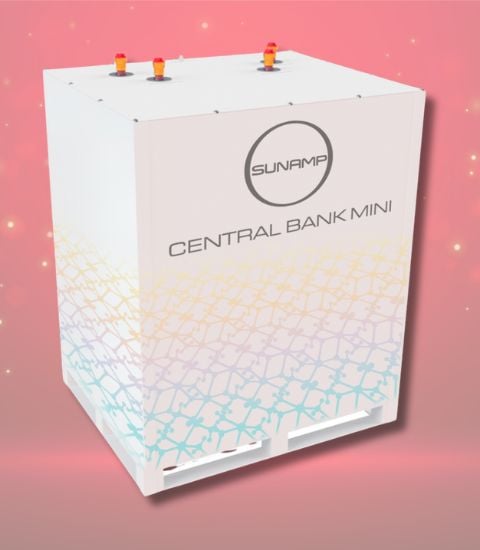
Sunamp thermal battery. Image used courtesy of Sunamp
Architecturally, the battery is designed to offer efficient heat storage and on-demand hot water in a compact form suitable for space-constrained buildings.
A Thermal Future
As renewables enter the scene and global energy demand continues to climb, thermal batteries are growing in prominence. By storing excess energy as heat during peak generation and releasing it when demand surges, thermal batteries provide a reliable, cost-effective solution to balance grid fluctuations. With advancements in materials and efficiency, these systems could gain significant traction in 2025.