Facebook
 Google
 GitHub
 Linkedin
Reimagining Energy Storage With Bricks
Can an ancient heating system become a next-gen energy storage system?
The global energy landscape is profoundly transforming as the world strives toward sustainable power sources. Energy storage has become necessary to support the adoption of renewables. Still, traditional storage methods, such as lithium-ion batteries and pumped hydro, have limitations in cost, scalability, and environmental impact.
As researchers grapple with these challenges, they increasingly seek novel solutions, including reimagining ancient technologies for modern applications. A Stanford University study proposed using firebricks to store thermal energy rather than electrical energy. The method could provide a solution for carbon-free energy storage.
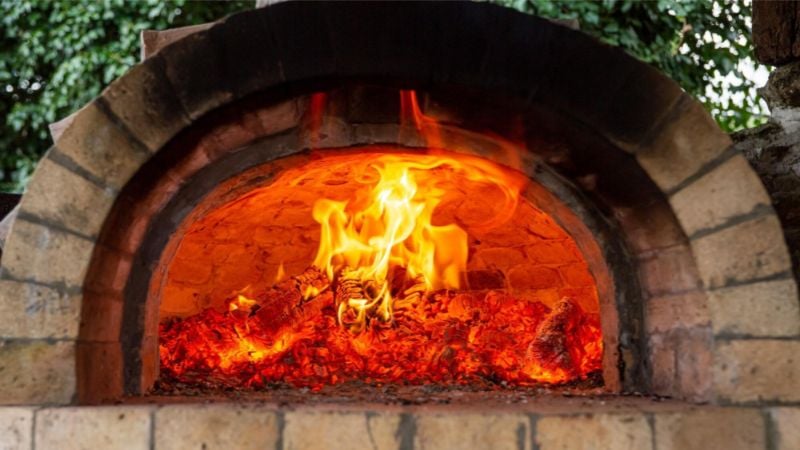
A brick oven. Image used courtesy of Adobe Stock
Storage: The Missing Link
Industries often need high temperatures for manufacturing, such as 1,300°C for cement production and 1,000°C or higher for glass, iron, and steelmaking. As a result, around 17% of global carbon dioxide emissions are due to burning fossil fuels for industrial heating. Fortunately, a near-complete reduction can be achieved by using electricity from renewable sources for all process heat, but this requires energy storage to combat renewable output variability.
Historically, lithium-ion batteries have dominated the energy storage landscape, but their high costs, environmental concerns regarding mining and production, and limited scalability have prompted researchers to explore alternative technologies. Hydrogen and underground thermal storage have been proposed as potential solutions, but each comes with technical and economic hurdles. For example, in the event of ignition, a hydrogen storage leak can lead to severe heat and overpressure effects on surrounding individuals and structures. In underground thermal storage, the initial cost of drilling and infrastructure is high, and efficiency depends on local geology, which can limit its feasibility in some regions.
The search for more sustainable and affordable energy storage options has led researchers to revisit and reimagine ancient technologies, looking for solutions that can be easily implemented globally.
The Firebricks Storage Solution
Recently, a groundbreaking study published in PNAS Nexus has found that firebricks, an ancient thermal energy storage technology, could revolutionize modern energy storage systems.
Firebricks, made from simple materials like dirt, store heat rather than electricity and cost only one-tenth of conventional batteries. The researchers hypothesized that firebricks could significantly reduce the need for electricity storage and other high-cost infrastructure components.
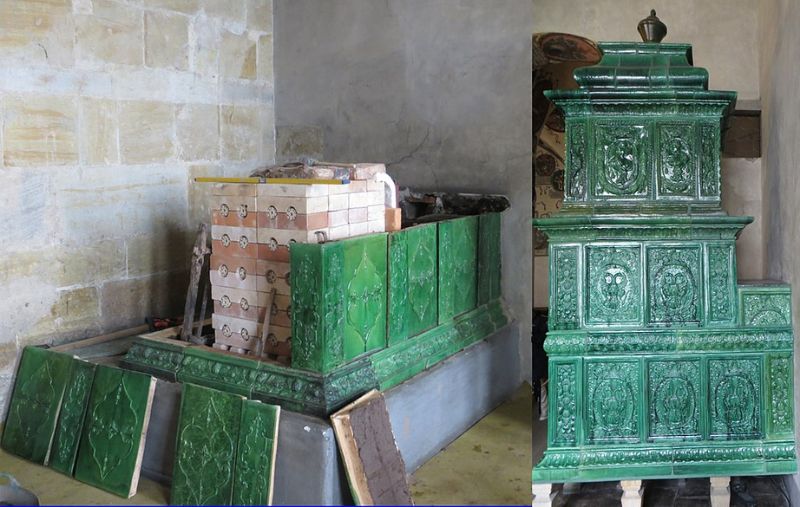
Firebrick heating dates back to ancient times. The bricks were often covered with tile. Image used courtesy of Wikimedia Commons
The researchers utilized three models: a spreadsheet model for estimating energy demand, the GATOR-GCMOM global climate model for predicting renewable energy supply, and LOADMATCH for matching energy demand with supply and storage. Using simulations across 149 countries, the researchers found that incorporating firebricks into industrial heat processes reduced 2050 battery storage capacity by approximately 14.5%, hydrogen production for grid electricity by 31%, and low-temperature heat storage by 27.3%.
Additionally, using firebricks reduced the required onshore wind nameplate capacity by 1.2% and land use by 0.4%. These changes contributed to an overall decrease in annual energy costs by 1.8%. The system’s efficiency stems from firebricks’ ability to store large amounts of heat at high temperatures, with costs less than one-tenth that of battery storage per kilowatt-hour (thermal).
Bricks Paving the Way for Sustainable Energy
Rediscovering firebrick technology for modern energy storage applications demonstrates the potential for simple, cost-effective solutions to complex global challenges. By leveraging this ancient method, the energy sector could accelerate its transition to renewable sources while simultaneously addressing the needs of high-temperature industrial processes. Moving forward, integrating this thermal storage technique with other emerging storage solutions could create a more robust, flexible, and resilient energy infrastructure capable of meeting the diverse needs of a rapidly evolving global economy.