Facebook
 Google
 GitHub
 Linkedin
Report: HVDC Not Ready for Future Energy Demand
Is HVDC technology ready for future energy needs? One group says more work is needed.
Energy expert DNV has completed the initial phase of its high-voltage direct current (HVDC) standards joint industry project (JIP) to enhance power grids to integrate offshore wind development. DNV, an assurance provider, has partnered with 10 offshore wind and transmission developers for the JIP.
How does HVDC transmit power over long distances, even underwater? Video used courtesy of Engineering with Rosie
The project identifies inadequacies in the standards governing high-voltage direct current transmission systems, a crucial step toward enhancing electrical grids. Establishing standards will guide HVDC transmission technology to significantly improve U.S. power grid capacity, reliability, and resilience, especially as renewable energy is added.
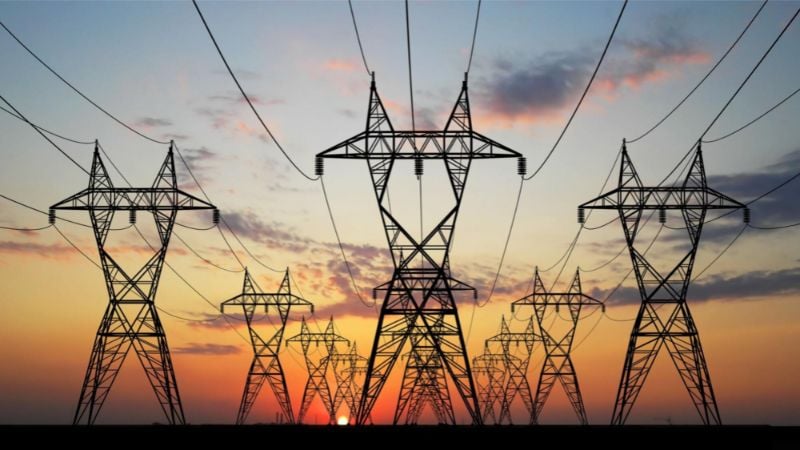
High-power transmission towers. Image used courtesy of Adobe Stock
Why Is HVDC Needed?
This strategic HVDC initiative is necessary due to the ongoing surge in electricity demand from data center expansion and consumer electricity consumption. Modernizing and expanding the grid infrastructure is needed to accommodate this growing demand.
HVDC is also critical in integrating offshore wind and other renewables into the power grid, particularly over substantial distances. HVDC can provide reliable and cost-effective long-distance transmission, which is essential for effectively incorporating renewable energy into the grid infrastructure.
Currently, the U.S. does not extensively utilize HVDC transmission. Forecasts indicate that more than 5,900 miles of undersea HVDC transmission cables will be required by the middle of the century to enable efficient offshore wind development.
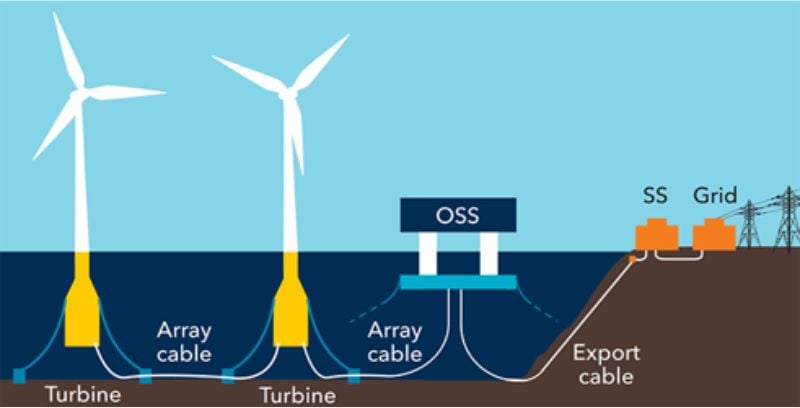
Offshore wind transmission configuration. Image used courtesy of DNV
Standardization Is Key For Success
Standardization is crucial for success in HDVC implementation. The JIP’s initial phase focused on identifying the codes and standards required for HVDC transmission systems in the U.S.
Four standards were identified as highly important in the study involving the ten offshore wind and transmission developers:
- Performance/grid code
- Manuals for regional transmission organization and independent system operators
- Utility interconnection manuals
- Offshore design requirements
The study found that while some standards are partially addressed, many gaps need attention.
Richard S. Barnes, DNV Region President, Energy Systems North America, noted that HVDC transmission is a key component of the renewable energy transition.
“To put it simply, there will be no transition without transmission,” Barnes stated. “It doesn’t matter how much clean power generation capacity is online if there is no low-cost, reliable way to get that energy to the grid.”
JIP partners include Shell, National Grid Ventures, EDF Renewables, Equinor, Atlantic Shores Offshore Wind, Invenergy, Ocean Winds, REW, TotalEnergies, and PPL Translink WindGrid.
Looking Ahead
The DNV has outlined a three-phase plan, with each phase expected to last around one year. Throughout 2025 and 2026, the project partners will collaborate to develop and execute a comprehensive strategy to address the identified gaps. This strategic plan guarantees operations' safety and efficiency in high-power settings. Safety is prioritized in this initiative to ensure optimal performance and risk management.